
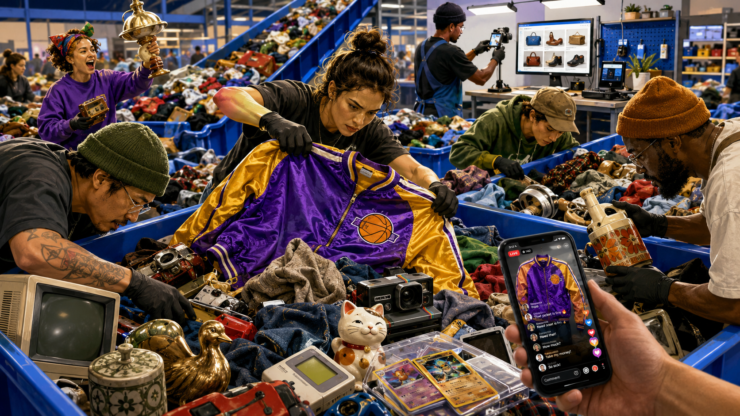
Goodwill learned what resellers have known for decades: some of this stuff is worth real money. Now the whole secondhand economy is scrambling to keep up.
I have always thought of Goodwill as a giant treasure hunt with no rules, and at least one person aggressively guarding a cart full of mystery finds. Turns out I was underestimating the operation.
For decades, resellers made a business out of finding the good stuff buried in everyone else’s castoffs: vintage Levi’s, old electronics, the occasional item worth thousands of dollars that somehow ended up in a $6 bin. The whole system ran on one simple fact: the person pricing your donated sweatshirt usually had no idea what it was actually worth.
Goodwill has caught on. And now it wants a bigger cut.

Goodwill Got Smart
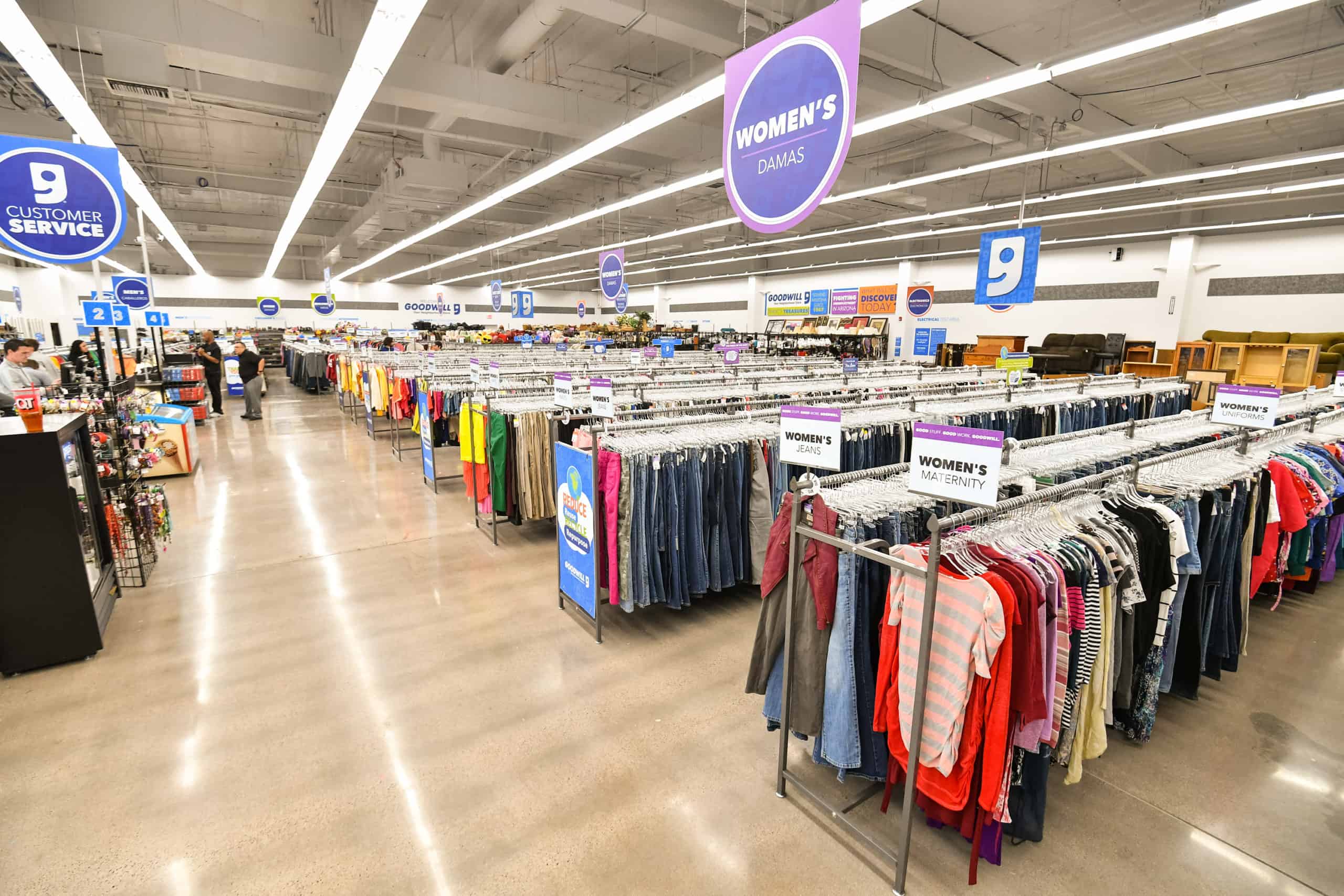
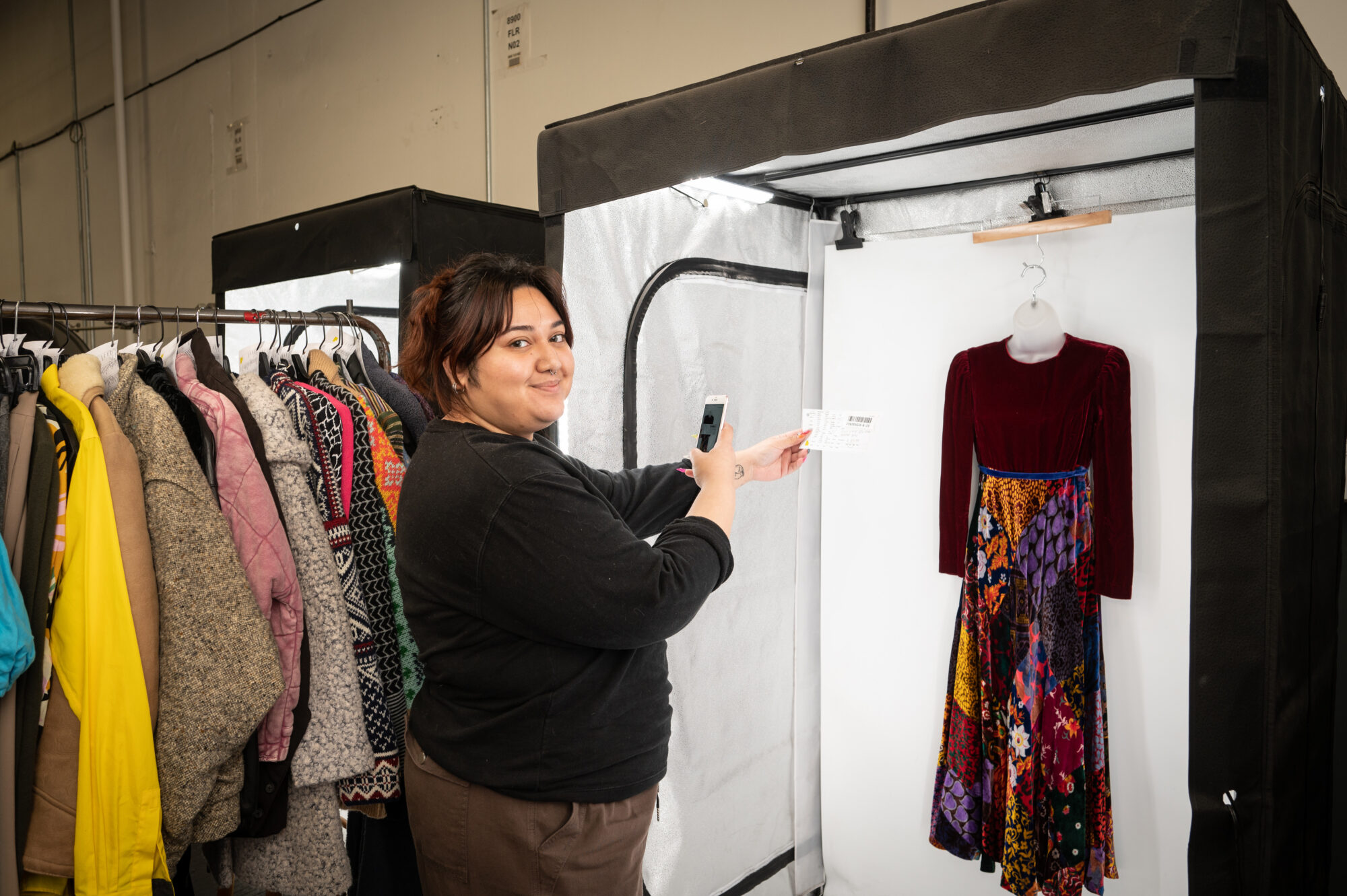
The old thrift-store model was simple: donations came in, an employee slapped on a price tag, and everything went to the floor. That’s still mostly true. But Goodwill now pulls anything that looks promising and routes it to ShopGoodwill.com, its 26-year-old online auction site, where dedicated e-commerce teams photograph and list it for a national audience instead of whoever happens to wander into the physical location.

Welcome to the Bins
If you’ve never been to a Goodwill Outlet, picture a warehouse where merchandise is dumped into giant blue bins instead of hung on racks, priced by the pound rather than by the item, and rotated out every 15 to 30 minutes so there’s always a reason to stick around. Resellers treat it like a job, because for a lot of them, it is.
Locations now flag specific categories known to have resale value before they ever hit a bin. Name-brand clothing and jewelry increasingly get pulled and priced separately. Because of this, longtime resellers say the bins just don’t produce as much as they used to.
The Livestream Pivot
The bigger shift might be in how resellers sell, not just what they find. A growing number have moved to Whatnot, a livestreaming auction platform where hosts sell in real time while viewers watch, chat, and bid.
Chris Hatfield, a Texas reseller who runs a brand called Flip the World, spends five days a week digging through Goodwill bins with his wife, aiming to collect 150 to 200 pounds of merchandise a day at $1.99 per pound. At night, they livestream it. Their average sale is $11.21 an item, but volume does the work: their goal is $1,000 in profit a day. It’s not glamorous, but it’s a real business model, and it scales in a way that standing behind a folding table at a flea market never could.
The $89,600 Jacket
Even with Goodwill getting smarter, the occasional insane find still slips through. In January, 19-year-old Portland reseller Quinn Brown saw another shopper about to toss a purple-and-gold warm-up jacket back into a Goodwill Outlet bin. He grabbed it for $3.07.
It turned out to be a jacket Wilt Chamberlain wore during the Lakers’ 1972 championship run, photo-matched by Sotheby’s to game footage from that year’s NBA Finals. It sold at auction this summer for $89,600.
Imagine being the shopper who put that jacket back. Actually, don’t.
Somewhere Under a Broken Toaster
None of this makes thrifting easier for longtime resellers. More competition, sharper pricing, and a nonprofit that now understands eBay comps as well as anyone else in the game. But it also means the sweater you dropped off while cleaning out your closet might have a longer, weirder life ahead of it than you’d expect. It might get bought, flipped, livestreamed, or shipped somewhere else entirely.
And somewhere in a Goodwill outlet right now, somebody is digging through a pile convinced the next $89,600 jacket is sitting under a broken toaster. Given how this year went, they might not be wrong.
![Checkmate: Genius, Lies, Ambition, and the Biggest Scandal in Chess by Ben Mezrich [Book Review]](https://ashbydodd.com/wp-content/uploads/2026/06/Checkmate-hero-370x300.png "Checkmate: Genius, Lies, Ambition, and the Biggest Scandal in Chess by Ben Mezrich [Book Review]")
:max_bytes(150000):strip_icc():focal(599x0:601x2):format(webp)/jar-jar-binks-1-df304279b57b4384a3186250aaaa7327.jpg "Jar Jar Binks Actor Ahmed Best Opens Up About His Suicide Attempt")
:quality(70):focal(325x208:335x218)/cloudfront-eu-central-1.images.arcpublishing.com/thenational/72EBXBVU7BA57ILFQH5DFK4PNY.jpeg "Podcast Review: Wild Boys from the Chameleon Podcast")