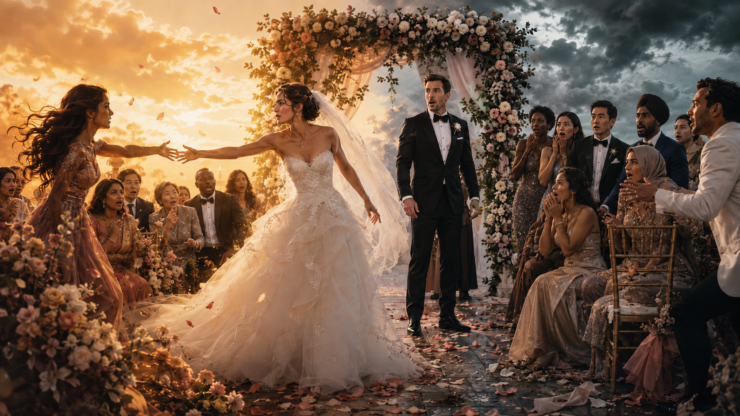
Pop culture has spent decades making runaway weddings look romantic. The real-life version is messier, stranger, and way harder to score with an indie ballad.
I’m a very specific kind of Grey’s Anatomy fan.
Yes, I care about the surgeries, and I have opinions about hospital leadership. Yes, I have screamed internally at fictional doctors making wildly unprofessional romantic choices in supply closets.
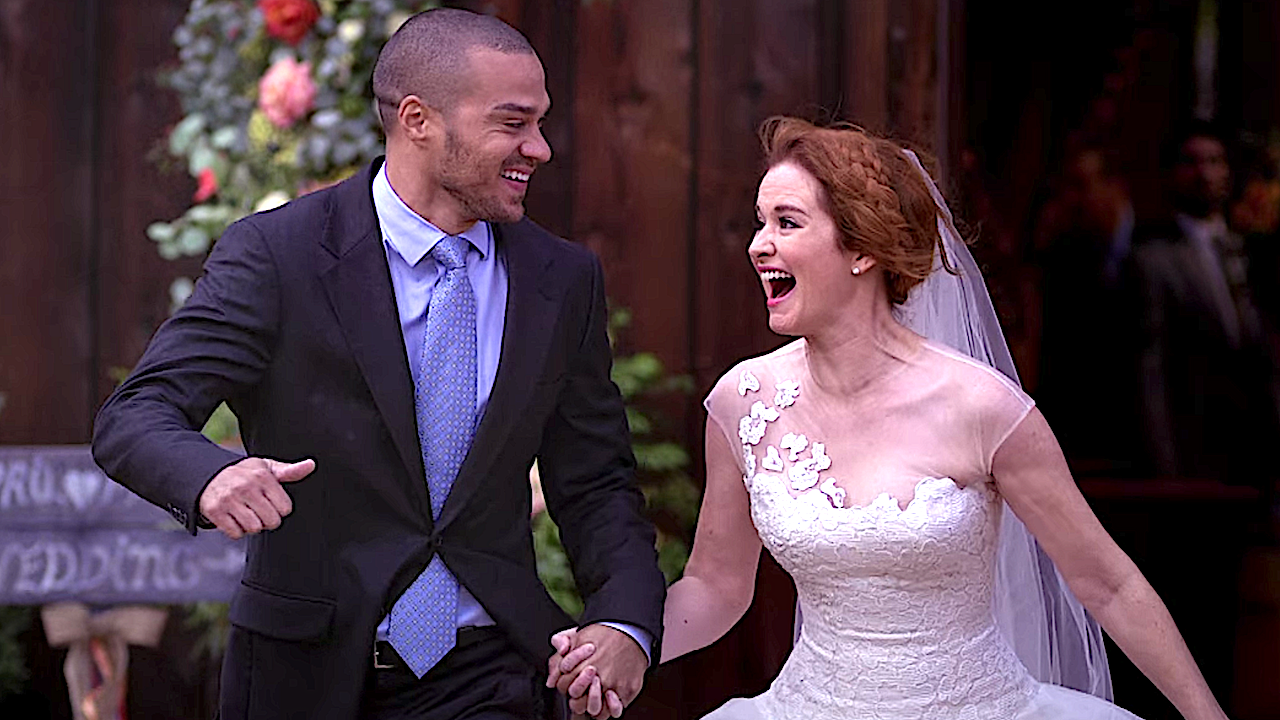
But when Jackson Avery (Jesse Williams) stood up at April Kepner’s (Sarah Drew) wedding and declared his love for her in front of God, Matthew, Stephanie, and everyone’s beautifully uncomfortable faces?
I swooned.
I know, I know.

IRL
In real life, this would be a disaster. A deeply humiliating, emotionally chaotic, possibly friendship-ending disaster. But on television? With the music swelling and the camera cutting to April’s face as she realizes the life she planned may not be the life she actually wants?
That is premium romantic nonsense. I ate it up with a spoon.
Jackson interrupts April’s wedding to another man. April leaves with him. They run off together. For a while, at least, it feels like the universe has finally let the right people choose each other.

It is not hard to understand why this trope works so well.
We love the idea of someone risking everything for love. We love the last-second confession, the breathless escape, the fantasy that the heart knows what it wants even when the seating chart says otherwise.
The Graduate gave us Ben (Dustin Hoffman), banging on the glass, and Elaine (Katharine Ross), fleeing in a white dress. Four Weddings and a Funeral gave us Hugh Grant halting his own wedding mid-ceremony to confess he was in love with someone else. Romantic comedies have been dining out on this premise for decades.
But here’s where it gets awkward.
In real life, leaving someone at the altar for another person is usually not cinematic. It is not scored by an indie ballad. Nobody cuts to black before the consequences arrive.
There are families, police reports, and medical emergencies. There are cultural expectations, public shame, financial loss, and people trying to salvage dignity in front of a room full of guests who have already eaten the appetizers.
The fantasy says: true love wins.
Real life says: Okay, but who is explaining this to the groom’s father?
When the Groom Disappeared, and a Guest Took His Place
One of the strangest real-life examples comes from Karnataka, India, in 2021.
A man named Naveen was supposed to marry a woman named Sindhu in a double wedding ceremony. But shortly before the wedding, Naveen reportedly ran away after his girlfriend threatened to harm herself if he went through with the marriage.
So Sindhu was left behind at her own wedding.
That alone is awful. Public rejection is bad enough when it happens in a text message. At a wedding, in front of relatives, neighbors, and probably at least one auntie who will retell the story forever? That is another level of emotional carnage.
Then the story took a turn that sounds almost too strange to be real.
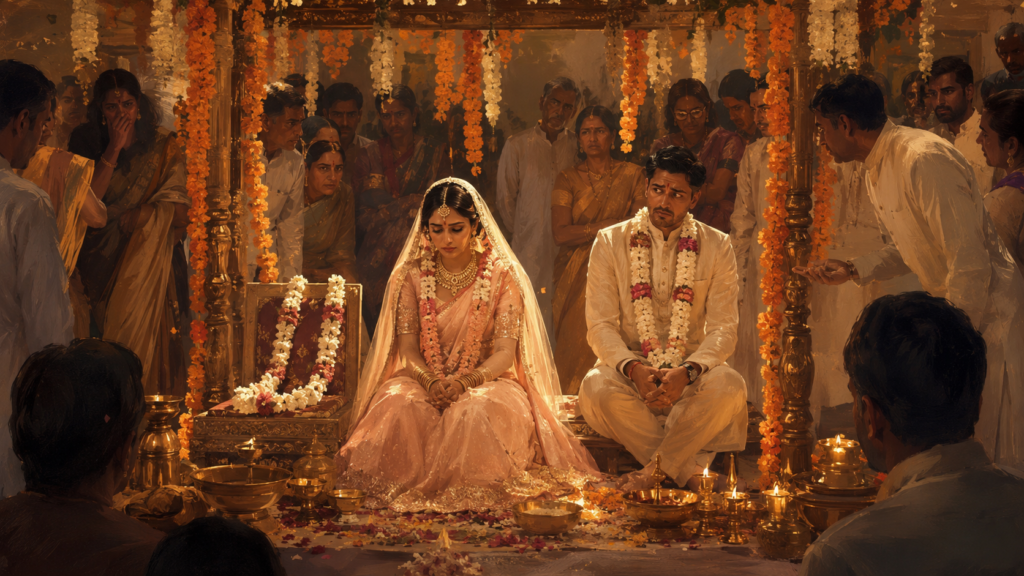
Sindhu’s family reportedly decided to find another groom among the guests, and a man named Chandrappa agreed to marry her. The wedding went ahead, just not with the groom who was originally supposed to be there.
That is not a rom-com twist. That is a social emergency being solved in real time.
And this is where the pop-culture version starts to fall apart. In a movie, we would probably be asked to cheer for the new couple. Look, love found a way! Isn’t fate quirky?
But I keep thinking about Sindhu.
Was she relieved? Pressured? Embarrassed? Numb? Did she want the wedding to continue, or did everyone around her decide that a completed marriage was better than a canceled one?
That is the part that feels important. Not the spectacle of the runaway groom, but the way a bride’s humiliation became something her family had to fix immediately, in public, with whatever option was available in the room.
Somewhere between romantic destiny and crisis management, a woman’s entire future changed before the decorations came down.

When a Medical Emergency Became a Wedding-Day Reversal
Another case, from Uttar Pradesh, India, in 2015, is even more uncomfortable.
A groom named Jugal Kishore reportedly had an epileptic seizure during the wedding ceremony and was taken to the hospital. His bride, Indira, was said to be furious that his epilepsy had not been disclosed to her family.
Then, instead of waiting for him to return, she reportedly married a wedding guest named Harpal Singh.
On one hand, withholding major health information before marriage is a serious issue, especially in a context where families are deeply involved in arranging and approving a match. Trust matters. Consent matters. Knowing the truth before making a lifelong commitment matters.
On the other hand, epilepsy is a medical condition, not a moral failure. The public rejection of someone immediately after a seizure carries its own cruelty, and it points to a much larger stigma around illness and disability.
This is not Jackson and April running toward love. This is a wedding becoming the place where fear, secrecy, anger, and stigma collide.
Kishore reportedly returned from the hospital to find that his bride had married someone else.
I can’t imagine that moment. Actually, I don’t want to imagine it for too long, because it feels too awful. One minute, you are a groom. Then you are a patient. Then you are back at the venue, and the role has been recast.
No rooftop tap-dancing required. Just emotional whiplash.

When the Bride Left With Her Lover After the Garland Ceremony
Then there are the stories that come closer to the pop-culture fantasy, at least on the surface.
In 2025, a wedding in Unnao, Uttar Pradesh, reportedly descended into chaos when the bride slipped away with her lover shortly after the varmala — the garland-exchange ceremony. She went to her room while the groom’s family prepared for the next ritual. When they came to get her, she was gone. Her father called the man she’d left with, and the bride herself got on the phone to say she wanted to marry him instead.
That is probably the closest real-life version of the runaway-wedding trope: the bride, the ceremony, the other person, the deliberate exit.
And yet even this does not feel like a clean romantic triumph.
The groom’s family reportedly returned home without her. The families argued. Police became involved.
That is the thing movies tend to skip.
They don’t show the person who was left behind sitting in a car on the way home, still dressed for a wedding that never happened.
They don’t show the relatives dividing blame.
You won’t see the bride having to defend whether her choice was love, rebellion, desperation, or all three at once.
To be clear, I am not saying someone should marry a person they do not want to marry just to avoid embarrassment. That would be its own tragedy. A wedding should not become a trap just because the invitations already went out.
But there is a difference between choosing your own life and turning that choice into a public detonation.
Sometimes the brave thing is leaving before you get to the altar.
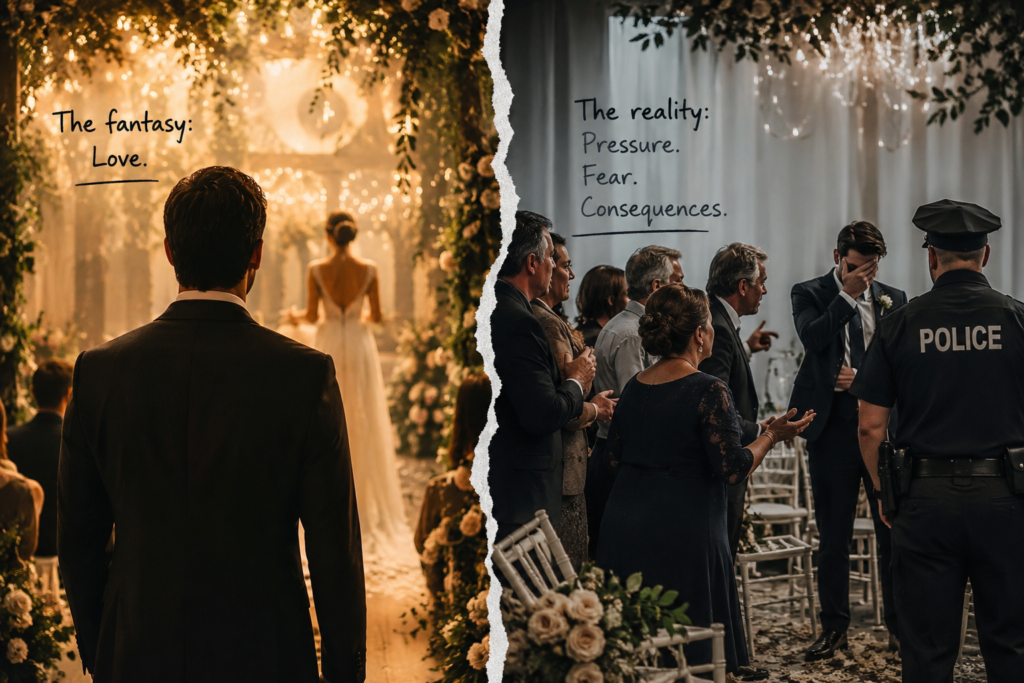
The Fantasy Is About Love. The Reality Is About Pressure.
The reason Jackson and April’s wedding interruption works is because Grey’s Anatomy gives us years of emotional context.
We know them and their history. We know the longing, the bad timing, the chemistry, the missed chances. By the time Jackson stands up, the show has trained us to believe this is not random chaos. It is destiny finally losing patience.
Real life does not come with ten seasons of backstory.
Most of the time, we get fragments. A runaway groom. A bride’s lover. A medical emergency. A family scrambling. A ceremony interrupted. A room full of people trying to figure out what just happened.
Because the details are incomplete, the fantasy rushes in to fill the gaps.
Maybe it was true love… or fear… or coercion.
Maybe it was someone making the only choice they felt they had left.
That is what makes these stories so fascinating and so uncomfortable. They sit right on the line between romance and wreckage.
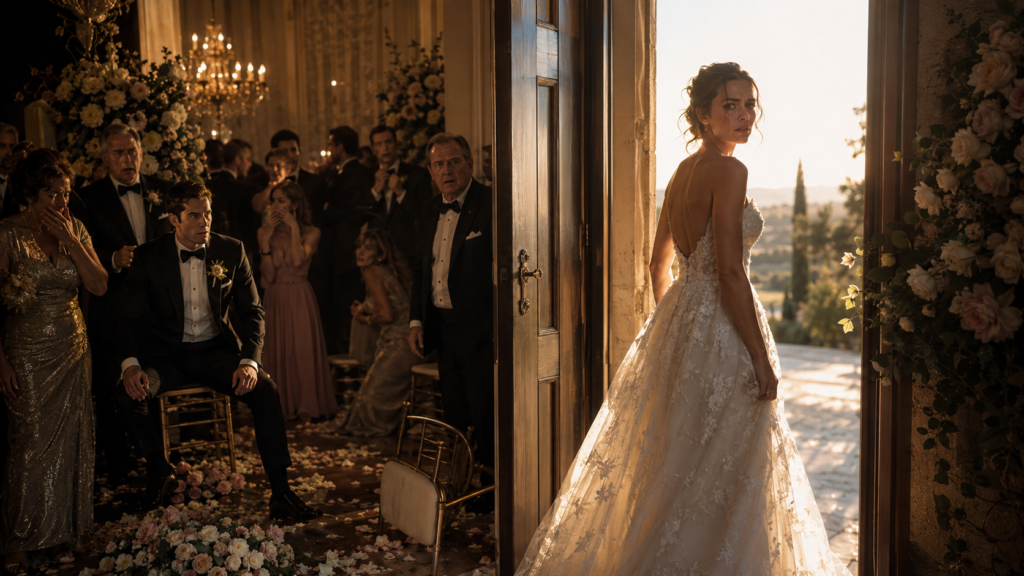
Maybe We Like These Stories Because They Let Us Believe in the Last Second
I think the runaway-wedding trope appeals to us because it suggests that it is never too late to choose the right life.
There is something undeniably powerful about that.
But real life asks a harder question: what happens when one person’s liberation becomes another person’s humiliation?
That does not mean the person should stay. It means the story is bigger than the escape.
Jackson and April can run off and become a great romantic saga because they are fictional, beautiful, and protected by writers who know exactly when to cut the scene.
Real people do not get that luxury.
They have to walk back into the room. Or leave the room… or file a police complaint… or explain to their family why the person they were supposed to marry is now married to someone from table six.
So yes, pop culture makes runaway weddings look romantic.
Real life makes them complicated.
And maybe that is the story hiding underneath all the drama: love may be worth choosing, but the way we choose it still matters.
sources: