
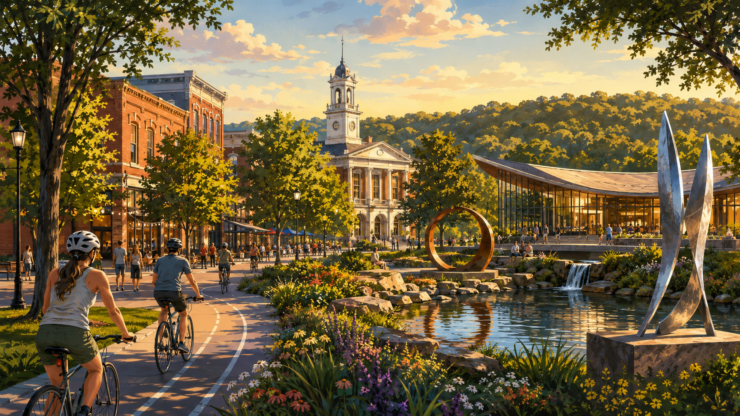
Arkansas is one of the poorest states in the country. But Bentonville has a world-class art museum, mountain bike trails, and expensive mansions. Would you live in a town built by Walmart?
Bentonville is where Walmart was born, and where its headquarters still sits. That alone wouldn’t make it interesting — plenty of towns have a big employer. What makes Bentonville strange is what’s happened around that headquarters over the last two decades. The Walton family has poured billions into the region, and the town has responded by becoming less like small-town Arkansas and more like a boutique city that was picked up and dropped into the Ozarks. A recent video from the creators at Morning Brew even framed the trip as a week spent inside “Walmart’s socialist utopia” — a hyper-capitalist company building a town that runs on free public amenities. It’s a good hook, and also kind of the whole story.
The numbers back up the vibe. Bentonville is currently building a new 350-acre corporate campus. And the city has more cranes going up per capita than just about anywhere else in the country. Local officials expect the population to roughly triple by 2050.
:max_bytes(150000):strip_icc()/27352_Bentonville_356w_preview-c7a80d2f46a4490e96583742deb0e737.jpg)
What Walton Money Actually Buys You
Start with Crystal Bridges Museum of American Art, founded by Alice Walton. It’s free to enter, houses serious American art, and would be a genuine destination museum in a city ten times Bentonville’s size.
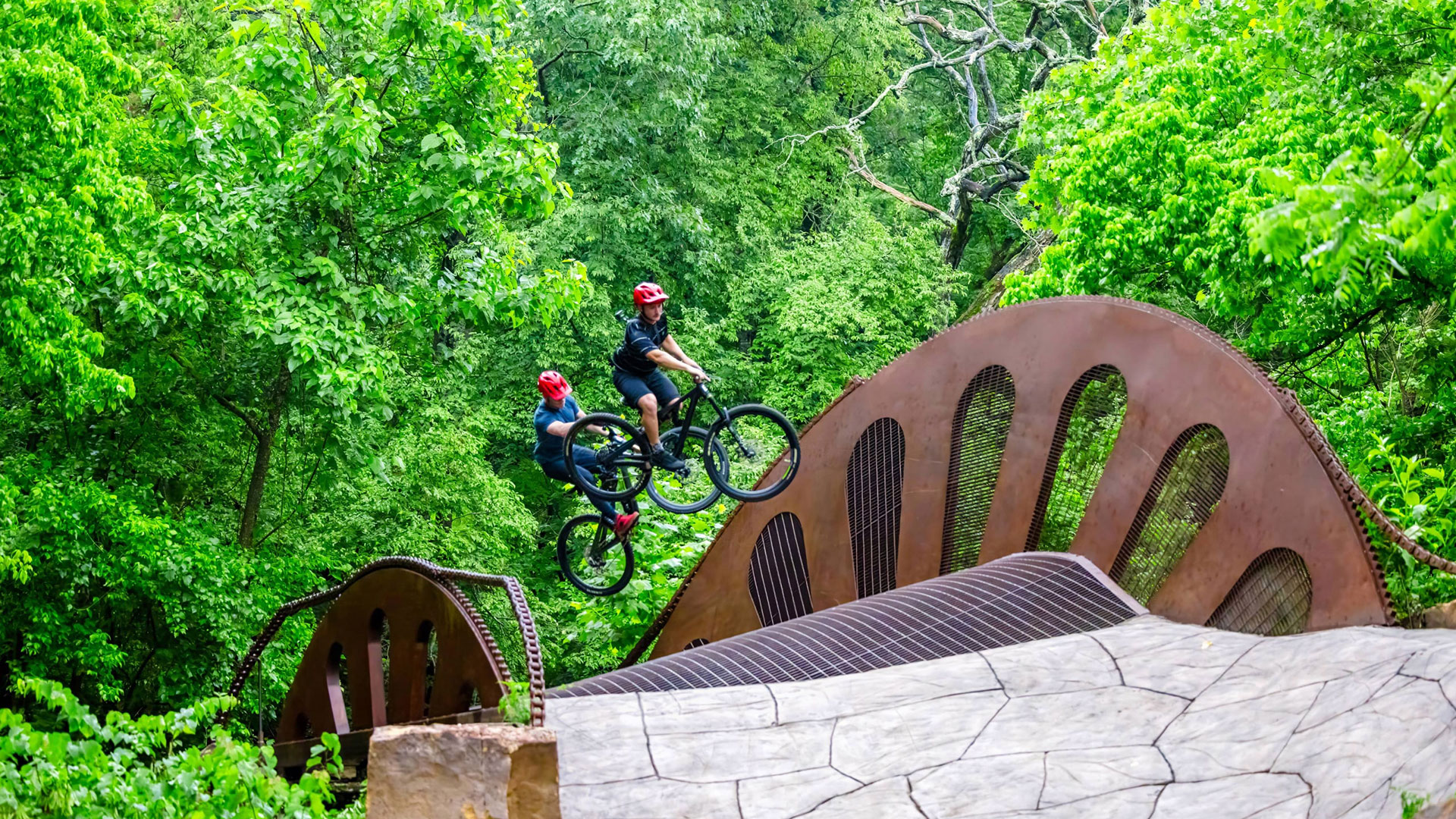
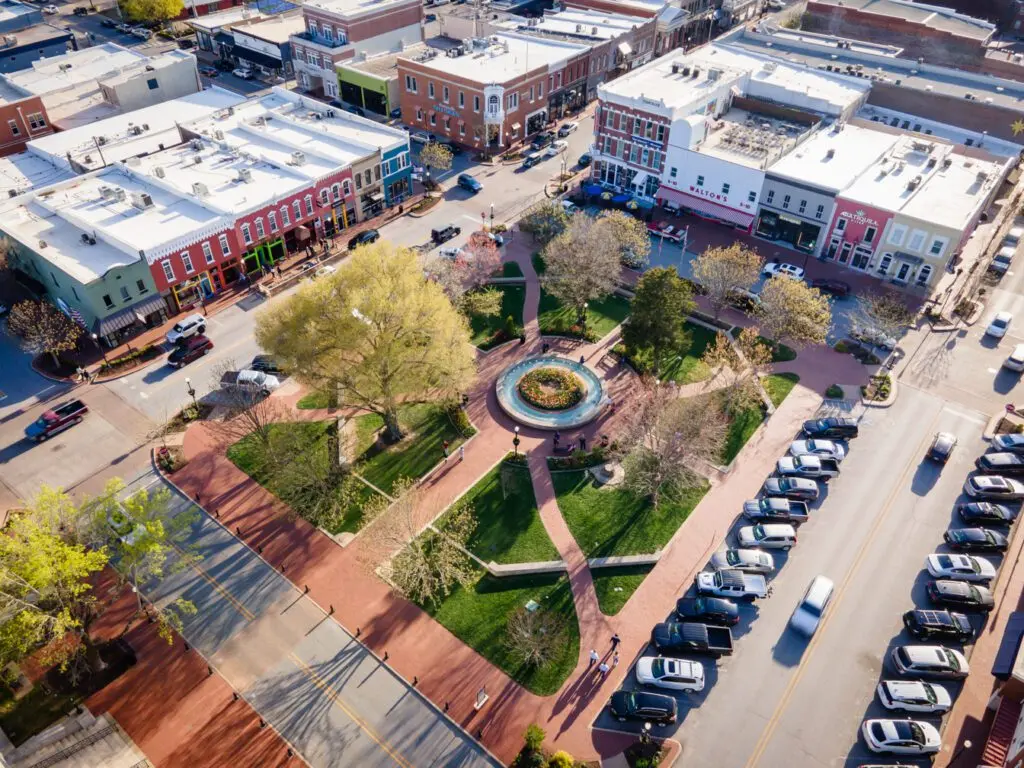
Then there’s the trail system. Hundreds of miles of mountain biking routes woven through and around town. As a result, Bentonville has built a real reputation in the biking world. Add in a walkable downtown, good coffee shops and restaurants, and schools that outperform what you’d expect for the region.
It’s easy to see why young professionals have been moving in. You’ve got museum-quality art, a serious outdoor scene, and a downtown that feels curated — because it was.
The Fine Print
Here’s where it gets more complicated. Critics have described the Walton Family Foundation as functioning almost like a second layer of local government. One that quietly shapes what gets built, funded, and prioritized across the region. The foundation has also been tied to political pushes, including backing the campaign to legalize alcohol sales in the county and helping secure the infrastructure financing that made much of the town’s recent growth possible.
Some commentators have landed on the phrase “benevolent paternalism” to describe the arrangement: a company famous for its low prices and famously thin retail wages, choosing to build an unusually generous public realm around its own front door. It’s not hard to see the self-interest — a town with a great museum, great schools, and a great trail system is a much easier sell when you’re trying to recruit corporate talent to rural Arkansas. Fortune has also reported a quieter backlash brewing among some longtime locals, who are openly skeptical about what the Waltons actually want out of all this generosity.
Would You Actually Live There?
This is the part that’s genuinely hard to land on a clean opinion about. Bentonville isn’t a company town in the grim, old-fashioned sense — nobody’s being paid in scrip, and you’re not required to shop anywhere in particular. But it is a place where an enormous amount of what makes daily life pleasant was built, deliberately, by one family with an obvious business interest in the outcome. That’s a different kind of company town than the history books usually describe.
If someone handed you a free museum, a world-class trail system, and a walkable downtown, would it matter to you who was writing the checks — and why? Bentonville is betting the answer is no. A growing number of people moving there seem to agree.
Sources: Morning Brew, Jacobin, Fortune, CNBC