
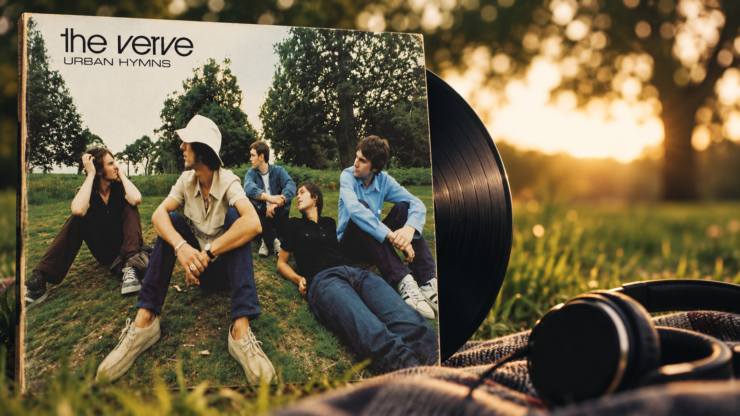
“Sonnet” may not be The Verve’s most famous song, but nearly 30 years later, it might be one of their most enduring. Here’s the story behind the Urban Hymns favorite that barely made it as a single.
There should probably be a name for when you hear a song you haven’t thought about in years and suddenly need to listen to it 47 times in a row.
Whatever that is, The Verve’s “Sonnet” has done it to me.
I heard the song again the other day, for the first time in what felt like forever, and something happened. Not in a dramatic, stare-out-the-window-while-it-rains kind of way. Although, to be fair, “Sonnet” would be excellent for that.
I just immediately needed to hear it again.
The Song I Somehow Forgot
“Sonnet” is one of those songs I knew without realizing how well I knew it.
That opening guitar, Ashcroft’s voice, the strings that slowly work their way in. The whole song is melancholy without ever going full-on miserable.
And then there’s that chorus.
There’s love if you want it.
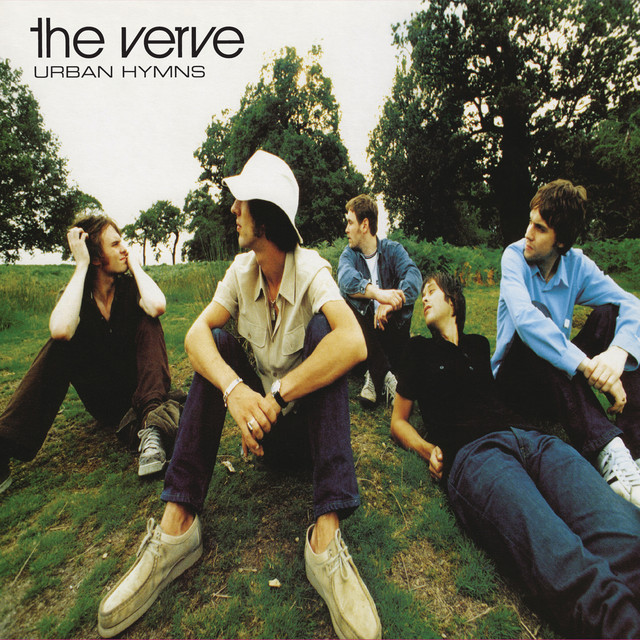
“Sonnet” appeared on The Verve’s 1997 album Urban Hymns, tucked right behind “Bitter Sweet Symphony,” an almost comically difficult song to follow. But where “Bitter Sweet Symphony” announces itself with those instantly recognizable strings, “Sonnet” sneaks up on you.
It doesn’t demand your attention.
It just quietly wrecks you.
The Verve Were Having Quite a Moment
The Verve formed in Wigan, England, with Richard Ashcroft on vocals, guitarist Nick McCabe, bassist Simon Jones, and drummer Peter Salisbury. Their early music was much more psychedelic and sprawling than the songs that would eventually make them famous, and the band had already released A Storm in Heaven and A Northern Soul before Urban Hymns turned them into one of the defining British bands of the late 1990s.
They were also spectacularly good at breaking up.
The band split after A Northern Soul, regrouped, became enormously successful, and then split again in 1999. Another reunion eventually produced Forth in 2008 before they went their separate ways yet again.
And somehow, amid all that turmoil, they made Urban Hymns.
The album gave us “Bitter Sweet Symphony,” “The Drugs Don’t Work,” “Lucky Man,” and “Sonnet,” which is a frankly obnoxious number of great songs for one album.
“Sonnet” Almost Wasn’t a Proper Single
Here’s where the history gets a little funny.
By early 1998, The Verve had already released several singles from Urban Hymns, and their label wanted another one. The band apparently felt they’d squeezed enough singles out of the album already and weren’t interested.
The label wanted “Sonnet.”
The Verve eventually agreed, but with a catch.
“Sonnet” was released in the UK on March 2, 1998, as a limited-edition 12-inch record, with only 5,000 copies pressed. The unusual release was deliberately structured so it wouldn’t qualify for the official singles chart. Imported copies spoiled that plan just enough for the song to sneak onto the UK chart at No. 74 anyway.
The record label essentially said, “We think people want another single.” The band said, “Fine, but we’re going to make it extremely difficult for them to buy.”
Music industry problem-solving, 1998 edition.
Richard Ashcroft wrote “Sonnet,” and the song was already in his repertoire before Urban Hymns fully became a Verve project. Producer Youth later recalled that when Nick McCabe returned during the album sessions, he recorded his guitar parts for both “Sonnet” and “The Drugs Don’t Work” in first takes.
The song also contains a tantalizingly real detail. Ashcroft has confirmed that the “red box of memories” mentioned at the beginning actually existed. When an interviewer tried to get him to explain what was inside it and who the friend in the song was, Ashcroft declined, joking that the mystery had to stop there.
Why Does It Still Work So Well?
I think part of what grabbed me this time is how little “Sonnet” seems interested in showing off.
This is a song from the height of Britpop, on an album containing one of the most recognizable orchestral rock songs ever recorded, and yet “Sonnet” feels almost intimate.
The arrangement keeps growing around Ashcroft, but the emotion never gets swallowed by it. Acoustic and electric guitars sit alongside the strings, and everything gradually swells without turning the song into some giant power ballad.
Ashcroft once described the chorus of “Sonnet” as essentially gospel music. Not because he deliberately set out to write gospel, but because of how it feels.
Once you hear that, it makes complete sense.
There’s repetition to it, and something almost devotional in that.
And there’s that idea at the center of the song that I apparently needed to hear again all these years later: love doesn’t necessarily arrive in some perfectly constructed, Shakespeare-approved form.
You May Have Heard “Sonnet” More Recently Than You Think
Part of the reason “Sonnet” feels both deeply tied to the 1990s and strangely current is that it has kept resurfacing.
It appeared in a 1999 episode of Daria, “Through a Lens Darkly,” playing after Daria wakes from a nightmare. That episode’s soundtrack also included New Radicals, Semisonic, Lauryn Hill, Rob Zombie, and Rammstein, which may be the most beautifully 1999 collection of artists imaginable.
It returned in 2015 in the My Mad Fat Diary episode “Rewind.”
Then in 2020 alone, it did double duty. A cover of “Sonnet” by the indie band Faces on Film opens the sixth episode of Ted Lasso’s first season, “Two Aces,” as Ted (Jason Sudeikis) removes his wedding ring for the first time.
The original plays over the closing scene of C.B. Strike (the adaptation of the Cormoran Strike novels) in the fourth episode of “Lethal White,” as Robin (Holliday Grainger) walks down the street.
More recently, “Sonnet” appeared in Episode 10 of Netflix’s One Day, the episode set in 1997. The song accompanies Dexter (Leo Woodall) and Emma (Ambika Mod) during a particularly complicated point in their relationship, and I’m not sure you could engineer a song more specifically for them.
Its appearance helped introduce The Verve track to another generation of listeners, something Universal specifically noted when announcing a 2024 anniversary edition of the band’s singles collection.
Then came the 2024 John Lewis Christmas advert, The Gifting Hour.
The ad follows a woman searching for a meaningful gift for her sister and slipping into memories of their life together. It uses Ashcroft’s later acoustic recording of “Sonnet,” originally recorded for his 2021 album Acoustic Hymns Vol. 1.
Some Songs Just Need To Be Found Again
The weird thing about rediscovering music is that the song hasn’t changed. You have.
“Sonnet” sounds essentially the same as it did when Urban Hymns came out in 1997. The guitars are still there. The strings still swell in the same places.
But I’m hearing it differently now.
Certain songs just go quiet for a while. Then something reminds you they’re still there.
I’m so glad I stumbled across “Sonnet” again.
Sources: Wikipedia, Wikipedia, Songfacts, Rolling Stone, Music Week, Universal Music, WhatSong, NME, Tunefind, ITV News, Last.fm


![Rockin’1000 Honor Taylor Hawkins: My Hero [Tribute]](https://cdn-p.smehost.net/sites/2ed48fdcc3904f548299cd86d78e9885/wp-content/uploads/2022/05/Rockin1000-Taylor-Hawkins.jpg "Rockin’1000 Honor Taylor Hawkins: My Hero [Tribute]")
