
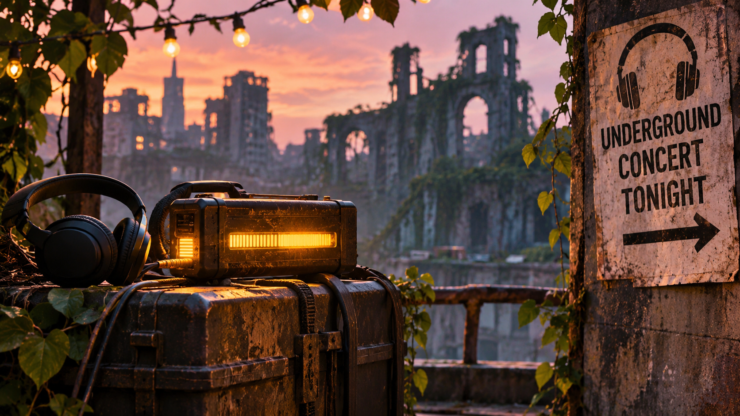
Civilization has collapsed, electricity is currency, and the underground music scene is thriving. Ply had all the ingredients for a fascinating future, but somewhere between stealing power and unraveling reality, it lost its spark.
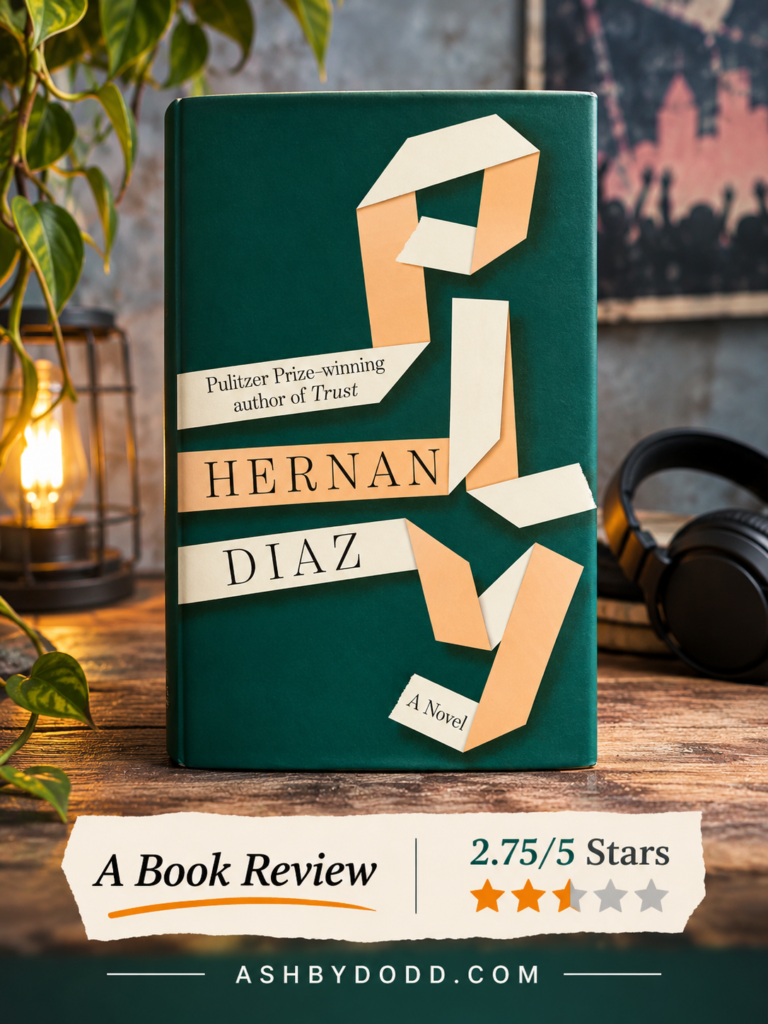
Rating: 2.75 out of 5 stars
Apparently, even after civilization collapses, people still need live music.
That was what sold me on Ply by Hernan Diaz. Governments gone, electricity as currency, and people stealing power from the grid to keep underground concerts running? Sign me up.
Somewhere between the black-market batteries and the lectures on the nature of reality, though, the book lost me. I really wanted to love it, so that was frustrating.

The Future Is Dark, but the Band Is Still Playing
Ply is set several hundred years from now, in a city where the government has dissolved, and private companies control the electricity and the security. Our unnamed narrator is a “pincher.” She taps into the grid, charges portable batteries called bricks, and trades them on the black market or uses them to power concerts.
The concerts were my favorite part. Resources are scarce, survival is a full-time job, and people still show up to hear music. I wanted so much more of that. More of the underground scene and more of the odd little economies that grow up when regular society disappears.
Instead, the story heads toward a scientific experiment that could rewrite reality.
Big Ideas, Bigger Explanations
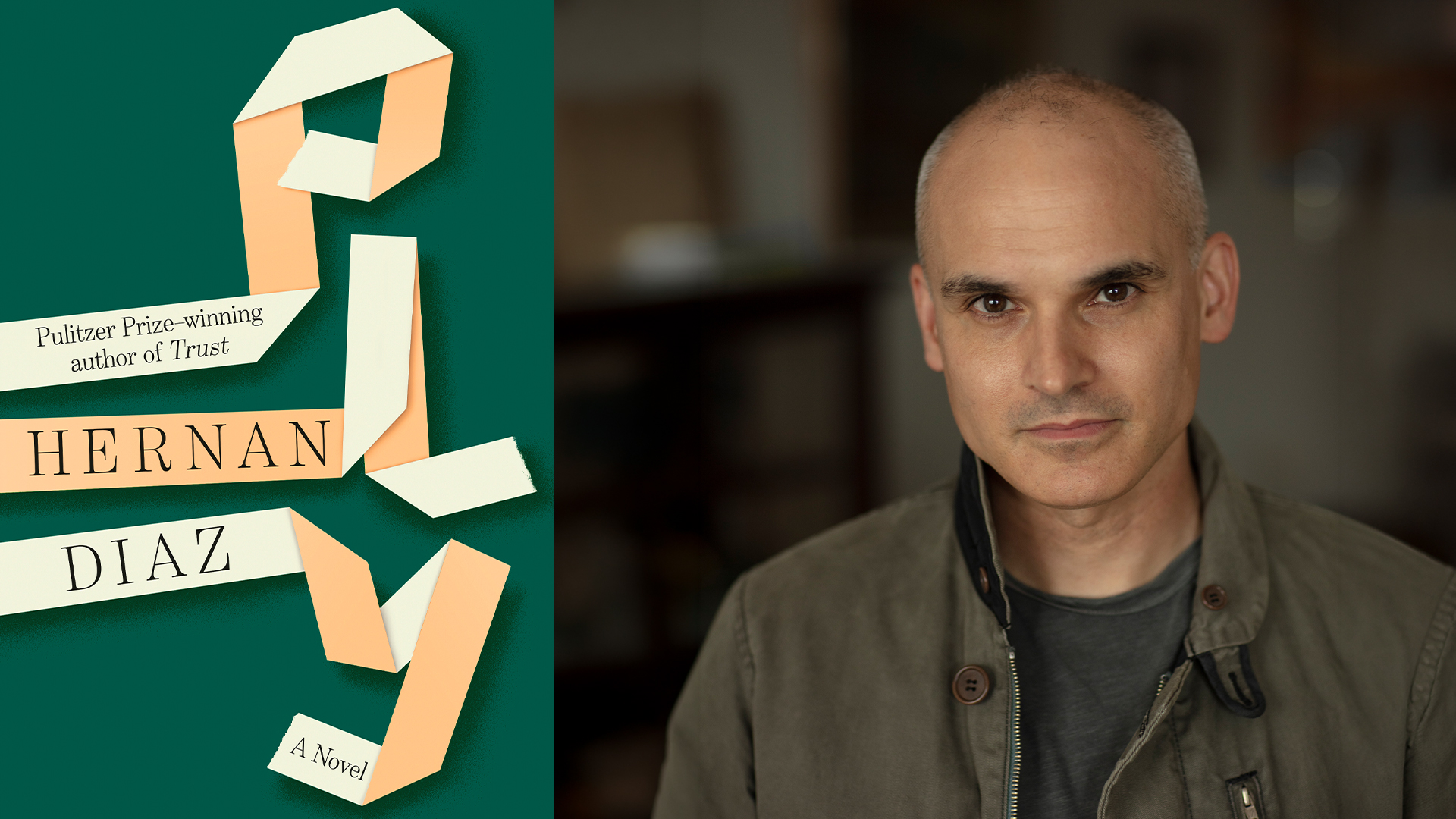
In the second half, the pincher gets recruited by Pola, a scientist who wants to manipulate space-time. From there, the book becomes about quantum physics, identity, and whether we’re as separate from each other as we think. Where does one person end and another begin? If our identities are tangled together, what does individuality even mean?
Those are good questions. I just didn’t find the journey as interesting as the questions.
There are long stretches of scientific and philosophical explanation, and they slowed everything down for me. I could admire the thinking, but I also wanted someone to do anything other than explain another theory.
The pincher also seemed to know a lot about how civilization collapsed, for someone who grew up just trying to survive the aftermath. I believed her stealing electricity and getting out of dangerous situations. I had a harder time believing her when she gave what felt like a graduate-level lecture on the failures of the modern world.
A few times I stopped hearing the character and started hearing the author.
Who Gets to Decide?
The ethics interested me more than the science. Pola’s experiment needs an enormous amount of electricity, and getting it means draining the power from a city where people are already struggling.
Who gave these two the authority to gamble with something everyone else depends on? And who decides what a better future should look like in the first place?
I wanted the book to spend more time there. As the story moves toward merged identities and the nature of reality, the immediate moral consequences get pushed aside. Maybe that’s the point. Maybe Diaz wants us to question the idea that we’re separate people making decisions that affect other separate people.
Still, I kept thinking about the people who just wanted their lights to work. It’s hard to get excited about rewriting reality when you’re wondering who’s left without power in the meantime.
A Book About Connection That Kept Me at a Distance
This book is about human connection. It looks at how other people shape us and whether the lines between individuals are as solid as we believe. And I struggled to connect with the characters.
I understood the pincher’s situation, and I appreciated how resourceful she is. I liked the people who helped raise her and the makeshift families she finds along the way. I just never felt as invested in her as I wanted to. That’s an awkward problem for a book this interested in connection.
Credit where it’s due, though. Diaz’s writing can be beautiful, and I admire the ambition.
Final Thoughts
My rating is a little complicated. I really wanted to like Ply. The premise was right up my alley, and the writing kept me going. But getting through it felt like work, and without that premise and that prose, I think my rating would have been lower.
That doesn’t make it a bad book. If you like ambitious, philosophical sci-fi that cares more about ideas than plot, you’ll probably get more out of it than I did. I wanted more time with the people building a life in this strange new world and less with the machinery that might transform it.
Thank you to NetGalley and Riverhead Books for the advanced reader’s copy. All opinions are my own.


