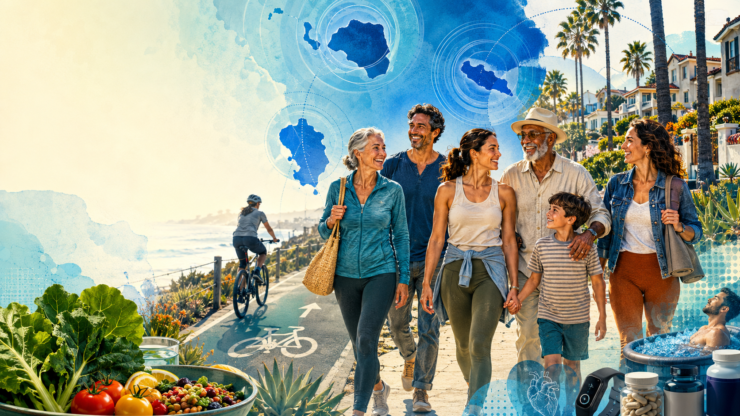
Move naturally, eat plants, know your neighbors — that’s basically the whole Blue Zone pitch. Turns out some communities are paying six figures a year for common sense.
I’ve apparently reached the stage of adulthood where longevity is marketable: supplements, cold plunges, biohacking, and morning routines that require getting up three hours earlier. Everyone’s got a secret for living longer.
Which is probably why the idea of a Blue Zone is so appealing. What if the secret isn’t something you have to buy, swallow, or endure while shivering in an ice bath? What if it’s just… how you live?
So What Exactly Is a Blue Zone?
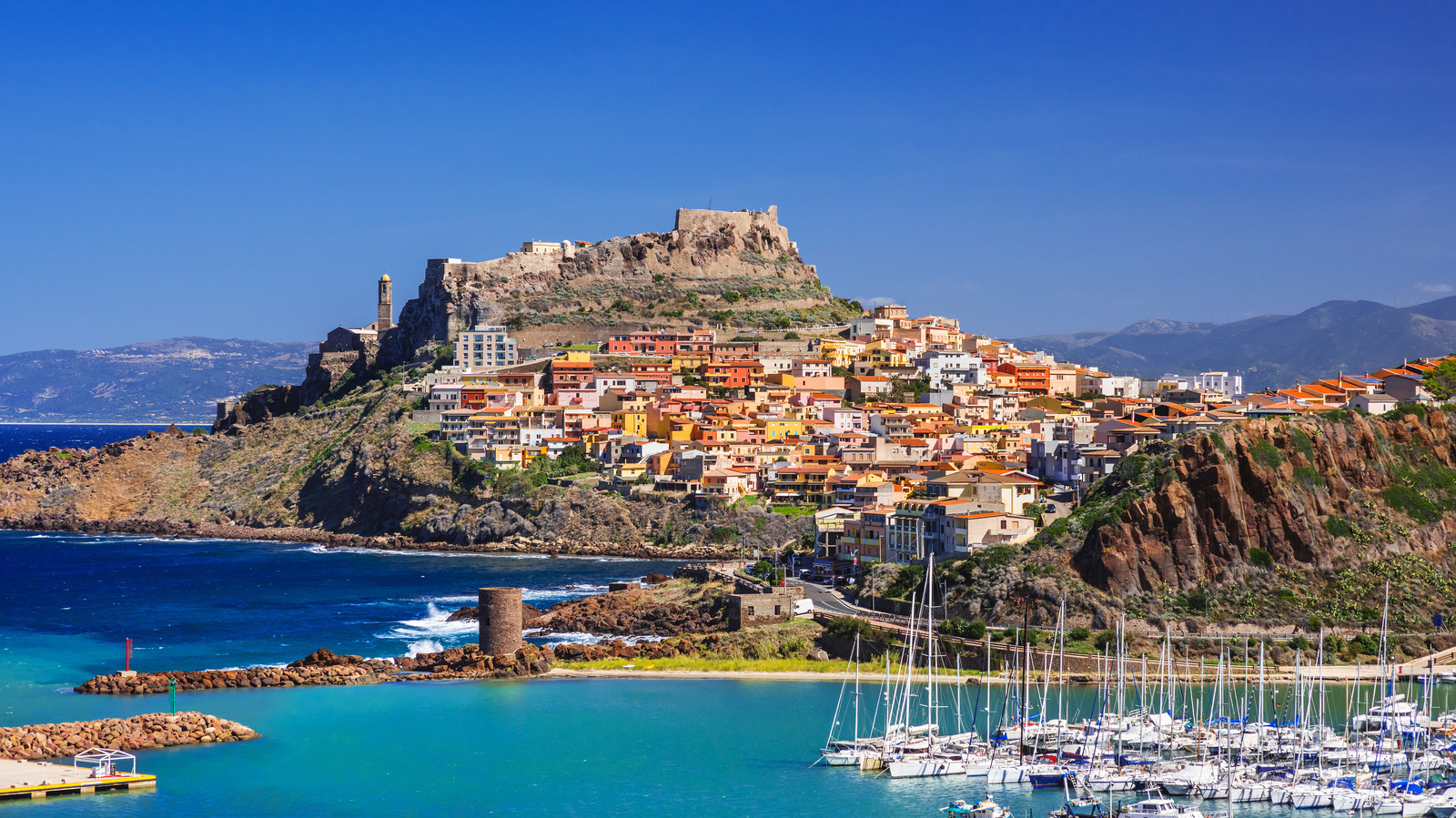
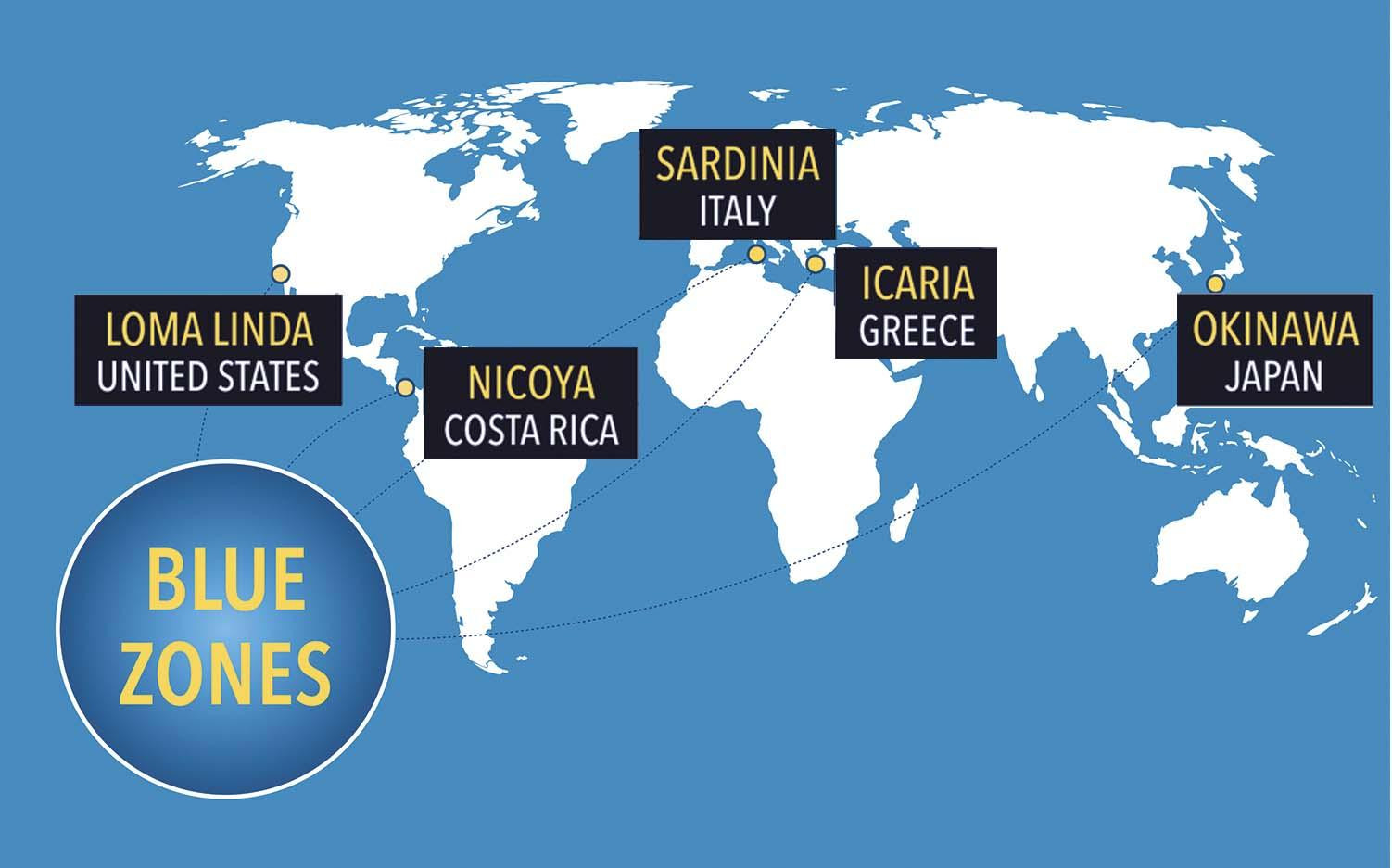
The term traces back to researchers Gianni Pes and Michel Poulain, who identified Sardinia as having an unusually high concentration of male centenarians and literally circled the region on a map in blue ink. Explorer Dan Buettner later expanded the idea to include four more longevity hotspots around the world, and the nine principles known as the Power 9: move naturally, eat wisely, reduce stress, stop eating before you’re full, build real relationships, have a sense of purpose. None of it is exactly shocking.
But there’s a difference between knowing what’s healthy and actually living somewhere that makes healthy choices easy. That’s where Blue Zones gets more interesting.
What If You Could Build One?
At some point, the question was asked: “can we replicate [Blue Zones] somewhere else?” In 2009, Albert Lea, Minnesota, became the first Blue Zones pilot project, and since then more than 70 communities across North America have signed on.
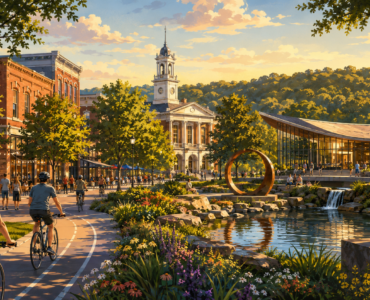
Instead of telling individuals to exercise more or eat better, the programs try to change the environment around them: bike lanes, healthier school lunches, smoking restrictions, restaurant menu changes, neighborhood walking groups. That part makes sense to me. We love handing people wellness advice as though everyone makes decisions in a vacuum — just walk more, except when there’s nowhere safe to walk; eat healthier, except when the cheapest food around isn’t affordable; just spend more time with friends, except here’s nowhere nearby to see them. Treating wellness as a community problem feels like a genuinely different approach.

The Results, and the Price Tag
The Beach Cities project in Southern California is the case study everyone points to. Redondo Beach schools saw a 68 percent drop in childhood obesity between 2007 and 2019, and the three Beach Cities together saw smoking decline 36 percent between 2010 and 2017. Restaurants changed their menus, walking infrastructure expanded, and community participation grew.
There’s a catch: none of it is free. The Beach Cities’ initial contract with the program ran about $1.8 million, and the local health district later moved to a licensing deal that costs roughly $110,000 a year to keep using the Blue Zones name. Other places have spent far more — in Iowa, insurer Wellmark committed $25 million over five years to bring the project to fifteen cities, and when that funding ran out, most of them lost their certification.
There’s something strange about paying six figures a year to brand a community around walking, vegetables, friendship, and not smoking. Implementation costs money, sure — consultants, programs, and bike lanes don’t build themselves. But once healthier living becomes a licensed product, it seems fair to ask exactly what you’re paying for.

Are Blue Zones Actually Making People Live Longer?
That part is less clear. A lot of the Power 9 amounts to health-promotion basics, and independent evidence that certification itself reduces chronic disease or extends life expectancy remains thin. Public health researchers who’ve looked closely at individual Blue Zones projects have raised similar concerns, and some of the most-cited results rely on self-reported surveys rather than outside verification.
Longevity was never going to fit into nine bullet points anyway. Genetics, health care access, wealth, geography, and the kind of work you do all factor in heavily. The richest Americans live 10 to 15 years longer than the poorest, and people in countries with strong universal health care systems live roughly four years longer on average than Americans do. Eating more plants and taking a walk starts to look like one useful piece of a much bigger puzzle, not the whole picture.
Maybe America Is the Opposite of a Blue Zone
This is the part I can’t stop thinking about. Maybe Blue Zones fascinate us because so much of American life is built in the opposite direction — most communities aren’t walkable, ultra-processed food dominates the average diet, and loneliness got serious enough that the U.S. Surgeon General declared it a public health epidemic in 2023. And then we turn around and tell individuals to exercise more, eat better, manage stress, and make friends.
Maybe the real lesson of Blue Zones isn’t that Sardinia or Okinawa stumbled onto some hidden formula. It’s that healthy behavior gets a lot easier when your environment is quietly on your side instead of working against you.