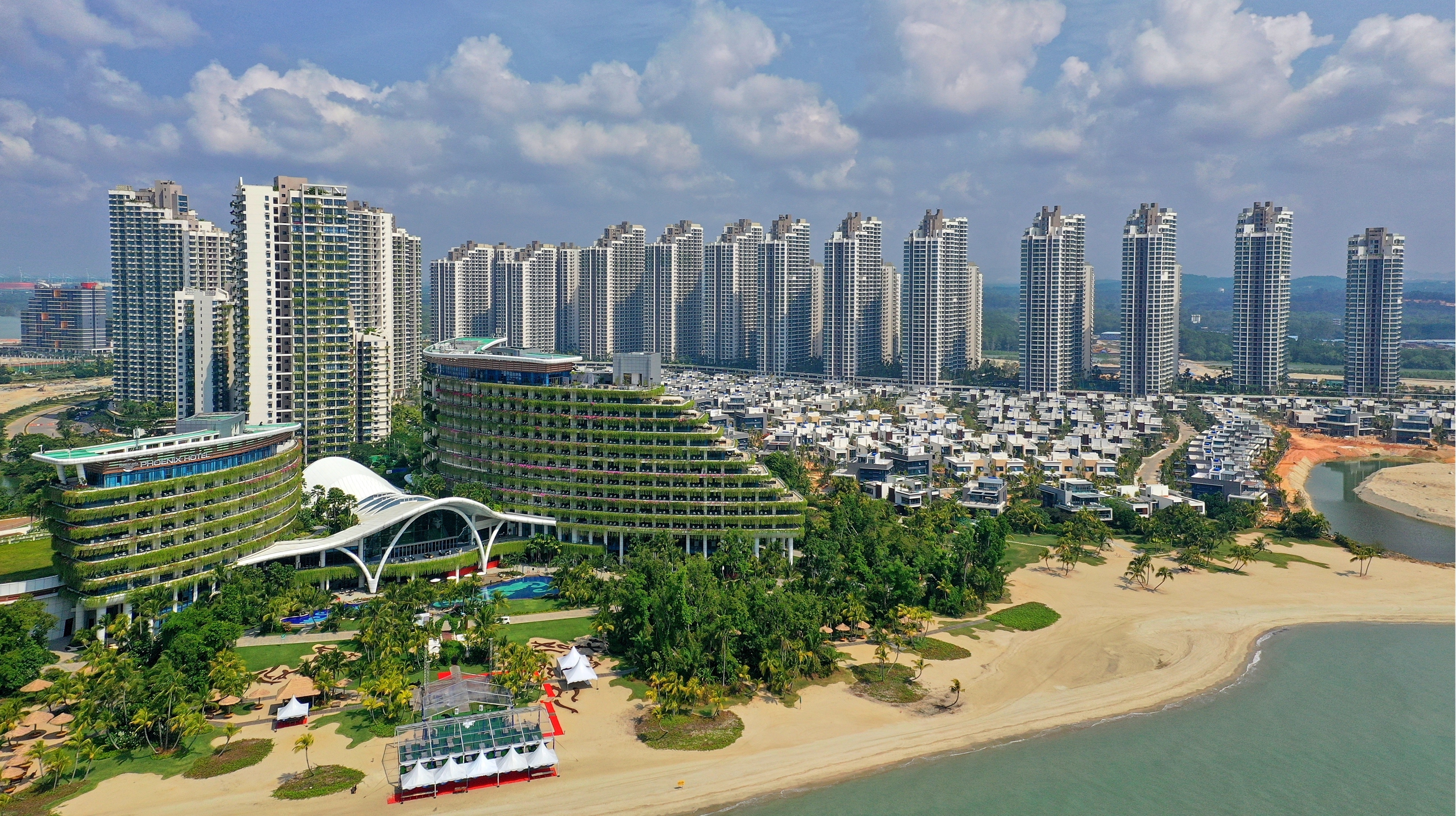
Malaysia built a city for 700,000 people. A fraction of that showed up. Then a crypto founder decided the empty half was the perfect place to test-run a new kind of country.
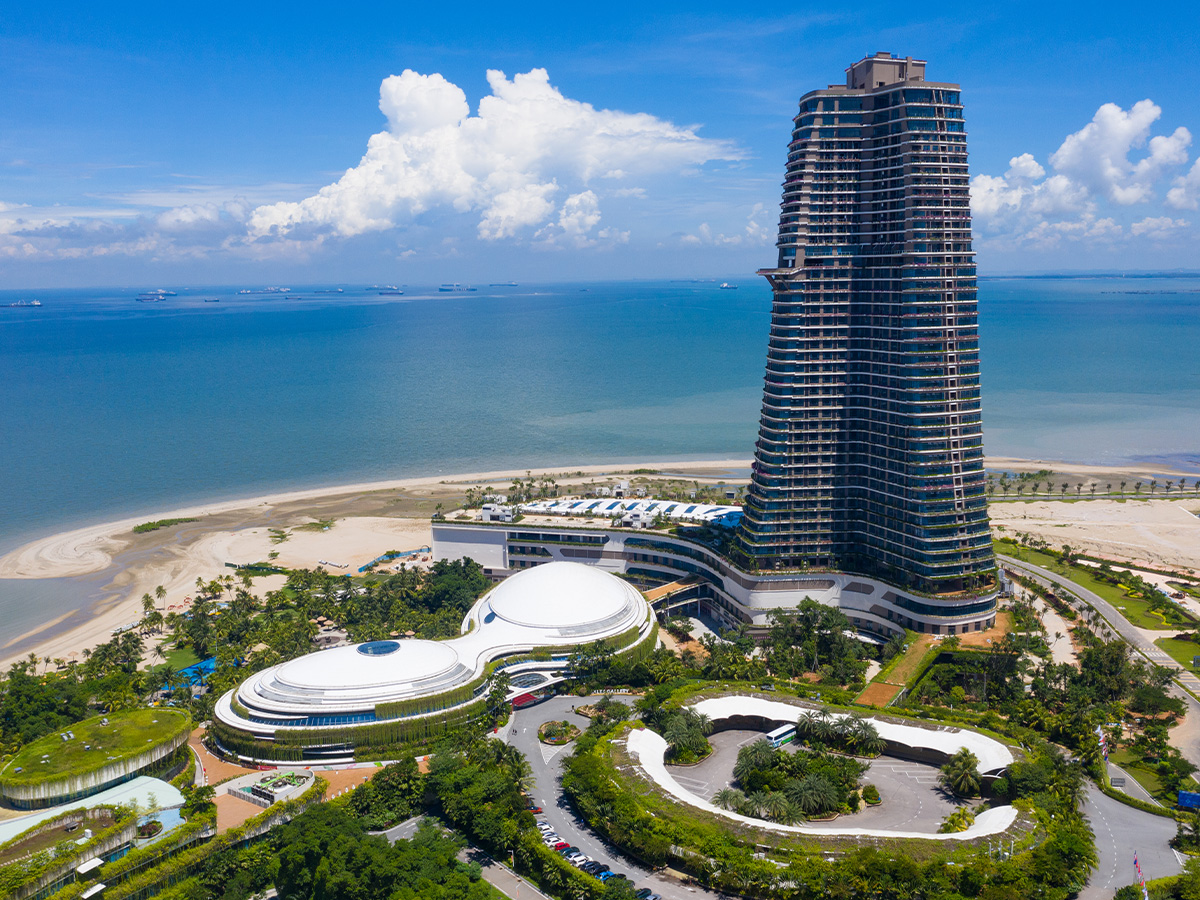
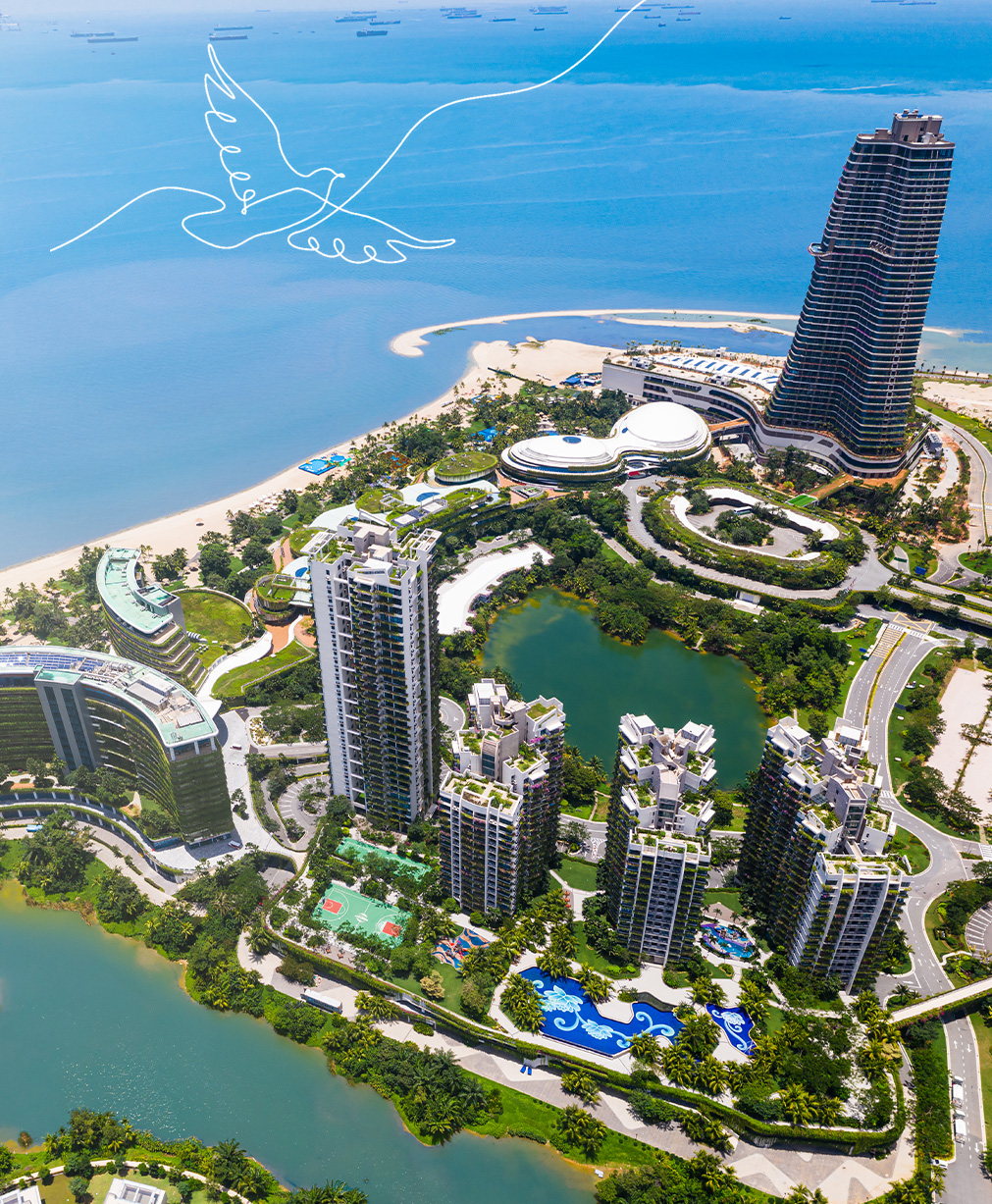
Forest City sits on four artificial islands off Malaysia’s southern tip, a short drive from Singapore. It was supposed to be one of the biggest urban developments in the world — $100 billion, four islands, room for 700,000 people by 2035.
Instead, it became one of the most famous ghost cities. And in 2024, a former Coinbase executive looked at all that empty, fully built infrastructure and decided it was exactly what he needed.
The City That Was Supposed to Fill Up
Forest City is a joint venture between Chinese developer Country Garden and Esplanade Danga 88, a company backed by the Johor state government. Construction started in 2014 on land reclaimed from the Strait of Johor.
The timing proved brutal. China tightened controls on money leaving the country in 2017, cutting off the Chinese buyers. Then-Prime Minister Mahathir Mohamad said in 2018 that Malaysia wouldn’t be issuing visas to foreign buyers who assumed a Forest City apartment came with residency. COVID closed borders next. And then Country Garden’s own finances collapsed under a debt crisis that’s since become a symbol of China’s property downturn.
People do live there. The golf courses are maintained, the landscaping is kept up, and Malaysia has spent the last few years trying to rebrand the place as a “Special Financial Zone.” But most counts still put the population at a small fraction of the 700,000 originally planned.

Enter the Crypto Founder
In 2024, entrepreneur Balaji Srinivasan — a former Coinbase CTO and Andreessen Horowitz partner — launched something called Network School. His pitch, laid out in a book called The Network State, is that communities don’t have to start with land. They can form online first and acquire territory later.
Network School was the physical test of that idea. Its first cohort, roughly 150 people, arrived in Forest City in September 2024 for a residential program built around coding, crypto, and AI. By 2026, it had grown into a paid community. Reports note somewhere between $1,000 and $2,000 a month for housing, meals, gym access, and workspace. Exactly the kind of built-but-empty infrastructure Forest City had sitting around.
Then the Government Showed Up
In July 2026, the arrangement fell apart. Social media accounts alleged that Israeli nationals were living at Network School on other countries’ passports — notable because Malaysia doesn’t have diplomatic relations with Israel. Immigration officials inspected 266 residents from 40 countries and found their documents in order.
A separate inspection turned up something else: licensing violations. One Network School site reportedly operated without a business license; another was approved only for office use but hosted classes and business events. The Iskandar Puteri City Council revoked the operator’s license and ordered all activities to stop, effective July 22, 2026.
Srinivasan had also floated a roughly RM500 million expansion in Malaysia. He put it on hold. A few days later, he announced Network School’s next campus: Kazakhstan.
So the project built to prove a community doesn’t need a country ended up needing one rather badly. It’s just not this one anymore.
So What Happens to Forest City Now?
Network School was a two-year answer to a much older question: what do you do with a city nobody moved into?
Malaysia’s current answer is a tax break. In 2024, Forest City became the country’s first Special Financial Zone, offering 0% tax for family offices, a 15% rate for skilled foreign workers, and similar incentives for fintech and banking companies. It’s also folded into the new Johor-Singapore Special Economic Zone, a much bigger bet on tying Johor’s land and labor to Singapore’s money. Six family offices have signed on so far, managing a combined RM400 million, with the government targeting RM2 billion by the end of the year.
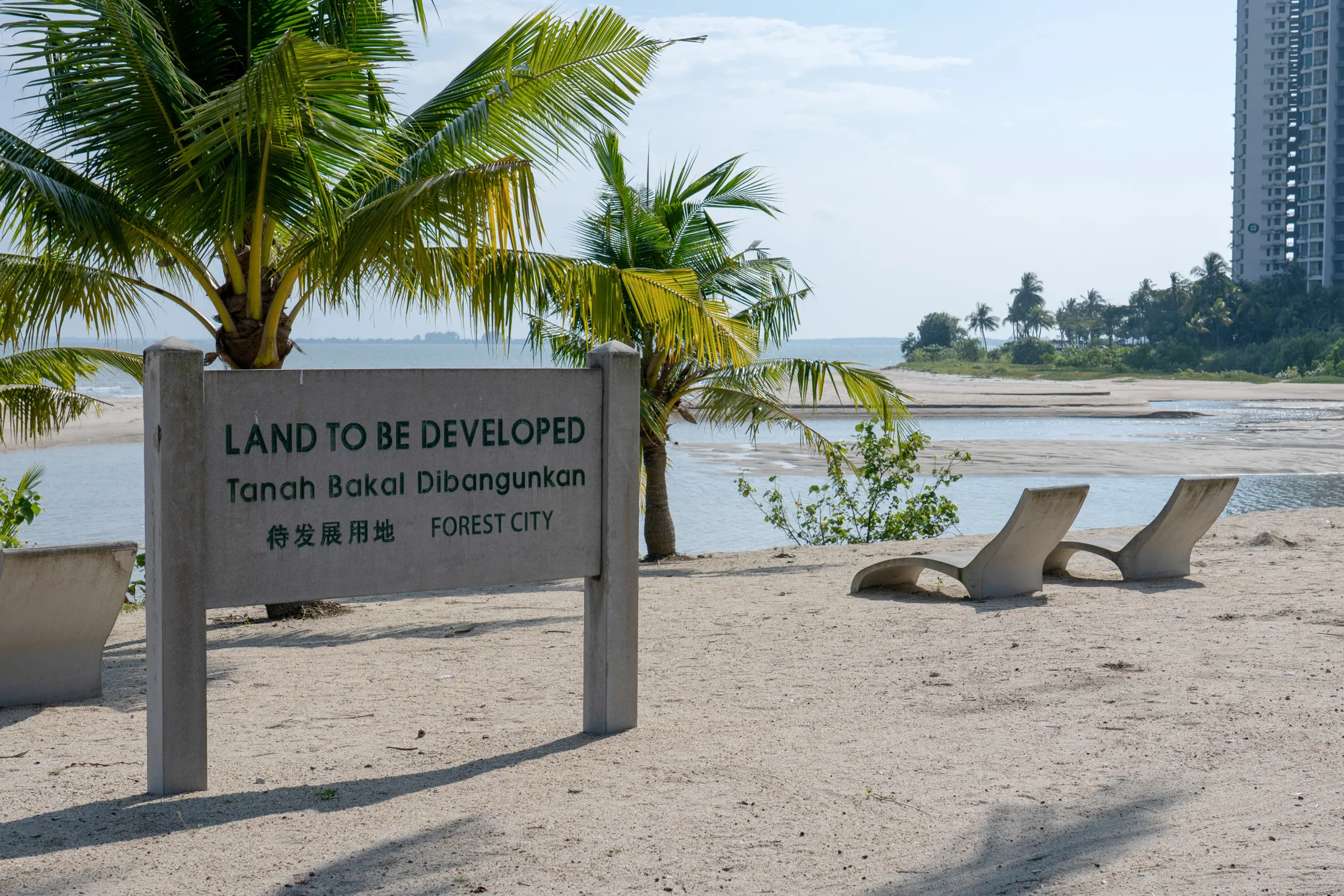
That’s real progress, on paper. It’s also still a small fraction of a city built for 700,000 people, an hour from Singapore, with no train line and no real neighborhood around it yet. Depending on who’s counting and how, occupancy across the completed towers ranges from a few percent to maybe a third. Nowhere close to what the original renderings promised.
The buildings aren’t going anywhere. What’s still unclear is who will fill them.
Get a first-hand look at Forest City in 2025 from Yes Theory:
Sources: CNA, Wikipedia, The Network State, WIRED, The Block, Malay Mail, CNA, Fortune, Nazmi Zaini Chambers, Hubbis, PropCashflow
Image: Dlubal

![Boxer Van Transformed Into a Mobile Office [Van Life]](https://web.archive.org/web/20221104143528im_/https://www.yankodesign.com/images/design_news/2022/03/369275/01_nomadicoffice_atelierjmca_mobilehome.jpg "Boxer Van Transformed Into a Mobile Office [Van Life]")