
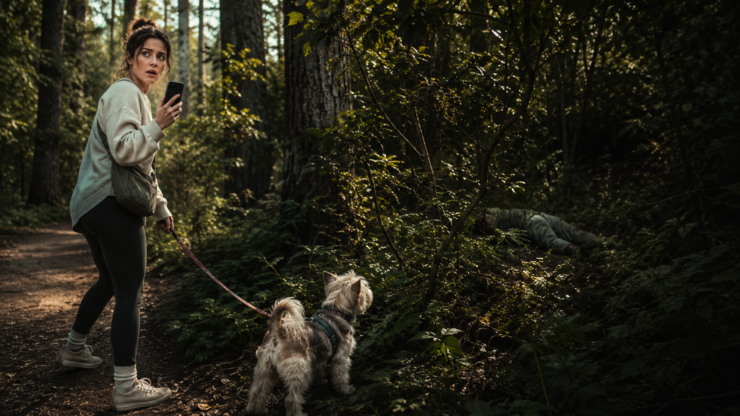
I have never found a dead body, and I’d love to keep that streak alive. But as someone who watches too much true crime, I have wondered: if a normal walk suddenly turns crime-scene-adjacent, what are you actually supposed to do?
I have never found a dead body.
Let’s just start there, because it feels like an important disclaimer before I begin discussing what one is supposed to do upon discovering human remains, like I’m hosting a very unsettling episode of Martha Stewart Living.
I have, however, watched a lot of true crime.
And I would be lying if I said I have never walked past a heavily forested area, an abandoned-looking field, or a city landfill and thought, “Well, statistically, someone has probably found something awful in a place like that.”
Is this healthy? Probably not. Is it the brain of a person who has consumed too many documentaries with dramatic string music? Absolutely.
Most of us don’t actually think this will ever happen to us. But that’s probably what almost every regular person thinks right before they become the person saying, “So I was just walking my dog…”
Which raises a very weird but genuinely useful question: what are you supposed to do if you find a dead body?
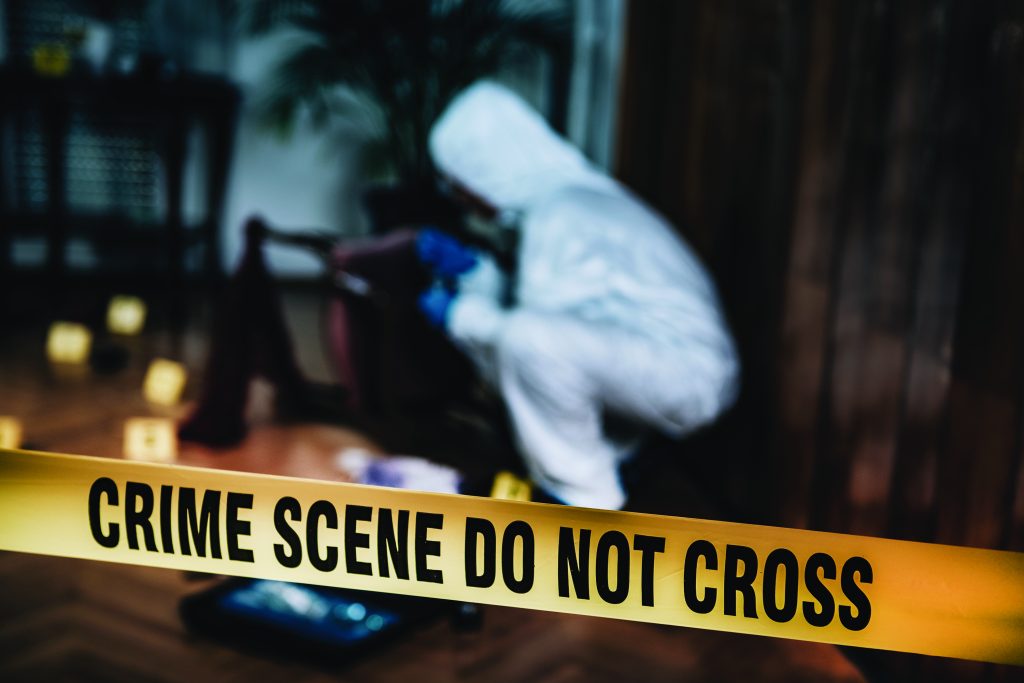
First: Do Not Become Part of the Emergency
Before you do anything else, make sure you are safe.
If you find a body in the woods, near water, in an abandoned building, beside a road, or anywhere that feels even slightly wrong, do not rush in like the plucky civilian sidekick in a detective show. Look around. Is there traffic? Broken glass? Needles? A weapon? Chemical smells? Someone nearby who could be dangerous?
Your first job is not to solve the mystery. Your first job is to avoid needing your own emergency response.
This is not the moment to be brave in a trench coat.

Call 911
Not your friend who “knows about this stuff.” Not your group chat. And definitely not your cousin who listens to three true crime podcasts and now says things like “livor mortis” at brunch.
The dispatcher will ask questions — where you are, what you found, whether the person appears to be breathing, and whether there are obvious dangers nearby. Answer as clearly as you can and stay on the line until they tell you otherwise.
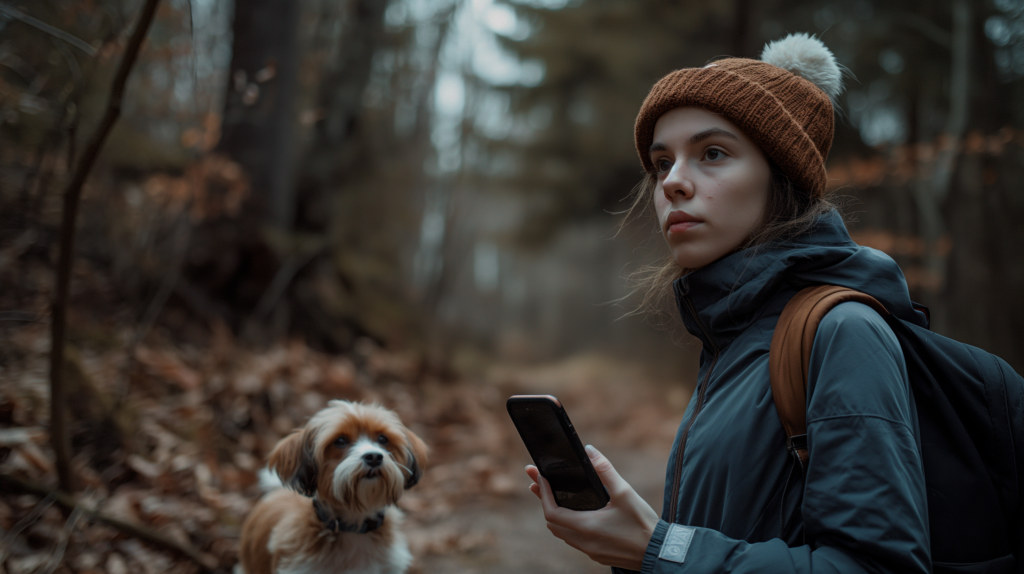
The location part matters more than you might think, especially outdoors. “In the woods” is not very helpful unless those woods are the size of a dentist’s office. Use trail names, mile markers, GPS coordinates, nearby landmarks — whatever you’ve got.
Do Not Touch Anything
This is where true crime has actually taught us something useful, even as it has taught us to distrust every husband within a 40-mile radius.
Do not touch the body. Don’t move it or cover it. Do not take photos of it. Do not pick up a wallet, phone, weapon, or mysterious object that seems “important.” And whatever you do, do not tidy up.
And for the love of every evidence technician who has ever worn a paper mask, do not bring human remains to the local law enforcement office in a shopping bag. That sounds ridiculous, but it’s happened before.
Even if the death turns out to be natural or accidental, you do not know that yet, and moving things makes it harder for investigators to understand what happened. There are also health risks — decomposition, blood, and contaminated surfaces can expose you to things you should not be casually meeting on a Tuesday.

But What If They Might Still Be Alive?
If you find someone who appears unconscious or unresponsive and it is safe to approach, the dispatcher may give you instructions. Follow them. If the person isn’t breathing normally, they may walk you through CPR.
But if the person is clearly deceased or located somewhere unsafe, do not put yourself at risk trying to get closer. The dispatcher’s job is to help you figure out what to do in that specific situation. Your job is to listen and not improvise a medical drama.
Pay Attention, But Don’t Investigate
There is a difference between noticing and snooping. Noticing is useful. Snooping is what gets you yelled at by people wearing gloves.
Try to remember what you saw when you arrived: where the body was, anything nearby, whether you saw a vehicle or a person leaving. Tell the dispatcher or responding officers.
But do not search the area, follow footprints, or decide that you — an enthusiastic viewer of prestige murder television — are now the lead investigator. You are a witness. Possibly a very shaken one. But still.
If You Find Bones, the Same Basic Rules Apply
Do not pick them up. Do not dig. And do not take them home (again, it’s happened).
Unless you are qualified to distinguish human bones from animal bones, archaeological remains, or medical specimens, assume you are not. Call the police and let the professionals determine what they are.

Be Ready to Feel Strange Afterward
Finding a dead body, even a stranger’s, can mess with you. You may feel scared, numb, shaky, or weirdly calm at first and awful later. It’s possible you may replay what you saw. And you might suddenly become very aware that every person is a whole world walking around, until one day they are not.
So after the practical part is over, take care of yourself. Call someone you trust. Drink water. Sit down. Consider talking to a counselor if the image keeps coming back to you.
You are allowed to be affected. A body is not just a plot point because you found it in real life instead of on a streaming service.
Most of us will never need this information. Hopefully, it stays one of those strange things you read out of curiosity and never apply.
But life has a way of being deeply normal right up until it isn’t. So if you ever find yourself walking past the forested area, the quiet ditch, the empty lot — and you realize something is very, very wrong — you do not have to become the hero, the detective, or the narrator of a limited series.
You just have to be safe, make the call, and let the people trained for this take it from there.
And in the meantime, at least you’ll know exactly when the guy in episode two of a Netflix documentary is making a terrible decision.