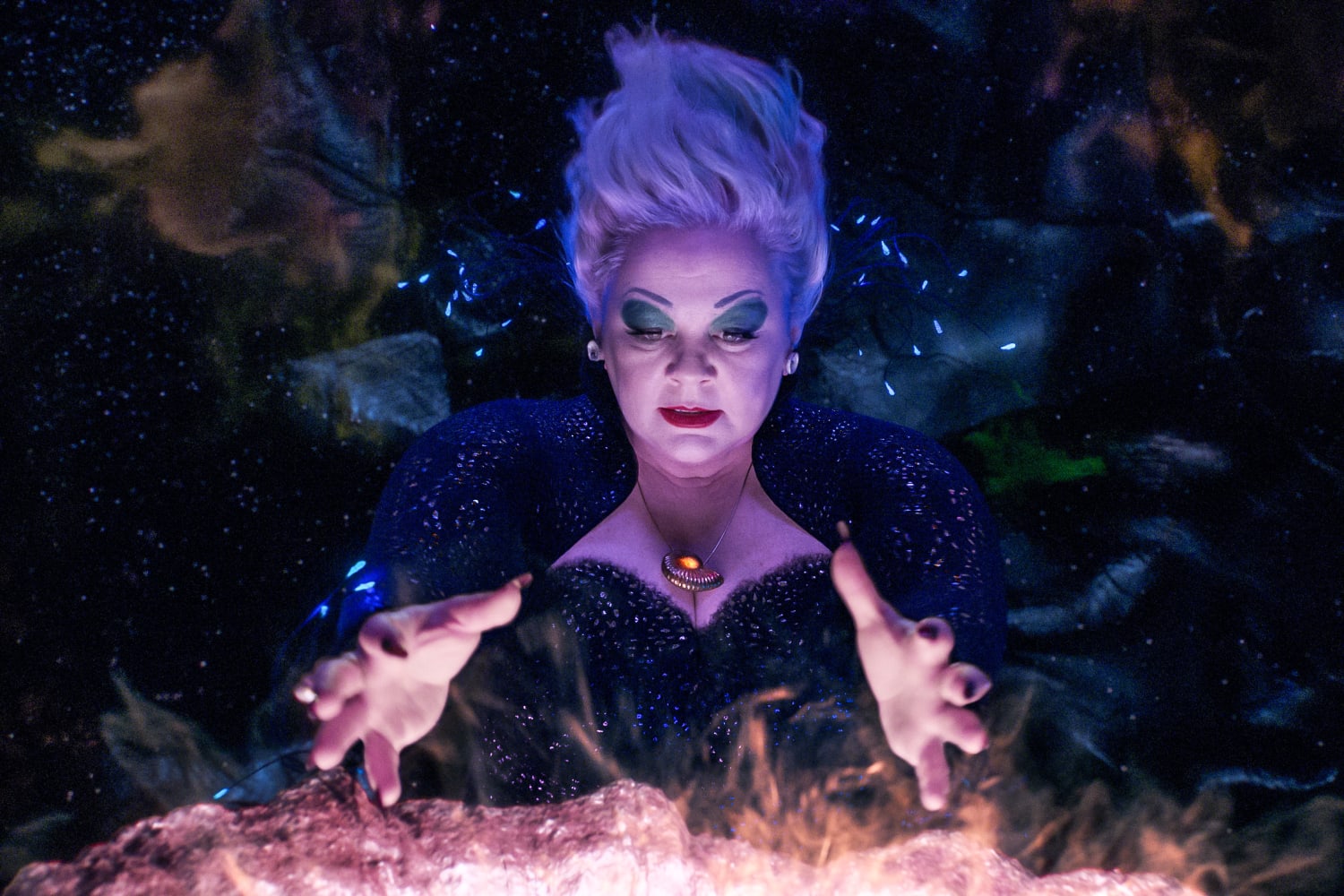
Ursula may be Disney’s most iconic sea witch, but was she really the villain of The Little Mermaid? Or just the only one honest about power, choice, and consequences?
Somewhere, a Disney adult just clutched a Sebastian plushie and whispered, “Not Ursula.”
But hear me out.
For decades, The Little Mermaid has asked us to believe that Ursula is the villain because she has dramatic eye makeup, lives in a cave, and collects desperate souls.
And yes. The soul thing is not ideal.
But when you actually look at what happens in this movie, Ursula may not be the mustache-twirling monster we were told she was. She might be the only character honest enough to say the quiet part out loud.
Ariel wants something. Triton refuses to listen. Eric is mostly just confused, but at least he’s pretty. And Sebastian is running a full-on crisis-management operation single-handedly.
But Ursula? Ursula listens and offers a contract.
That’s not villainy. That’s just paperwork. And, don’t forget, Ariel had a choice.
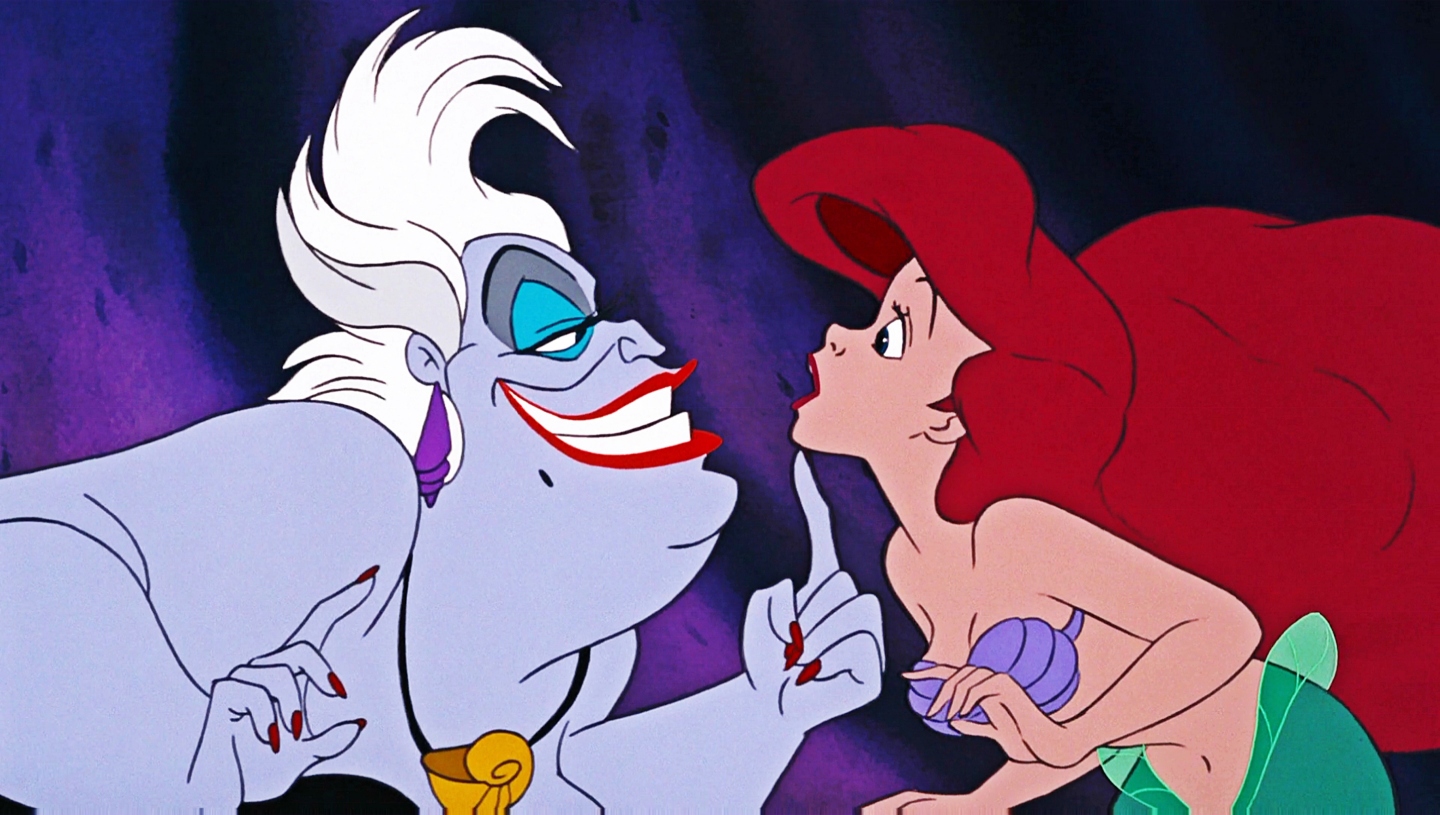
Ariel’s Home Life
Ariel is sixteen, impulsive, deeply dramatic, and convinced that a man she saw once during a shipwreck is her destiny.
So yes, she is making some choices.
But her father responds to her curiosity about the human world by destroying her entire collection in a rage, with a glowing underwater pitchfork. That scene is always framed as Triton, a worried parent, not knowing how to communicate. And sure, he’s scared and has his reasons. But there is a difference between setting limits and obliterating your kid’s prized possessions.
Ariel doesn’t run to Ursula because Ursula is persuasive. She runs to Ursula because every other adult in her life has made it clear that her questions aren’t welcome.
Ursula doesn’t create Ariel’s desire to leave. Triton does a pretty good job of that all by himself.
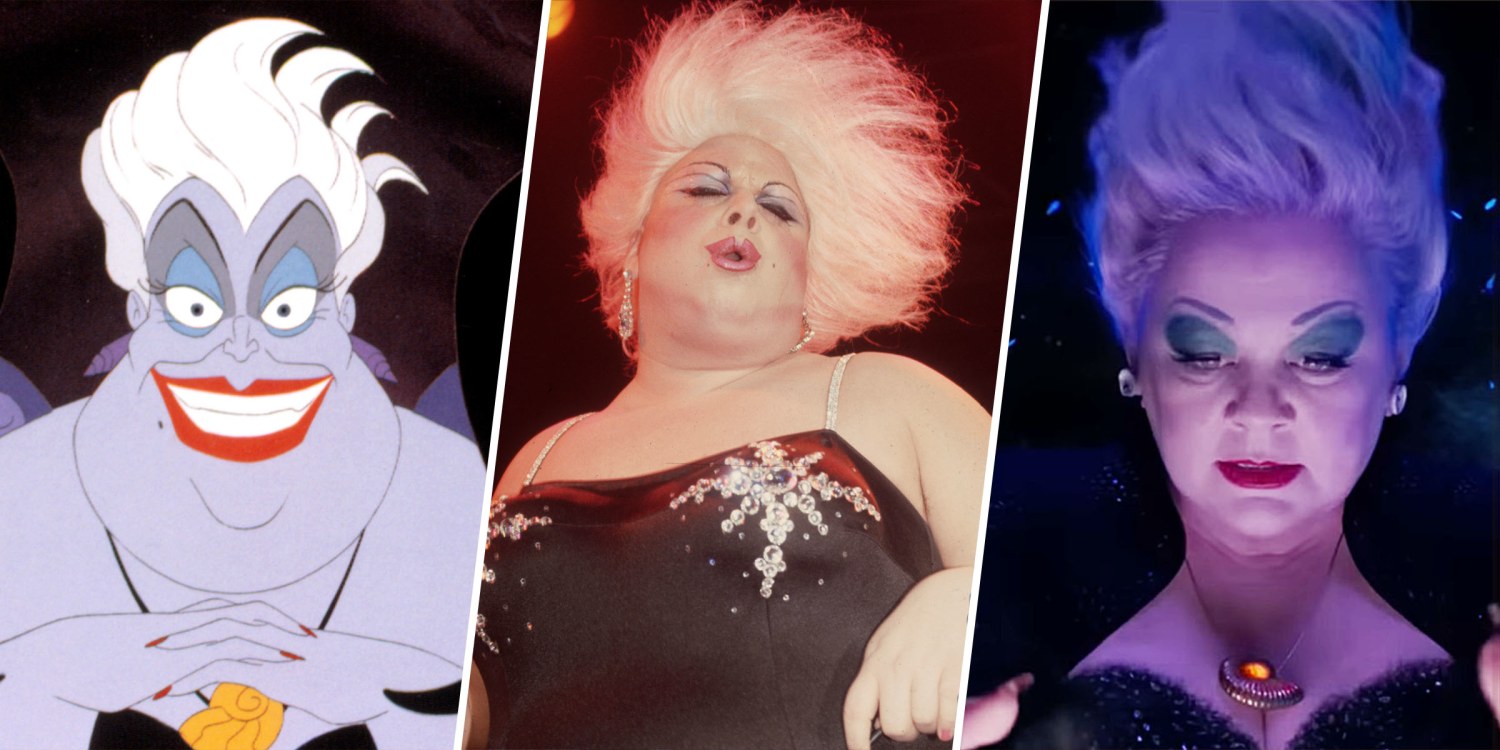
Ursula Understands Ariel Better Than Anyone Else
The thing about Ursula is that she listens.
Not in a wholesome, guidance-counselor way, but she gets what Ariel actually wants.
Ariel wants agency. She wants to explore a world she’s been told is forbidden. She wants the freedom to make her own ridiculous, romantic, possibly disastrous decisions.
Ursula doesn’t say, “Silly girl, you don’t know what you want.”
She says, essentially, okay. Here are the terms.
Is the deal wildly risky? Yes. Is the three-day deadline a little aggressive? Also, yes — even your cell phone provider gives you more time to rethink a contract. But Ursula doesn’t kidnap Ariel. She doesn’t force her into anything. She lays out the arrangement, gives a full musical presentation, and Ariel signs.
Again: paperwork.
The voice thing is where it gets complicated. Taking Ariel’s voice is symbolically enormous — a young woman giving up her ability to speak for a shot at love is the kind of thing you unpack in therapy. But Disney does something sneaky here. Ursula frames the voice as Ariel’s most powerful asset. She knows it has value.
Ariel is the one who thinks she can get by without it.
Ursula doesn’t invent the pressure Ariel is already feeling — she just profits from it. She’s less “evil sea witch” and more “predatory capitalist with tentacles.”

It’s All About Power and Control
The central conflict of The Little Mermaid isn’t Ariel versus Ursula. It’s Ariel versus control.
Triton wants to control Ariel because he’s afraid of losing her. Ursula wants to control Ariel to gain power over Triton. Eric, bless him, barely knows enough to control his own narrative.
Everyone is fighting over Ariel’s future except Ariel.
And that’s why Ursula’s pitch works. She offers Ariel something no one else has: a choice. A dangerous choice, yes. A manipulative one, definitely. But still a choice.
Ursula says, what are you willing to risk?
That’s a more compelling question.
There’s also the matter of Ursula’s backstory. She used to live in the palace. She was cast out. The movie doesn’t spend much time on why because it would rather we focus on the tentacles and the lightning storm. But Ursula clearly knows how power works under the sea — and she wants back in.
Is she power-hungry? Yes. But so is Triton. The difference is that Triton already has power, so the movie calls him a king. Ursula wants power, so the movie calls her a witch.
That doesn’t make Ursula innocent. But it does make the framing feel a little suspicious.
So, Is Ursula the Hero?
Let’s not lose our minds completely.
Ursula manipulates a teenager. She sabotages the deal. She turns into a giant sea monster and attempts a hostile takeover of the ocean. These are generally frowned upon.
But “not the hero” doesn’t automatically mean “the villain.”
Ursula is the consequence of a kingdom that hides its problems. She doesn’t corrupt Ariel. She gives Ariel a chance to get everything she wants.
And maybe that’s why she’s one of Disney’s best villains. Because she’s not purely evil; she simply understands everyone’s weakness better than they understand themselves.