

An ice pack on your wrist calms your brain?! Sounds like another useless wellness myth pushed by desperate influencers. Annoyingly, there may actually be something to it.
I’ll admit it: the first time I heard that an ice pack on your wrists could help with stress, I rolled my eyes. Then I tried it. Did every problem in my life disappear? No. But the cold did pull my attention out of my head and back into my body.
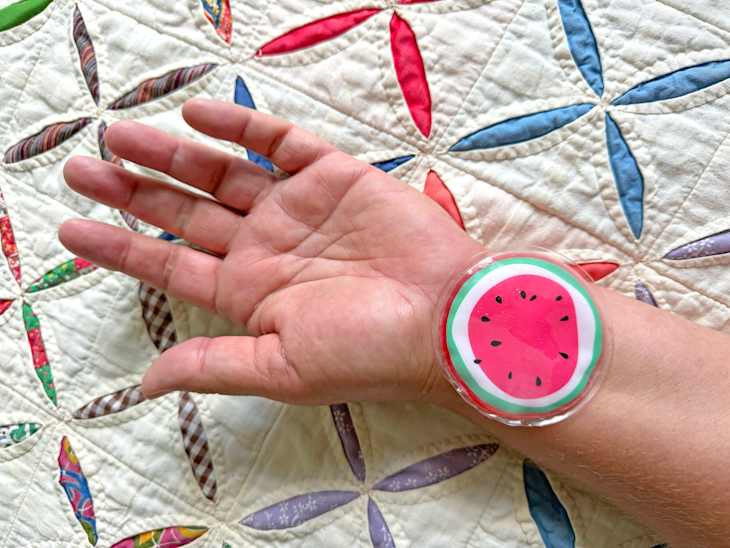
Why does cold work on a panicked brain?
Stress turns the volume up on everything. You know the feeling: heart racing, shallow breathing, your brain churning out worst-case scenarios on a loop… Sometimes the only way to interrupt that cycle is with a strong physical sensation.
Cold is good for this because it’s immediate. Instead of replaying tomorrow’s disaster or something awkward you said in 2017, your brain suddenly has a very present, very specific thing to deal with: this is cold, right now, on my skin.
There’s real physiology behind it, too. Cooling the skin, especially around the face, can trigger the body’s “dive reflex,” the same one mammals use when they go underwater, and that response calms the nervous system down and slows the heart rate.
:max_bytes(150000):strip_icc()/midsection-of-woman-holding-ice-pack-on-hand-1234755457-4eb0e6ea5429427bab027a2e3bbc64ee.jpg)
So why the wrists, specifically?
Honestly? Convenience. Wrists are easy to reach, sensitive to temperature, and usually bare, so you can press a cool washcloth or ice pack there without dunking your face in a bowl of water at your desk. (Try explaining that one to your coworkers.)
The sensation gives you something concrete to focus on: the temperature, the pressure, your own breathing. That’s a solid grounding tool.
The real technique this is riffing on
This trick is a watered-down cousin of a real therapy skill: the “T” in TIPP, a distress-tolerance technique from Dialectical Behavior Therapy (DBT). The actual version involves holding a cold pack over your eyes and cheeks, or dunking your face in cold water, for about 30 seconds. It’s used to help calm someone whose emotions have completely taken over.
The Department of Veterans Affairs teaches this exact skill in its DBT programs, and every version of it carries the same warning: very cold water can drop your heart rate quickly, so people with heart conditions, low blood pressure, or a history of fainting should check with a doctor first.
Putting a cold pack on your wrists isn’t the same technique and probably doesn’t trigger the same reflex. But it’s not something TikTok invented out of thin air, either. It’s the same basic idea, just watered down (pun intended!).

How to actually try it
Wrap a cold pack in a thin towel and hold it against one or both wrists. As you feel the cold, slow your breathing: in normally, out a little longer. Use the inhale-for-4, exhale-for-8 technique. Naming a few things you can see, hear, and feel helps too.
A few notes: never put ice directly on your skin; it can cause a cold burn. Pull the pack off if your skin goes numb, pale, or becomes painful.
A tool, not a treatment
A cold pack might take the edge off a bad moment, help you pause before reacting, or pull you back into your body. What it won’t do is fix the root of ongoing anxiety, depression, or chronic stress. If that’s what you’re dealing with, it deserves real support from an actual mental health professional.
Still, you don’t always need a full reset. Sometimes you just need ten seconds to get out of your own head. A cold pack on your wrists can give you that.
![Fed Up: Wellness Influencers Fued Over Fiber [Podcast Review]](https://ashbydodd.com/wp-content/uploads/2023/11/Fed-Up-Podcast-370x300.png "Fed Up: Wellness Influencers Fued Over Fiber [Podcast Review]")