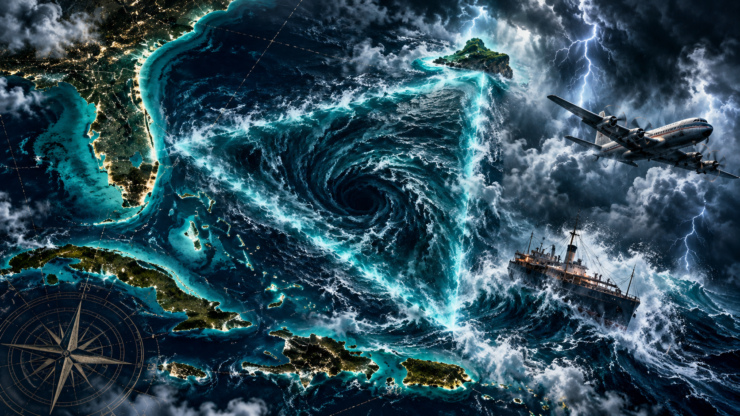
Remember when the Bermuda Triangle was supposedly swallowing ships, planes, and unsuspecting travelers? So why did one of the world’s biggest mysteries suddenly disappear from the conversation?
There was a time when the Bermuda Triangle was apparently one of humanity’s biggest threats.
Ships sailed into it and vanished. Planes disappeared overhead. Aliens may or may not have been involved, and Atlantis somehow got pulled into the conversation.
Then we all just stopped talking about it.
I can’t remember the last time I heard someone seriously worry about the Bermuda Triangle. Nobody boarding a flight from Miami to Puerto Rico is wondering whether the plane might slip through a portal into another dimension. It went from a terrifying unsolved mystery to a nostalgic reference, and I wanted to know why.
First, We Had to Invent the Bermuda Triangle
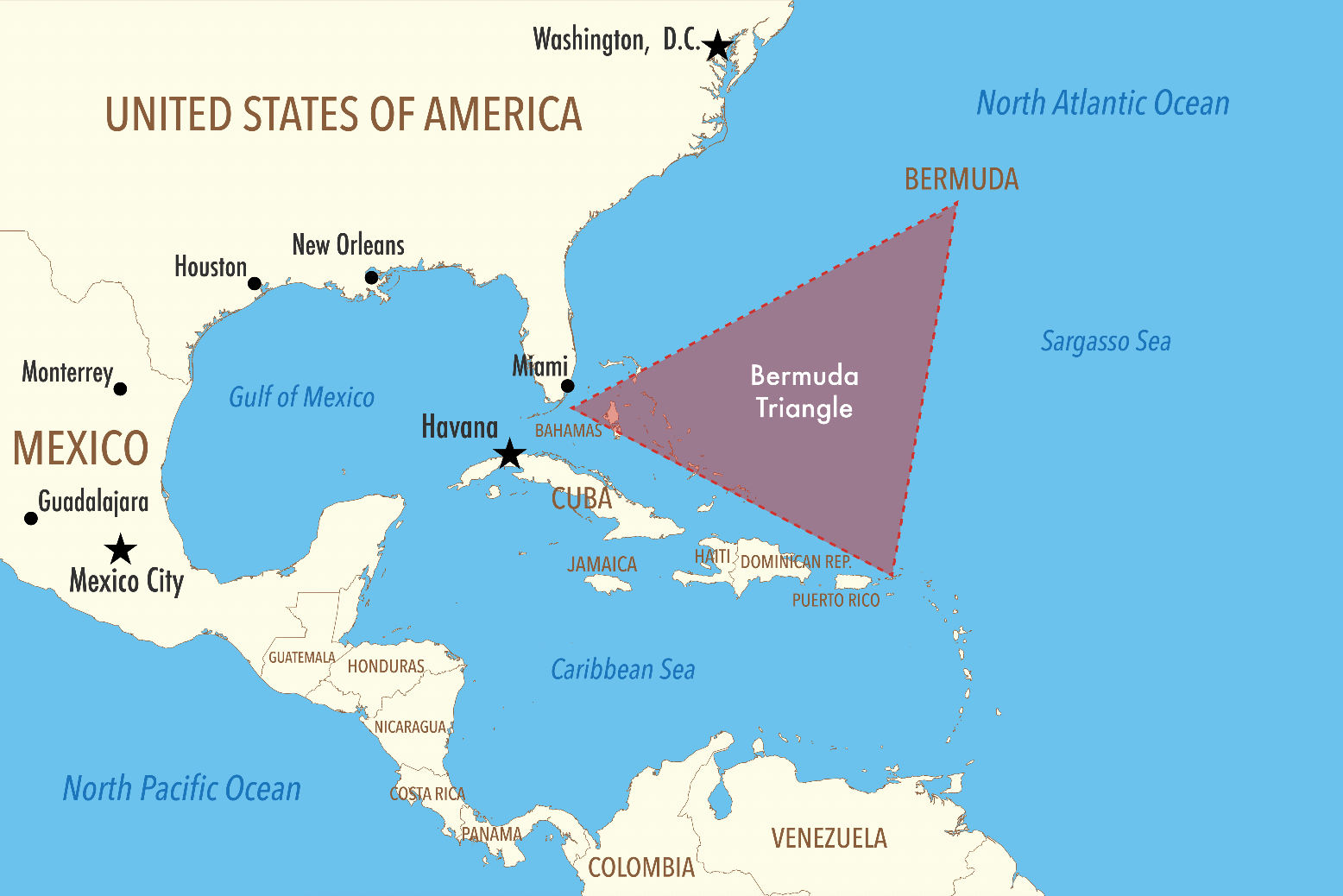
Technically, there is no official Bermuda Triangle. The name usually refers to a big stretch of the Atlantic between Florida, Bermuda, and Puerto Rico, but nobody agrees on the boundaries. No official maps show it, and the U.S. Board on Geographic Names doesn’t recognize the name or keep an official file on the area.
The legend does have some very real tragedies behind it.
On December 5, 1945, five Navy torpedo bombers known as Flight 19 took off from Fort Lauderdale on a routine navigation training flight. They never came back.
Flight leader Lt. Charles Taylor became disoriented and believed they were over the Florida Keys. They were actually far to the north, and the planes ended up out over the Atlantic. Eventually, they would have run out of fuel. All 14 men were lost.
Then a Navy PBM Mariner flying boat with 13 men aboard took off to search for them. It disappeared too. A tanker, the SS Gaines Mills, reported flames from an explosion at sea. That type of plane was known to collect gasoline vapors in its bilges, and investigators have assumed it exploded in mid-air.
Six planes, gone in a matter of hours. You can see how a legend starts.
A Good Name Changes Everything
In February 1964, writer Vincent Gaddis published an article in Argosy magazine called “The Deadly Bermuda Triangle.” He tied Flight 19 to other disappearances in the region and gave the area the name that stuck.
Branding matters. “Mysterious accidents and disappearances across a very large, heavily traveled part of the western Atlantic” does not exactly roll off the tongue. “The Bermuda Triangle” does.
Once a bunch of unrelated events have a name, they start feeling related. A ship disappears? Bermuda Triangle. A plane crashes? Bermuda Triangle. Every new incident becomes evidence for the pattern, because we already decided there was one.
The 1970s Were Ready for Something Weird
The Triangle’s golden age was the 1970s. The culture was already obsessed with UFOs and Bigfoot and anything else that could be introduced by a narrator asking, “Could it be possible?”
Then Charles Berlitz published The Bermuda Triangle in 1974, and it was a huge bestseller. It floated UFOs and Atlantis as possible explanations, and soon the Triangle was everywhere: TV specials, novels, magic stunts, movies. Steven Spielberg even worked Flight 19 into Close Encounters of the Third Kind, where the missing planes turn up abandoned in the Sonoran Desert in Mexico, and the dazed pilots eventually walk off an alien ship.
It was the place on the map where the rules stopped working. I get the appeal.
Unfortunately, Someone Checked the Facts
Every great supernatural mystery eventually runs into a person willing to spend an unreasonable amount of time in a library. In this case, that person was Larry Kusche.
Kusche was a research librarian at Arizona State University and a pilot, and people kept asking him about the Triangle. So he looked into it, and in 1975 he published The Bermuda Triangle Mystery: Solved. He went back to period newspapers and contacted agencies like the Coast Guard and Lloyd’s of London.
The mystery fell apart pretty quickly. Some disappearances happened in bad weather that the legend never mentioned. Some were reported inaccurately. And some didn’t happen anywhere near the Triangle.
Lloyd’s of London reached the same conclusion decades later when it was asked about the area for a 1992 TV documentary: large numbers of ships had not sunk there.
That’s still the position of the agencies that deal with the ocean for a living. NOAA says there is no evidence that mysterious disappearances happen more often in the Triangle than in any other large, well-traveled part of the ocean. The Navy and Coast Guard say there are no supernatural explanations for disasters at sea.
Which is disappointing if you were hoping for Atlantis.

The Ocean Is Already Dangerous Enough
The boring explanation is pretty terrifying, too. You don’t need aliens to make that stretch of ocean dangerous.
Most Atlantic tropical storms and hurricanes pass through it. The Gulf Stream can cause rapid, sometimes violent, weather changes. The Caribbean’s many islands create shallow water that is treacherous for ships. Before GPS and satellite weather forecasting, getting lost at sea or in the air was a lot easier than it is now.
It’s also heavily traveled. If enough ships and planes pass through a huge area for enough years, accidents will happen. And wreckage in deep water is hard to find. Not finding it doesn’t mean something inexplicable happened.
So Why Did We Stop Caring?
The Bermuda Triangle didn’t fade because somebody held a press conference to announce that the dimensional portal had been closed. The things that made it scary went away. Navigation and weather forecasting got a lot better, GPS arrived, and researchers poked enough holes in the sensational stories that it became hard to defend the idea of one mysterious force swallowing ships and planes.
We also got new mysteries. UFOs are still around. Bigfoot refuses to retire. And the internet means we don’t need one spooky patch of ocean to hold our anxiety anymore, because conspiracy threads and true-crime rabbit holes are available at all hours.
The Triangle also benefited from scarcity. A few unexplained stories could be repeated for decades because most people had no easy way to check them. Now someone can hear a claim about Flight 19 and within minutes find weather records, the Navy investigation, old newspapers, and seventeen people arguing about it on Reddit.
Why It Hooked People
I don’t think people in the 1970s were foolish for being fascinated by it. There’s something unsettling about imagining that one ordinary-looking section of ocean behaves differently from everywhere else. You can visit Miami. You can fly to Puerto Rico. And somewhere between them, supposedly, the normal rules stop applying.
It also arrived when the world was starting to feel knowable. People had walked on the moon, jet travel was becoming normal, and satellites were circling the planet. I suspect part of the appeal was that the Triangle suggested blank spaces still existed on the map.

The Triangle Never Really Went Anywhere
Planes still fly through the Bermuda Triangle. Ships still sail through it. Cruise passengers are probably drinking something frozen in it right now.
The region never got safer, because the available evidence shows it was never uniquely dangerous. We just stopped telling the story.
Now we fly straight through it and complain about the Wi-Fi.