
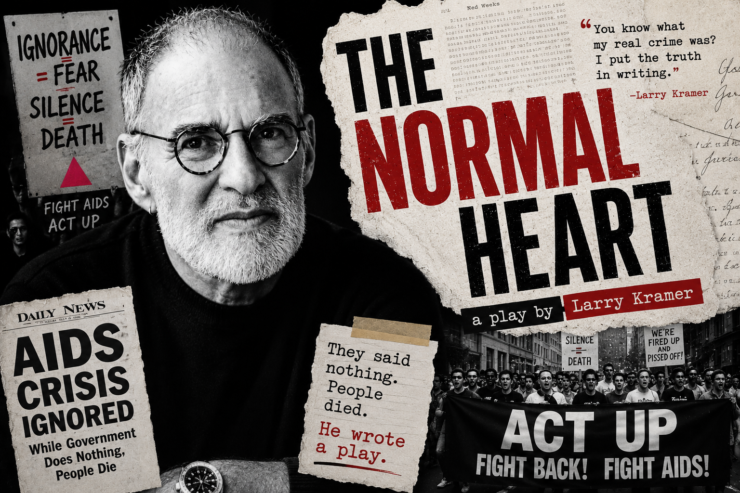
The Normal Heart didn’t just change theater. It forced audiences to confront a public health crisis that many people were still trying to ignore.
History is filled with artists remembered for their charm.
Larry Kramer wasn’t one of them.
He picked fights, embarrassed allies, and alienated friends. More than once, he was pushed out of organizations he helped build because people simply couldn’t deal with him anymore.
And yet, he was exactly the person the AIDS crisis needed.
The Man Nobody Wanted to Listen To
Long before he wrote The Normal Heart, Kramer had already earned a reputation as someone who refused to shut up.
His 1978 novel Faggots wasn’t aimed at conservative America. It was aimed at the gay community itself, criticizing what Kramer saw as a culture of excess and denial just at the moment the fight for acceptance was gaining speed. It’s not surprising that many readers felt betrayed.
Kramer was banned from Manhattan’s only gay bookstore, and Fire Island neighbors wanted nothing to do with him. Straight critics called the book offensive, while gay critics called him a traitor.
He later summed it up himself: “The straight world thought I was repulsive, and the gay world treated me like a traitor. You know what my real crime was? I put the truth in writing.”
That line is basically the key to everything that came after.

Then the Funerals Started
In the early 1980s, young gay men started getting sick, and no one knew exactly why. The government moved slowly. Most of the public barely noticed. Newspapers often treated the growing epidemic like someone else’s problem.
But Kramer noticed.
In 1982, he co-founded Gay Men’s Health Crisis, New York’s first major AIDS service organization. His relentless urgency clashed with board members who wanted a slower approach, and before long, he was pushed out. And it wasn’t the last time people decided Larry Kramer was simply too much to deal with.
But history has a way of reconsidering difficult people when it turns out the building was actually on fire.

A Play He Never Planned to Write
After leaving GMHC, Kramer traveled through Europe. While visiting Dachau in Germany, he learned the camp had been operating openly for years while much of the world turned a blind eye. He came home and broke a promise he’d made to himself.
He wrote a play.
Despite almost no theater experience, he directed his grief and anger into The Normal Heart, which premiered at the Public Theater in 1985. It barely disguises its autobiographical roots. Ned Weeks is Kramer in all but name. Supporting characters are taken directly from people he’d worked beside. New York City Mayor Ed Koch doesn’t even get a fictional stand-in — he’s named outright and criticized by name, onstage, repeatedly.
The drama forces audiences to live inside his history for the duration of the play. The original production’s program listed friends and loved ones the cast and crew had personally lost to AIDS. Before the lights came up, audiences were already confronted with the fact that this wasn’t historical fiction. It was still happening.

Why It Still Matters
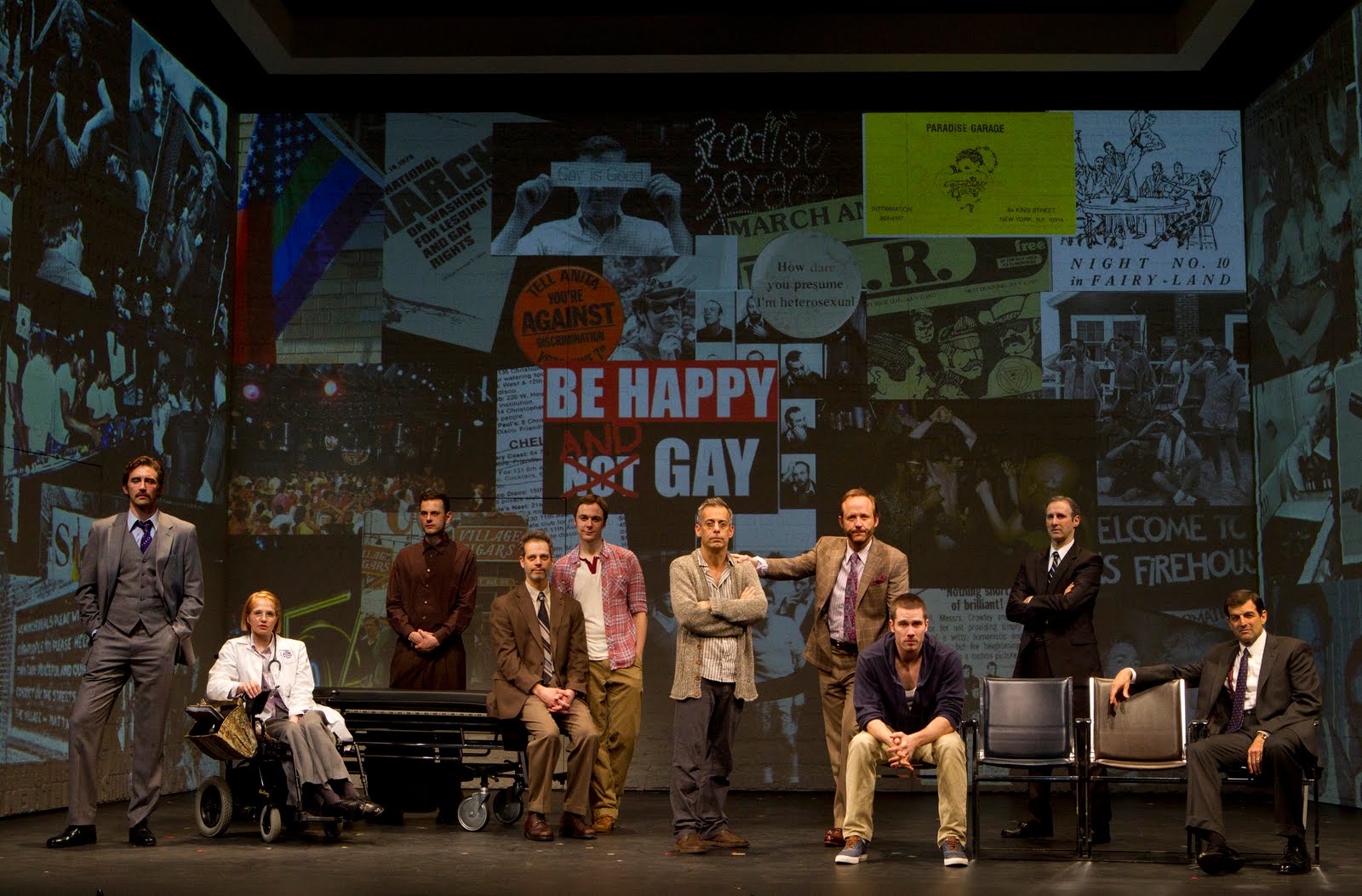
The Normal Heart has never really gone away. It returned off-Broadway in 2004 (starring Raúl Esparza), won the Tony for Best Revival after moving to Broadway in 2011 (with Ellen Barkin and Jim Parsons), and reached a much wider audience through HBO’s 2014 all-star film adaptation (from Ryan Murphy, starring Mark Ruffalo, Matt Bomer, Taylor Kitsch, Alfred Molina, Joe Montello, Jonathan Groff, and Julia Roberts).
The play forced audiences to look directly at a crisis that most institutions had been content to ignore, and made it hard to look away from the specific failures of government, media, and public health that let it spiral. You can see its influence in Angels in America, in Philadelphia, and in How to Survive a Plague. You can see it in ACT UP, the activist organization Kramer founded in 1987, whose direct-action protests genuinely changed the national conversation around AIDS.
Not every activist is easy to like. Not every artist is enjoyable company. Kramer was neither, and that is what makes his story important. History does not always move forward because of popular people. Sometimes it changes because one very stubborn person keeps making others uncomfortable until they finally listen.
If you want to dig into the full story, including Kramer’s life, the making of the play, the crisis behind it, the YouTube channel Wait in the Wings put together a documentary short on exactly that: