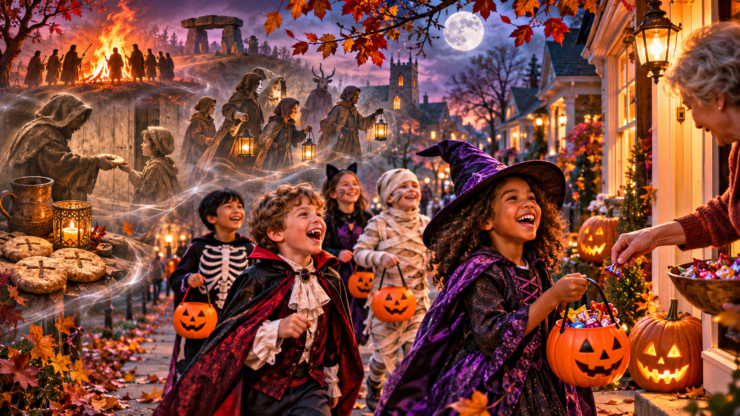
Before Halloween became a night of costumes and candy, it involved wandering spirits, medieval prayers, and a surprising amount of property damage. Here’s how centuries of strange traditions turned knocking on strangers’ doors and demanding chocolate into a perfectly acceptable childhood activity.
Every October 31, we send children into the darkness dressed as witches, dinosaurs, superheroes, and obscure pop-culture references so they can knock on strangers’ doors and demand candy.
And somehow, this is considered wholesome.
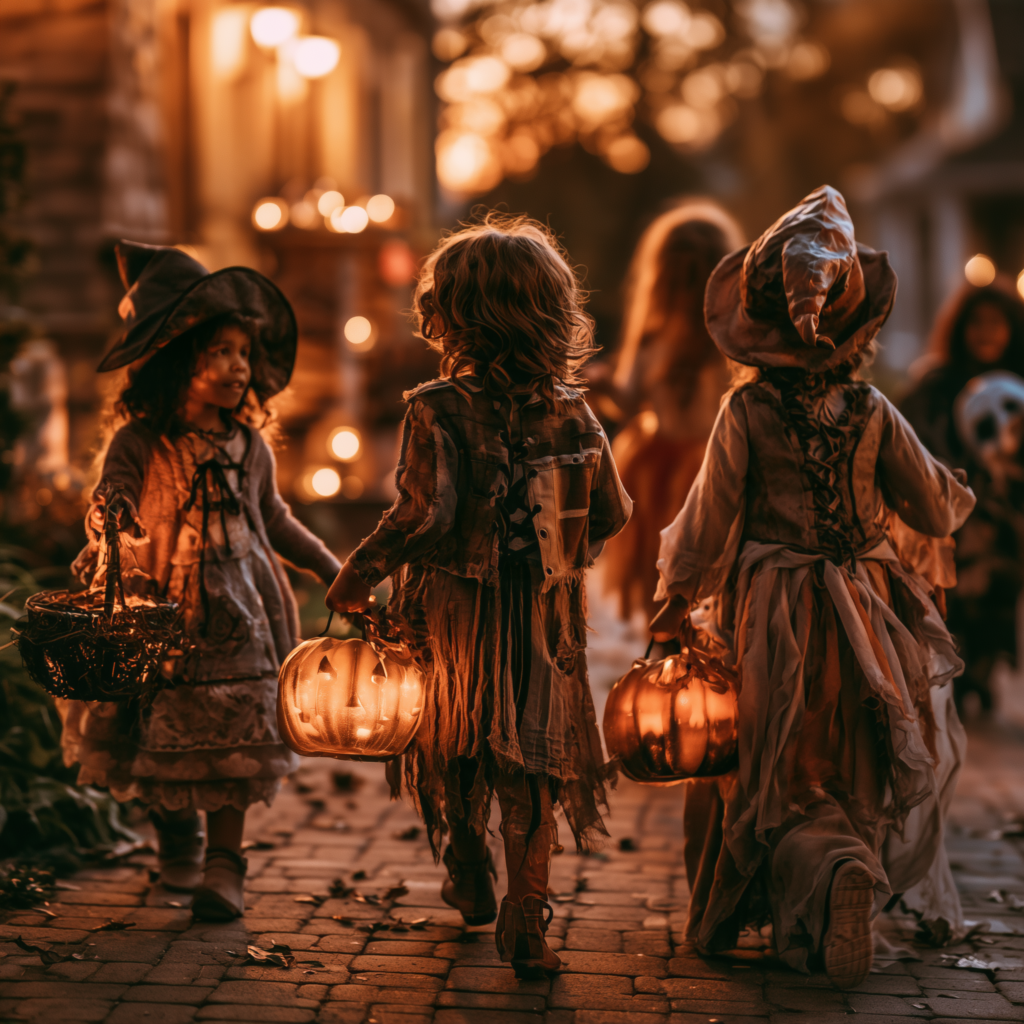
When you really think about trick-or-treating, the whole arrangement is bizarre. We tell kids not to take candy from strangers for 364 days a year. Then Halloween arrives, and suddenly we hand them a plastic pumpkin and send them on their way.
But trick-or-treating didn’t begin with miniature Reese’s cups and inflatable lawn skeletons. The tradition we know today grew out of a strange mix of ancient beliefs about the dead, medieval prayers, costumes, neighborhood mischief, immigration, suburban growth, and a very practical desire to stop teenagers from destroying things.
Before the Candy, There Were Spirits
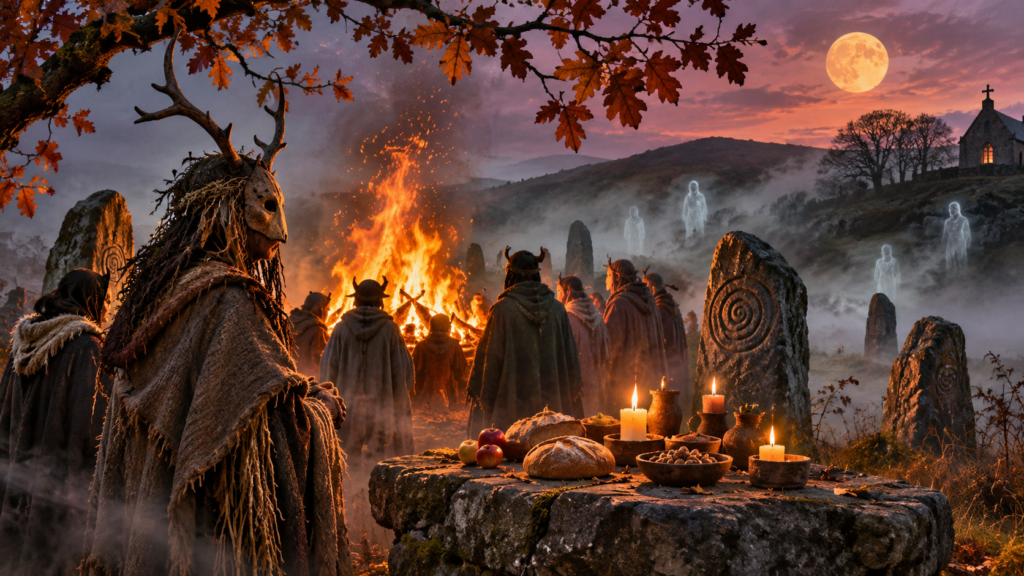
Like many Halloween traditions, the story starts with Samhain, an ancient Celtic festival marking the end of the harvest season and the beginning of winter.
People believed the boundary between the living and the dead became unusually thin around this time of year. Spirits could return, supernatural beings might wander around, and apparently late October has always had a reputation for being a little unsettling.
People lit bonfires, sometimes left food as an offering, and may have used disguises as part of the celebrations. Some traditions involved dressing in ways that could confuse or ward off wandering spirits.
Which means the modern child wearing a plastic ghost costume has considerably older company than they probably realize.
The season’s spiritual meaning changed as Christianity spread through Celtic regions. Samhain-era customs became intertwined with All Saints’ Day and All Souls’ Day, Christian observances honoring saints and the dead.
And this is where things start looking a little more familiar.
Would You Like a Prayer With Your Cake?
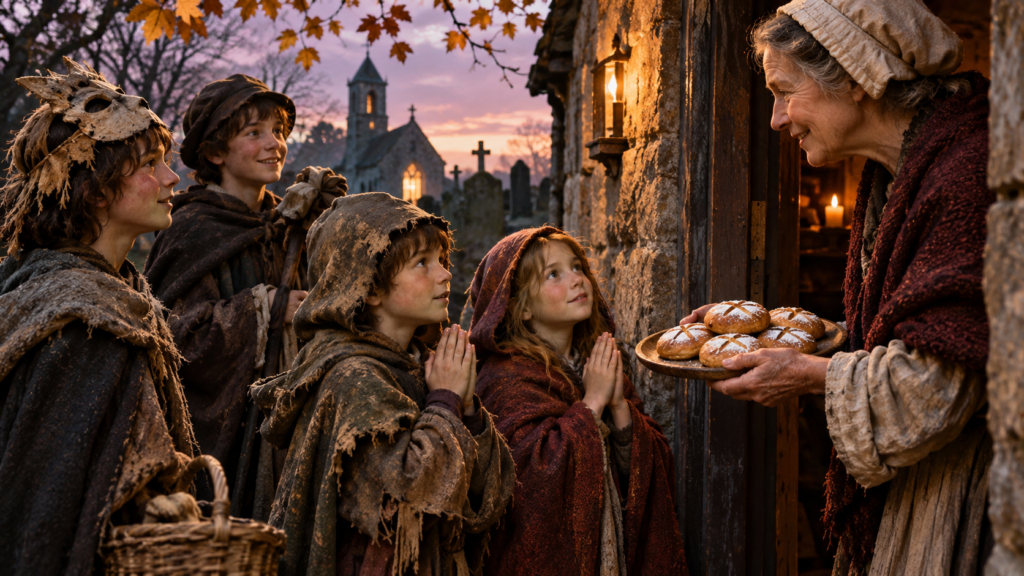
By the Middle Ages, a tradition called souling had developed in parts of Britain.
Poorer people visited wealthier households around All Souls’ Day and received small pastries known as soul cakes. In return, they promised to pray for the souls of the family’s deceased relatives. Children eventually participated too, going from house to house asking for food, money, or other gifts.
So yes, there is a surprisingly direct historical line between praying for someone’s dead relatives and a seven-year-old dressed as Bluey asking whether you have anything besides Almond Joys.
Human civilization is a beautiful thing.
In Scotland and Ireland, another tradition known as guising developed. Young people dressed in costume and went from house to house, but they usually had to earn whatever they received by singing, reciting a poem, telling a joke, or performing some other small trick. Treats might include fruit, nuts, or coins.
That version makes our current system seem almost embarrassingly easy.
Imagine telling today’s trick-or-treaters they need to perform a sonnet before receiving a Kit Kat.
There would be unrest.
Then Halloween Got to America
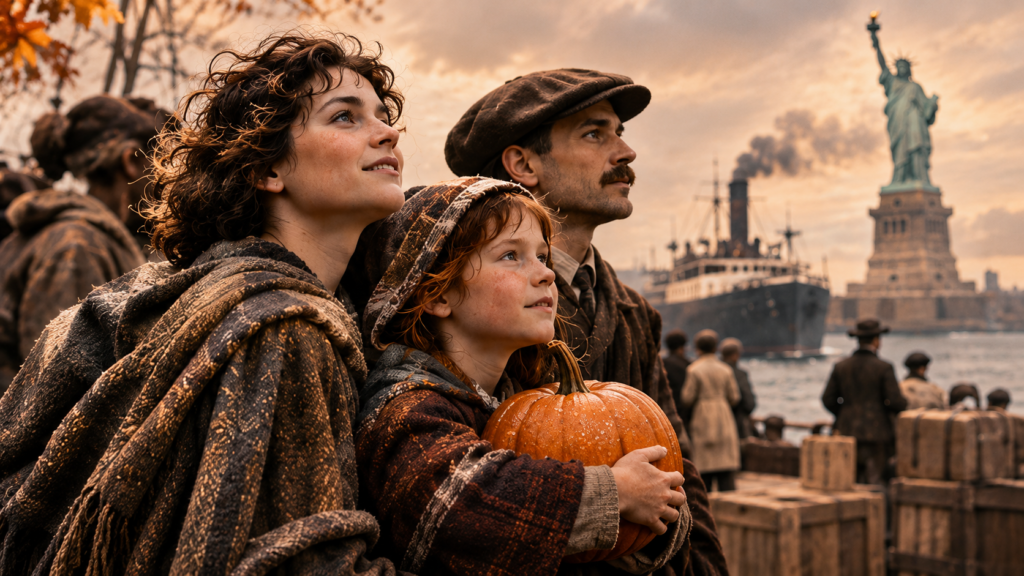
Large waves of Irish and Scottish immigration during the 19th century helped bring Halloween traditions to the United States. Over time, old European customs blended with American harvest celebrations, parties, fortune-telling games, costumes, and other local traditions.
By the late 1800s and early 1900s, Americans were increasingly trying to make Halloween less about frightening supernatural beliefs and more about parties, games, costumes, and community gatherings.
Which sounds charming.
Unfortunately, vandalism was part of it, too.
Halloween pranks had been around for a long time, but by the early 20th century, the mischief could get surprisingly elaborate. Windows were rattled. Gates disappeared. Property was damaged. Farm equipment occasionally ended up where it had absolutely no business being.
There is harmless Halloween mischief, and then there is apparently an entire generation asking, “But what if we put the wagon on the roof?”
By the 1920s and 1930s, communities were increasingly looking for ways to redirect that energy into organized Halloween activities. One theory about the rise of modern trick-or-treating is wonderfully practical: give the kids something fun to do, hand them treats, and perhaps everyone wakes up November 1 with their fence still standing.
Suddenly, “trick or treat” sounds less like a cute rhyme and more like the terms of a neighborhood protection agreement.
Where Did “Trick or Treat” Come From?
The phrase itself seems surprisingly recent.
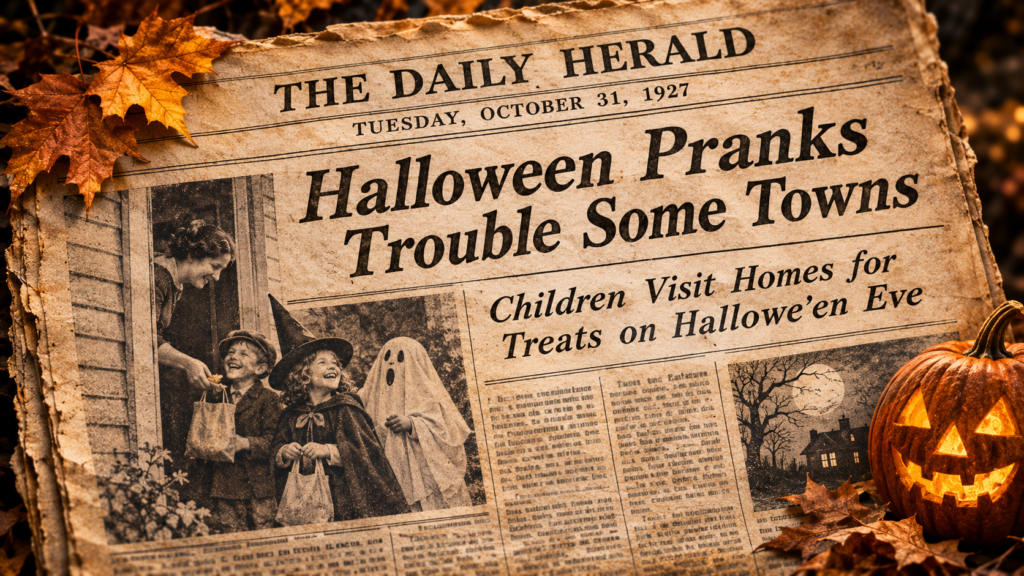
One of the earliest known printed uses connected to Halloween comes from a 1927 newspaper report in Alberta, Canada, describing costumed young people going from house to house and demanding “trick or treat.”
The meaning wasn’t especially subtle.
Give us something nice, or something considerably less nice may happen.
Over the following decades, the phrase spread along with the custom. By 1951, trick-or-treating was appearing in Peanuts. A year later, Disney released a Donald Duck cartoon literally called Trick or Treat.
By then, the tradition had officially moved from neighborhood custom to pop culture.
There was no going back.
World War II Put the Candy on Hold
Modern trick-or-treating was already developing in the United States by the 1930s and early 1940s, but World War II complicated things.
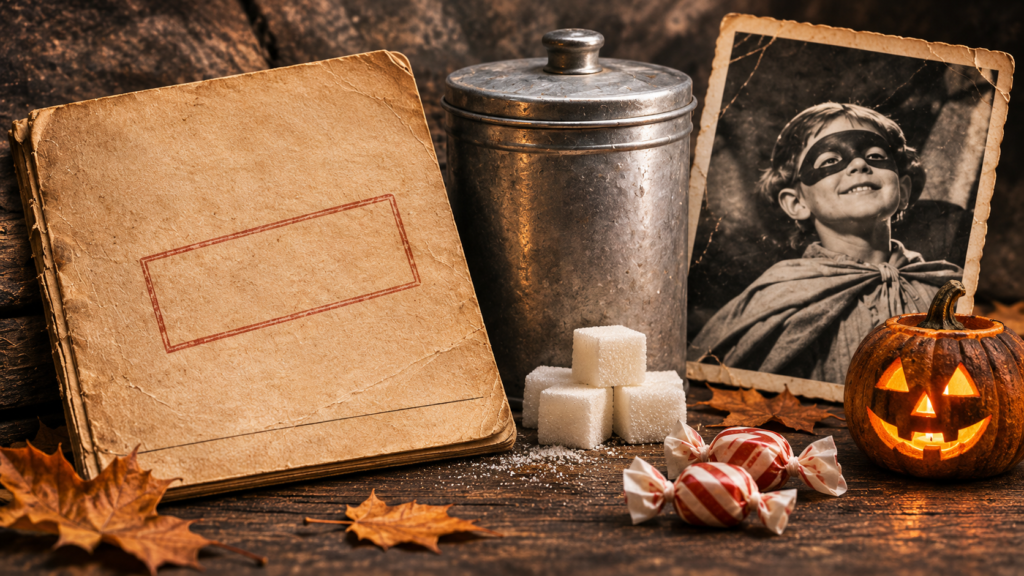
Sugar was rationed, which is obviously a problem when you’re trying to establish a national holiday tradition based partly on handing sugar to children.
After the war ended and rationing disappeared, trick-or-treating came roaring back. The postwar baby boom created a huge population of children, while rapidly expanding suburbs provided something close to the ideal trick-or-treating infrastructure: lots of families, lots of houses, sidewalks, and a seemingly endless supply of front doors.
This was when trick-or-treating really began to look like the version many of us grew up with.
But the treats themselves were still changing.
Candy Wasn’t Always the Point
Early American trick-or-treaters didn’t necessarily come home with a pillowcase full of miniature candy bars.
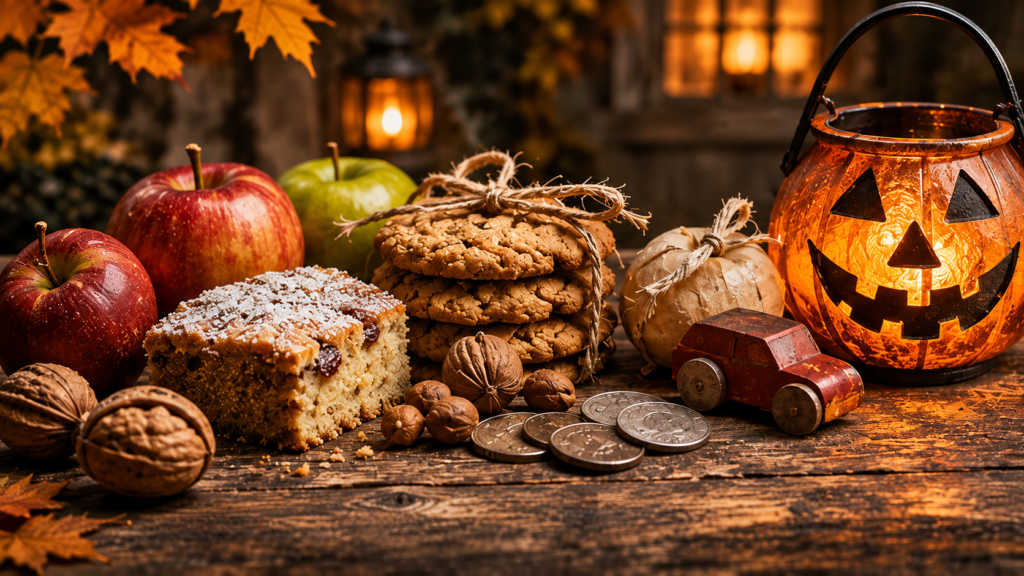
Children might receive homemade cookies, cake, fruit, nuts, coins, toys, or whatever a household happened to offer. Candy was part of Halloween, but it wasn’t yet the undisputed ruler of the night.
Candy companies, unsurprisingly, noticed an opportunity.
During the 1950s, manufacturers increasingly promoted candy as an easy Halloween treat. It was inexpensive, convenient, individually portioned, and required considerably less effort than baking cookies for forty neighborhood children dressed as cowboys.
By the 1970s, individually wrapped commercial candy had become the expected Halloween offering, helped in part by growing fears about the safety of homemade or unwrapped treats.
And there it was.
The modern Halloween economy had arrived.
The Strange Thing Is How Normal It Feels
This is what I love about traditions. We inherit the finished version and rarely think about all the strange little historical decisions hiding underneath it.
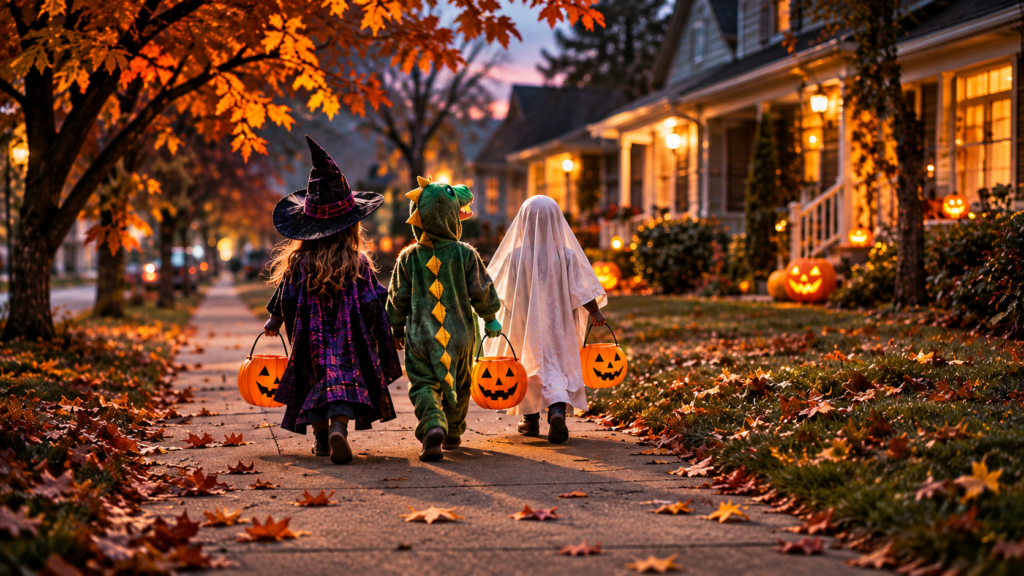
A child ringing your doorbell tonight probably isn’t thinking about Samhain, wandering spirits, medieval soul cakes, Irish immigrants, Depression-era vandalism, wartime sugar rationing, or the explosive growth of American suburbs.
They are thinking about whether you’re a full-size candy-bar house.
Fair enough.
But all of those earlier traditions are still faintly visible.
The costumes came from somewhere. So did the door-to-door visits. So did the idea that the person at the door should offer something. Even the word trick carries the memory of a time when refusing the transaction might have consequences.
What began as rituals surrounding death, spirits, religion, and seasonal change slowly became a community tradition built around children, neighbors, costumes, and sugar.
And I kind of love that.
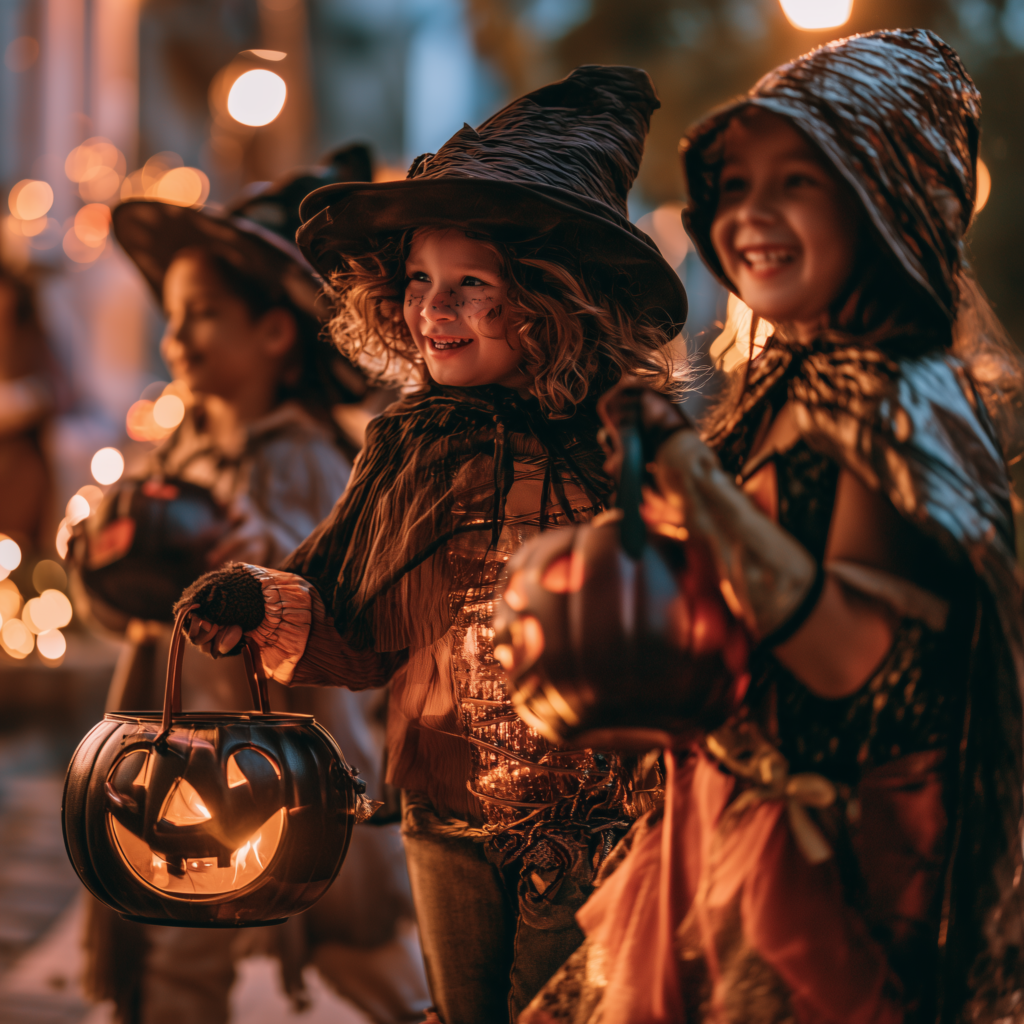
For one night, the normal rules bend just a little. Houses become haunted. Adults compliment children dressed as enormous chickens. Neighbors who barely speak the rest of the year stand on their porches handing each other’s kids chocolate.
It is weird.
It is completely unnecessary.
And maybe that’s exactly why we’ve kept doing it.