Chiquita traces back to United Fruit, a company that owned the railroad, the ships, and a lot of Guatemala, and had friends in Washington.
The Chiquita sticker is about as harmless as branding gets. Blue oval, piece of fruit, maybe a half-remembered dancing banana from an old commercial.
Then you learn the company goes back to United Fruit, and breakfast gets a little complicated.

Before Chiquita, There Was United Fruit
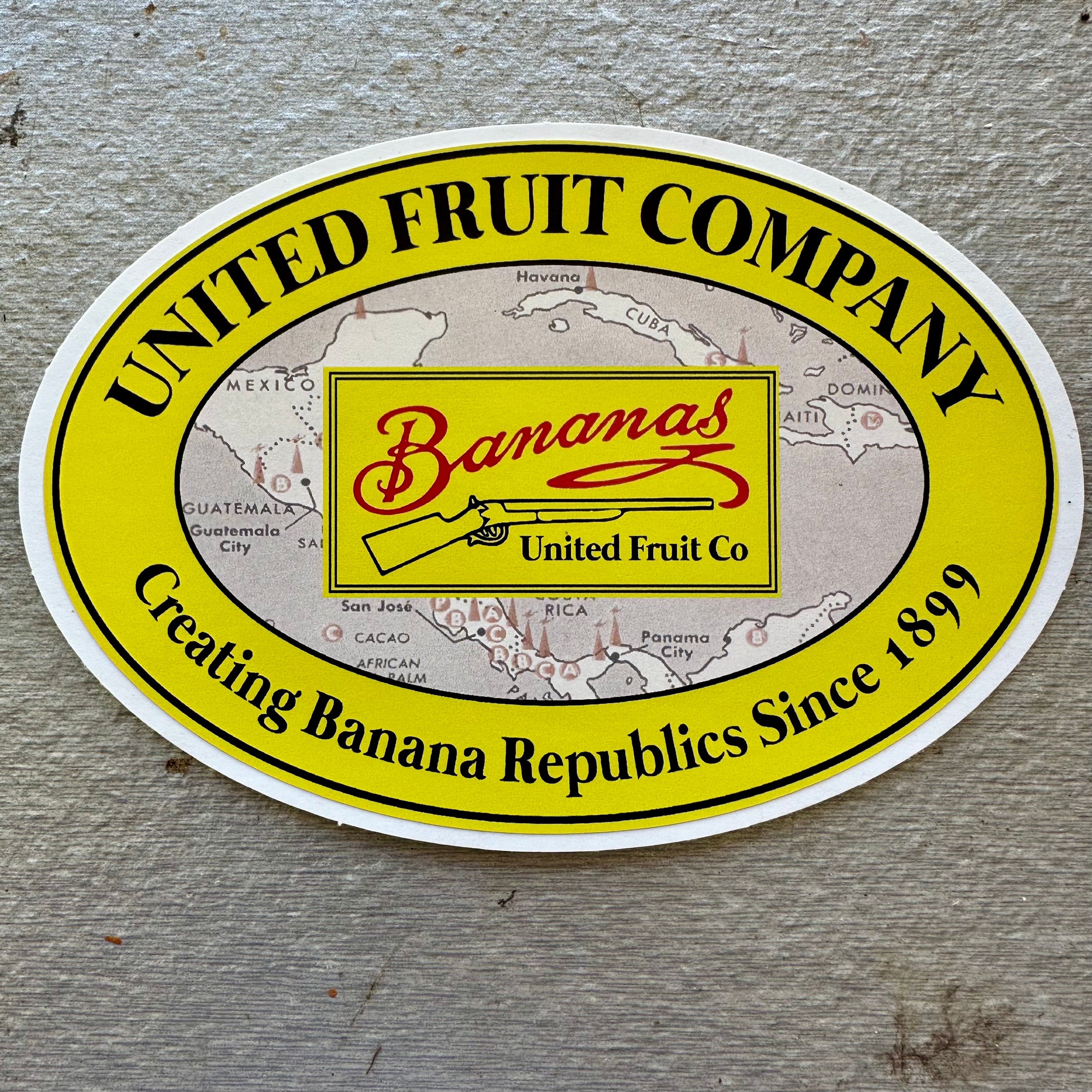
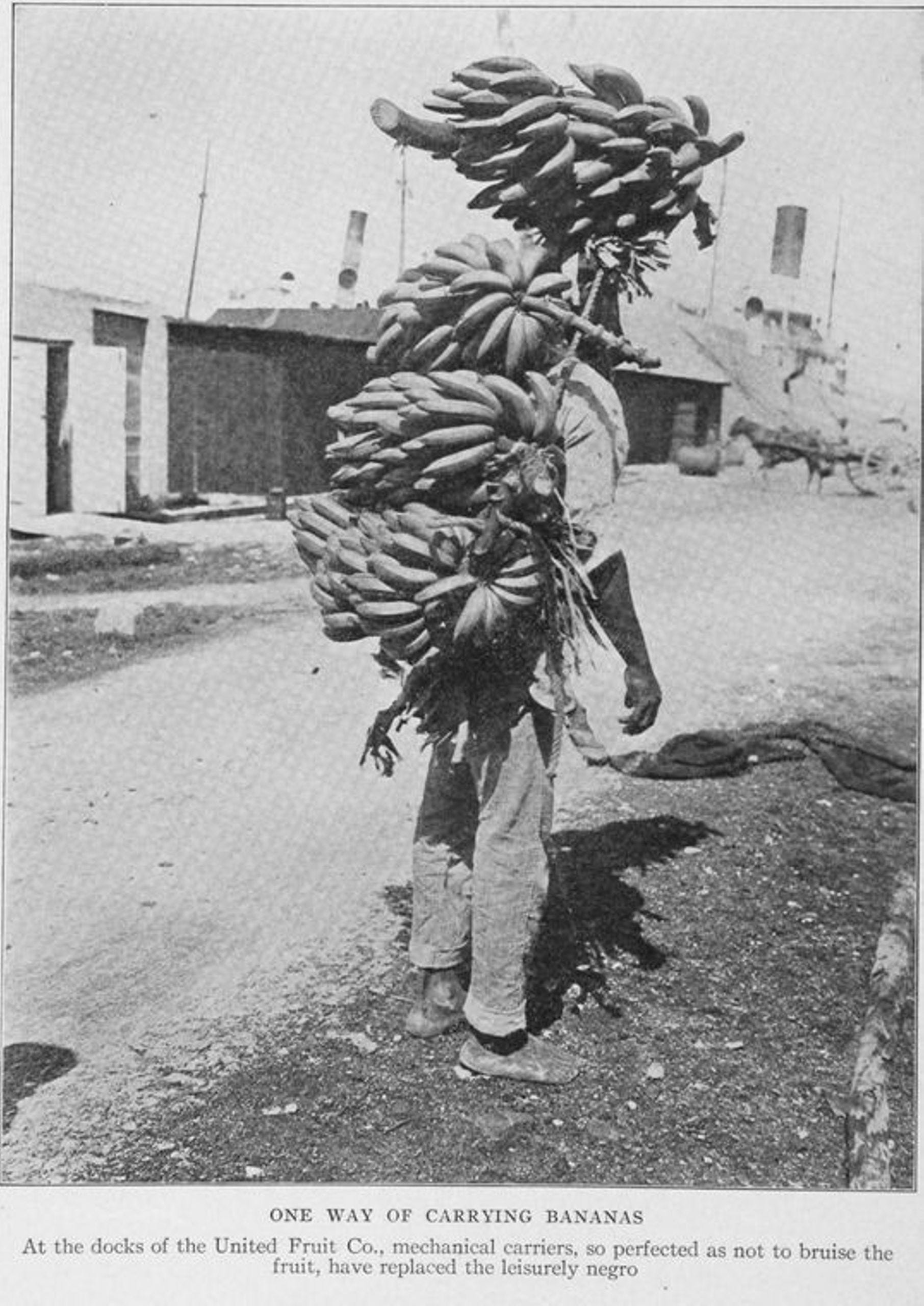
United Fruit started in 1899 and grew into a banana empire across Latin America and the Caribbean. The bananas were only part of it. The company also owned plantations, railroads, ports, and ships.
In Guatemala, a U.S. intelligence estimate from the early 1950s put it plainly. United Fruit dominated banana production, controlled the country’s only effective internal transportation system (the International Railways of Central America), had a virtual monopoly on overseas shipping, and was second only to the government as an employer.
So this wasn’t just a foreign company doing business in Guatemala. It was part of the plumbing. When one company owns the farm, the railroad that moves the crop, and the ships that take it out of the country, that’s economic power that starts looking a lot like political power.
Guatemalans called it El Pulpo. The Octopus.
To be fair, it wasn’t all cartoon villainy. The company ran hospitals, schools, and housing where the government offered very little, and U.S. officials at the time noted that it paid better than other farm employers in Guatemala. It also got along very well with Jorge Ubico, the dictator who ran the country from 1931 to 1944 and left the company’s contracts alone.
Guatemala Tries Democracy
Ubico was pushed out in 1944, which ushered in a period of elected government under Juan José Arévalo known as the Ten Years of Spring. But then Jacobo Árbenz legalized unions, expanded education, and focused on the fact that only a few people owned most of the land.
Árbenz took office in March 1951. In 1952, his government passed Decree 900, an agrarian reform law. The government would take idle land on large estates (anything over 223 acres) and redistribute it to rural families, and owners would be paid in 25-year government bonds.
United Fruit owned a lot of land, and a lot of it sat unused.

The Tax Bill Comes Due
Here’s the detail I keep coming back to. The bonds were valued at what each owner had declared their land was worth for tax purposes.
You can guess how a company that wants to pay low taxes declares its land.
In February 1953, Árbenz ordered the seizure of about 234,000 acres of United Fruit land near Tiquisate on the Pacific side. A second expropriation was announced that August, and another 172,532 acres near Bananera followed in February 1954. United Fruit was not thrilled about the math.
It also had friends in Washington.
Communism or Bananas?
You’ll often see this story boiled down to “United Fruit told the CIA to overthrow a president.” It’s more tangled than that, and not in a way that makes anyone look better.
The Eisenhower administration was genuinely worried about communism. Árbenz wasn’t running a Soviet puppet state, but communists were part of his political coalition and had real influence in the labor and peasant movements. A 1954 Policy Planning Staff memo even admitted that Guatemala’s revolution was driven by social reform and nationalism, not international communism.
Meanwhile, United Fruit was lobbying hard, and the company’s connections were hard to miss. Secretary of State John Foster Dulles’s former law firm, Sullivan & Cromwell, had represented United Fruit, and the Guatemalan ambassador pointed that out to Eisenhower in January 1954. John Foster’s brother, Allen Dulles, was running the CIA.
If you put that in a thriller, an editor would tell you it was too neat.

Operation PBSUCCESS
The CIA code-named the operation PBSUCCESS, and Eisenhower authorized it in August 1953. The budget was about $3 million. According to a memo in the State Department’s records, the initial estimate was closer to $2.7 million, but someone suggested rounding up to leave a little leeway.
The plan was to remove Árbenz. The CIA trained and funded a small force led by exiled officer Carlos Castillo Armas, who also had the backing of United Fruit. It cultivated contacts in the Guatemalan military, ran radio propaganda, and used contract pilots for airstrikes.
Castillo Armas crossed in from Honduras on June 18, 1954. His force wasn’t much of an army, but the propaganda made it sound like a national uprising, and that was enough. Árbenz resigned on June 27. Castillo Armas ended up as president.
For years, how much the U.S. had to do with it was hotly debated. It isn’t anymore. The State Department’s own historical series now describes PBSUCCESS as the CIA operation that removed Árbenz.
There’s also a document from June 17, 1954, the day before the invasion, that I can’t stop thinking about. The National Security Council was discussing an antitrust case against United Fruit that had been put on hold. Allen Dulles suggested waiting another month, by which time the situation in Guatemala would be “clarified.”
Árbenz resigned ten days later. The Justice Department filed the suit on July 2.
It Did Not End There
The coup ended Guatemala’s democratic experiment. A civil war followed and lasted 36 years.
A UN-backed truth commission later found that more than 200,000 people were killed or disappeared. About 83 percent of the identified victims were Maya, and state forces and the paramilitary groups tied to them were responsible for 93 percent of the documented violations. The commission concluded that acts of genocide had been committed against Maya communities.
United Fruit didn’t cause the civil war on its own, and the coup doesn’t explain every atrocity that came after. But 1954 marked a turning point for the country, and the U.S. helped change it.

From United Fruit to Chiquita
United Fruit introduced the Chiquita name in 1944, along with the Miss Chiquita character and her jingle. The company became United Brands in 1970 after merging with the meatpacker AMK, then renamed itself Chiquita Brands International in 1990.
So a company with that history ended up as the friendly blue sticker in the produce aisle. That’s a very successful rebrand.
Bananas cost around 65 cents a pound these days. I’ll be thinking about the rest of the price the next time I peel one.
Sources: U.S. State Department (National Intelligence Estimate), U.S. State Department (FRUS Guatemala introduction), U.S. State Department (PBSUCCESS release), U.S. State Department (expropriation note), U.S. State Department (Policy Planning memo), U.S. State Department (PBSUCCESS budget), U.S. State Department (antitrust discussion), College of Wooster (Cabot memo), U.S. Institute of Peace, FIDH, Britannica, Encyclopedia.com, FRED (BLS)