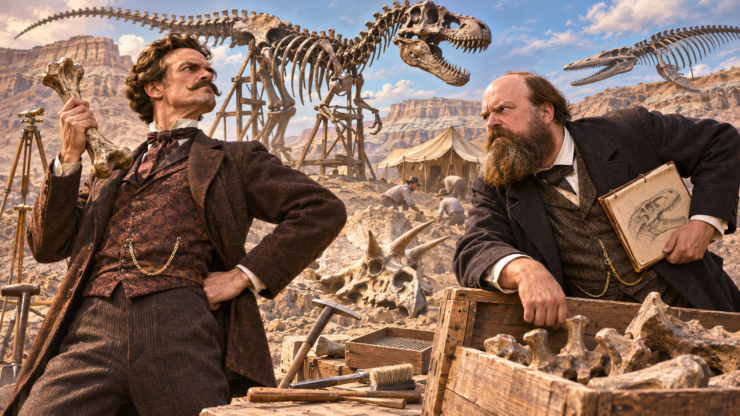
Edward Drinker Cope and Othniel Charles Marsh went from friends to bitter rivals and spent decades racing to out-dig each other. It nearly ruined them both, and it gave us Stegosaurus and Triceratops.
Most workplace feuds end with someone leaving for a new job.
This one ended with two of the best-known American paleontologists of the 1800s fighting over dinosaur bones in the newspapers, in Congress, and in the middle of a Wyoming winter. It became known as the Bone Wars, and it’s a strange mix of petty and important.

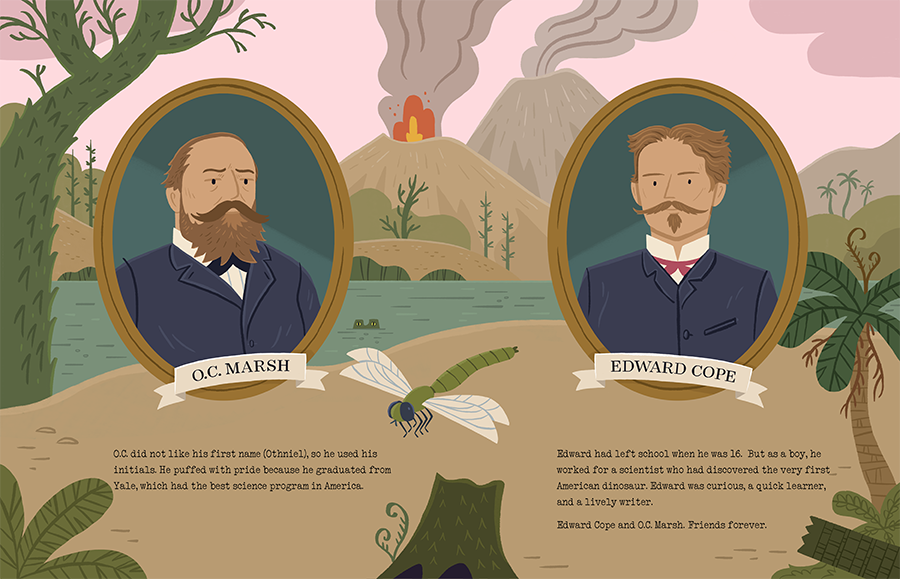
They Started Out as Friends
Cope and Marsh met in Berlin in the 1860s. They traded letters and fossils and even named species after each other. Cope named an amphibian Ptyonius marshii, and Marsh returned the favor with Mosasaurus copeanus.
They came from different worlds. Cope was a Philadelphia naturalist from a wealthy family who published constantly (about 1,400 papers over his career). Marsh grew up on a farm in upstate New York until his uncle, the banker George Peabody, paid for his education. He became Yale’s first professor of paleontology.
Never Show Your Friend the Good Fossil Spot
In 1868, Cope took Marsh to see a fossil quarry in Haddonfield, New Jersey.
Marsh went back without him and made a deal with the quarry owner to send any new finds to Yale instead. Cope later called it the beginning of the end of their friendship, which seems fair.

The Head Incident
That same year, Cope rushed out a description of Elasmosaurus, a long-necked marine reptile found in Kansas. He flipped the spine, so the skull ended up at the tail end and the animal’s very long neck passed for a tail.
Marsh pointed out the mistake, or at least claimed he did. Joseph Leidy, Cope’s former mentor, publicly confirmed it in 1870. Cope tried to recall every copy of the paper and reprinted a corrected version, but the damage was done. Marsh made sure nobody forgot it.
Making a mistake at work is bad. Making one your biggest rival can bring up for the next thirty years is worse.
The West Became Their Battlefield
By the late 1870s, huge fossil beds were opening up in the American West, and both men wanted them all.
The fight got worse at Como Bluff, Wyoming, where two railroad workers first reported bones to Marsh in 1877. Cope sent his own crew, and from 1877 to 1879 the two camps worked the same ridge. Marsh had spies watching Cope (he code-named him “Jones”). Workers were lured away with better pay. Marsh told his crew to keep digging through the freezing, windy winter months, and he reportedly had them destroy any bones they had to leave behind so Cope couldn’t have them.
That last part isn’t funny. Those fossils had been underground for well over 100 million years, and people were willing to wreck them over a scorecard.

The Pettiness Worked
Here’s the annoying part. The competition produced a lot of science.
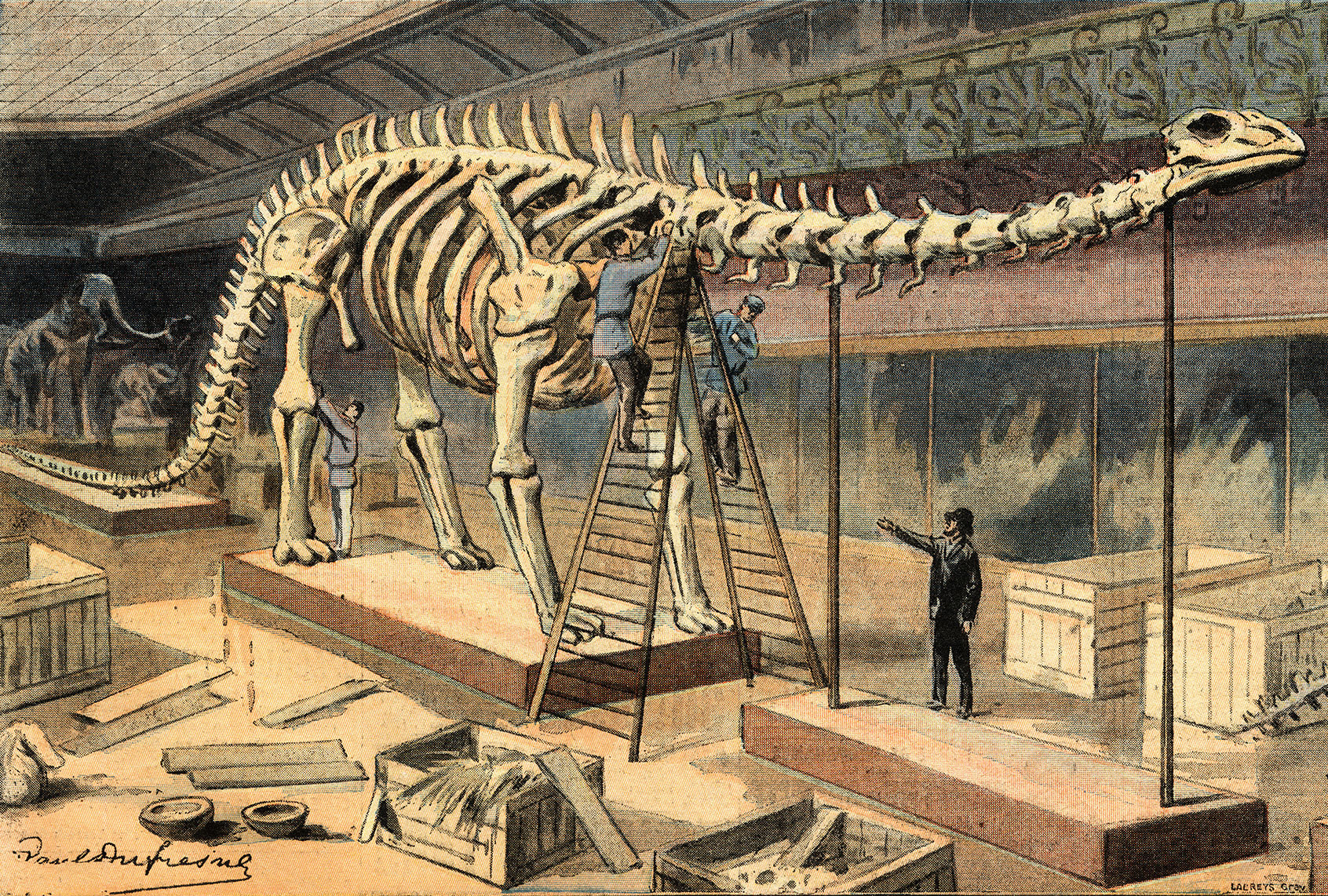
Marsh described about 80 new dinosaurs, bringing Cope’s 56 to 136, including Stegosaurus, Triceratops, and Brontosaurus. Between them, they described more than a hundred. Their collections ended up in museums in New Haven, New York, Washington, and Pittsburgh, and that’s a big reason dinosaurs became such a public obsession.
They also rushed. Descriptions often came from scraps; bones from different animals got mixed together, and the same animal sometimes got two names. Competition made them faster. It also made them sloppy.
They Took It to the Newspapers
By 1889, things had turned into a fight over government money. In December, Cope was ordered to hand over fossils collected with federal funds. He said he’d spent more than $80,000 of his own.
Cope had been collecting dirt on Marsh for years: alleged plagiarism, scientific errors, misuse of government funds. He gave it all to a reporter, and on January 12, 1890, the New York Herald ran it under the headline “SCIENTISTS WAGE BITTER WARFARE.”
Marsh fired back. Cope fired back at that. For about two weeks, two of the country’s most respected scientists argued in a major newspaper while their colleagues watched in horror.

So Who Won?
Marsh has the higher dinosaur count. Then he was asked to resign from the U.S. Geological Survey in 1892. Cope lost money in failed mining ventures, spent heavily on his expeditions, and sold his fossil collection to the American Museum of Natural History in 1895. Cope died in 1897 and Marsh in 1899, and both were nearly broke.
The dinosaurs are the clear winners. Everyone who has ever stood under a skeleton in a museum and thought that was actually walking around? has the two of them to thank, and they’d probably hate that.
I’ve had coworkers I couldn’t stand. I’ve never once considered destroying a dinosaur over it.