
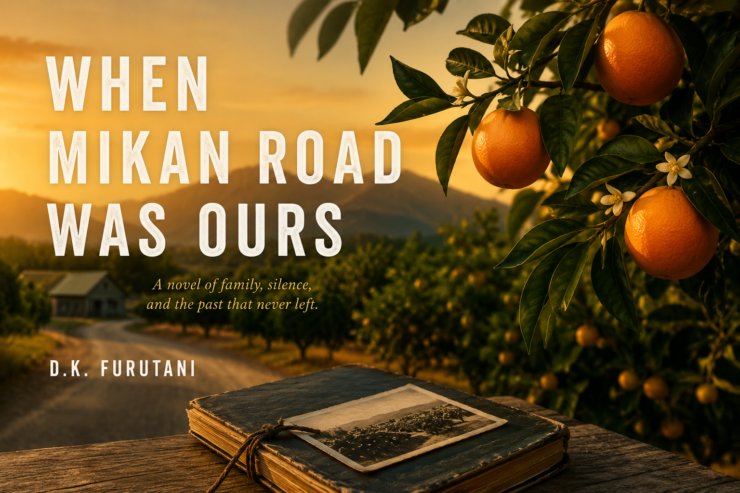
One inherited memoir. Four generations of family silence. When Mikan Road Was Ours asks what happens when the past you barely know has been shaping you all along.
Rating: 4 out of 5 stars
Turns out, the most complicated family heirloom is the truth.
Murano is already having a terrible time when When Mikan Road Was Ours begins. His father has died. He has been diagnosed with cancer. He is a high school English teacher slogging through the end of the school year in the middle of a brutal Los Angeles heat wave.
Basically, summer vacation cannot arrive fast enough.
Then Murano inherits an unpublished memoir written by his great-uncle Benjiro, and suddenly the family history he has spent much of his life feeling disconnected from is sitting right in front of him.
What he finds there is not the family he expected.
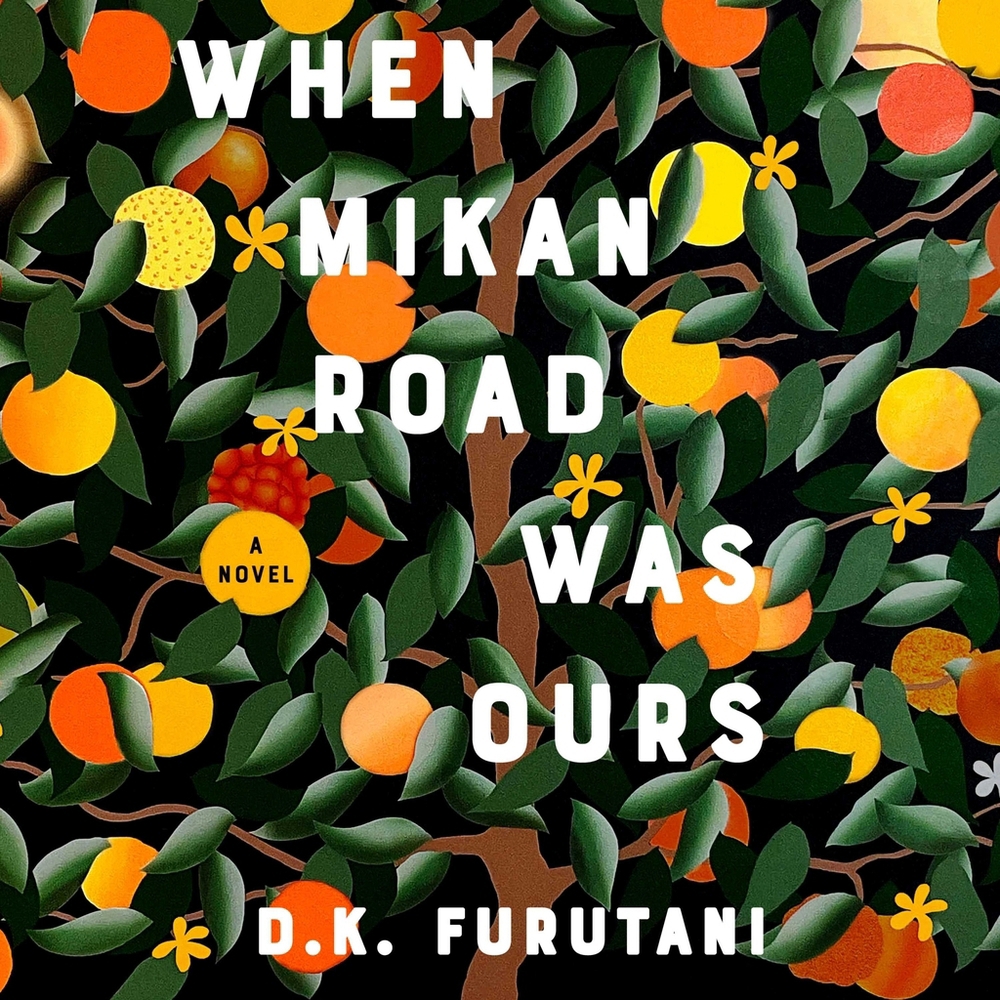
Before the Family Fell Apart
Benjiro’s memoir takes Murano back to California in the 1930s, when the Murano family lived and worked together on farmland along Mikan Road.
This version of the family feels almost foreign to him. They are close. Their lives are intertwined. There are disagreements and complications, of course, because no family gets through four generations without generating some material, but there is also a real sense of home.
And we know what is coming.
The incarceration of Japanese Americans during World War II tears through that life, but what I appreciated most about D.K. Furutani’s novel is that the story does not treat the camps as the beginning and end of the damage.
Because that is not how this kind of injustice works.
Homes and property are lost. Financial security disappears. Relationships fracture. Anger settles in. People stop talking about certain things.
Then their children grow up inside the aftermath.
And their grandchildren do too.
The Things Nobody Talks About
This is where When Mikan Road Was Ours really worked for me.
Murano has spent much of his life feeling removed from his Japanese heritage, but the deeper he delves into Benjiro’s memoir, the more he comes to understand that his distance from the family did not come out of nowhere.
There is history behind it.
The Murano family did not simply fall apart one day. There were losses, resentments, betrayals, impossible choices, and eventually a whole lot of silence.
Murano has inherited pieces of that history without ever being given the full story.
I also appreciated that reconnecting with his heritage does not magically fix anything. There is no tidy moment where Murano discovers the past and suddenly understands exactly who he is.
Instead, he gets more questions.
Some of the answers hurt.
And he has to decide what all of it means for the life he is living now.
That felt much more believable to me than a simple story about “finding your roots.”
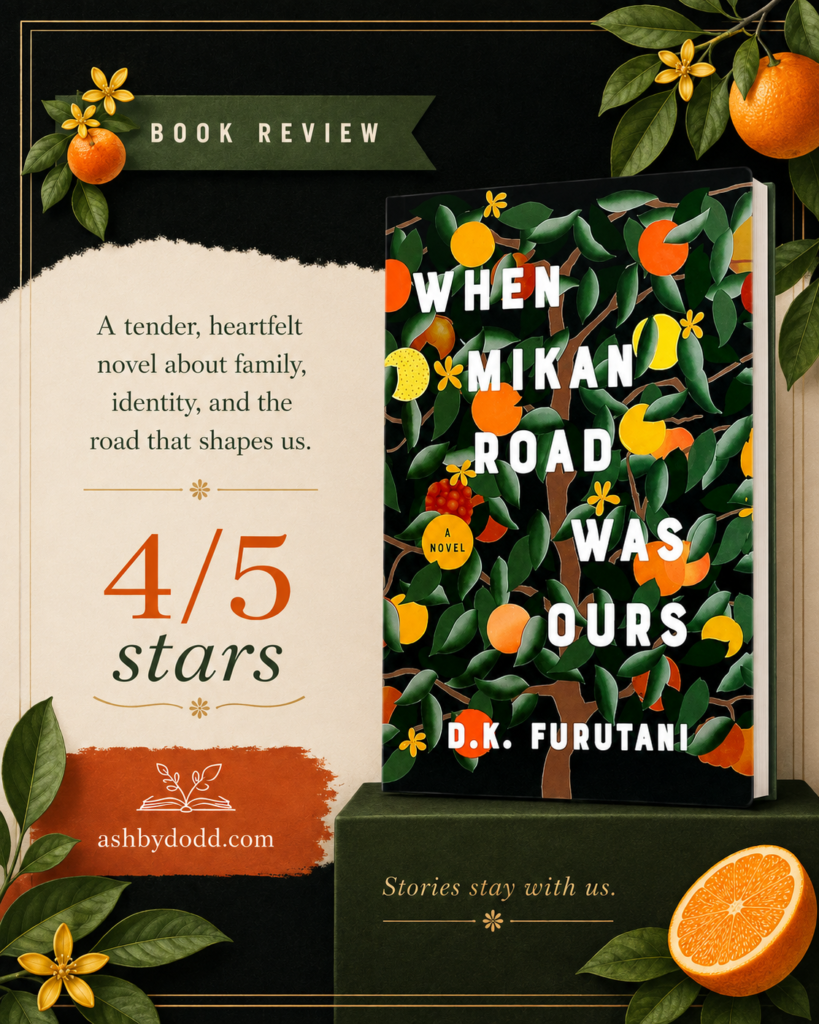
Four Generations Is a Lot of Family
The novel spans four generations of the Murano family, giving Furutani ample room to show how one generation’s experiences shape the next.
It is also, occasionally, a lot.
Every new piece of Benjiro’s story changes the way Murano understands someone in his present, and I loved watching those connections slowly come together. People who initially seem cold, difficult, or distant become much more complicated once we understand what happened before Murano was even born.
But there were also characters and moments I wanted to stay with longer.
The book covers so much history that sometimes it moves on just as a particular storyline starts to really grab me.
I also found the opening a little slow. Murano is intentionally stuck when we meet him, but I may have felt that stuckness a little more than intended. Once Benjiro’s memoir starts opening up the past, the story found its footing for me.
And the emotional payoff absolutely worked.
What the Past Leaves Behind
The part I keep coming back to is how clearly this book shows that Japanese American incarceration did not simply end when people were released from the camps.
The government could end the policy. That did not restore what families had lost.
Money was gone. Property was gone. Trust was damaged. Relationships had changed. People who had been treated as enemies by their own country were expected to somehow return to normal life afterward.
What does “normal” even mean after that?
When Mikan Road Was Ours looks at what happens when those consequences keep moving through a family, even as the original story becomes something younger generations barely know.
Murano begins by reading about relatives who feel almost like strangers.
Eventually, he realizes their story has been shaping his own life all along.
That is where this book really landed for me.
The pacing is not always even, and the four-generation scope sometimes left me wanting more time with individual characters. But Furutani has created a thoughtful, moving family story about grief, identity, estrangement, and the things people pass down even when nobody talks about them.
I finished it thinking less about the secrets Murano uncovered and more about everything that had to happen for those secrets to exist in the first place.
And yes, I would absolutely recommend it.
Thank you to NetGalley and Atria Books for an advanced reader’s copy. All opinions expressed in this review are my own.

![The Anniversary by Alex Finlay [Book Review]](https://ashbydodd.com/wp-content/uploads/2026/05/The-Anniversary-Alex-Finlay-Hero-370x300.png "The Anniversary by Alex Finlay [Book Review]")
![The Guest by Emma Cline [Book Review]](https://www.washingtonpost.com/wp-apps/imrs.php?src=https://arc-anglerfish-washpost-prod-washpost.s3.amazonaws.com/public/MRFDA2O3TZA2ZEPHI7JQLKU4GI_size-normalized.jpg&w=1440 "The Guest by Emma Cline [Book Review]")