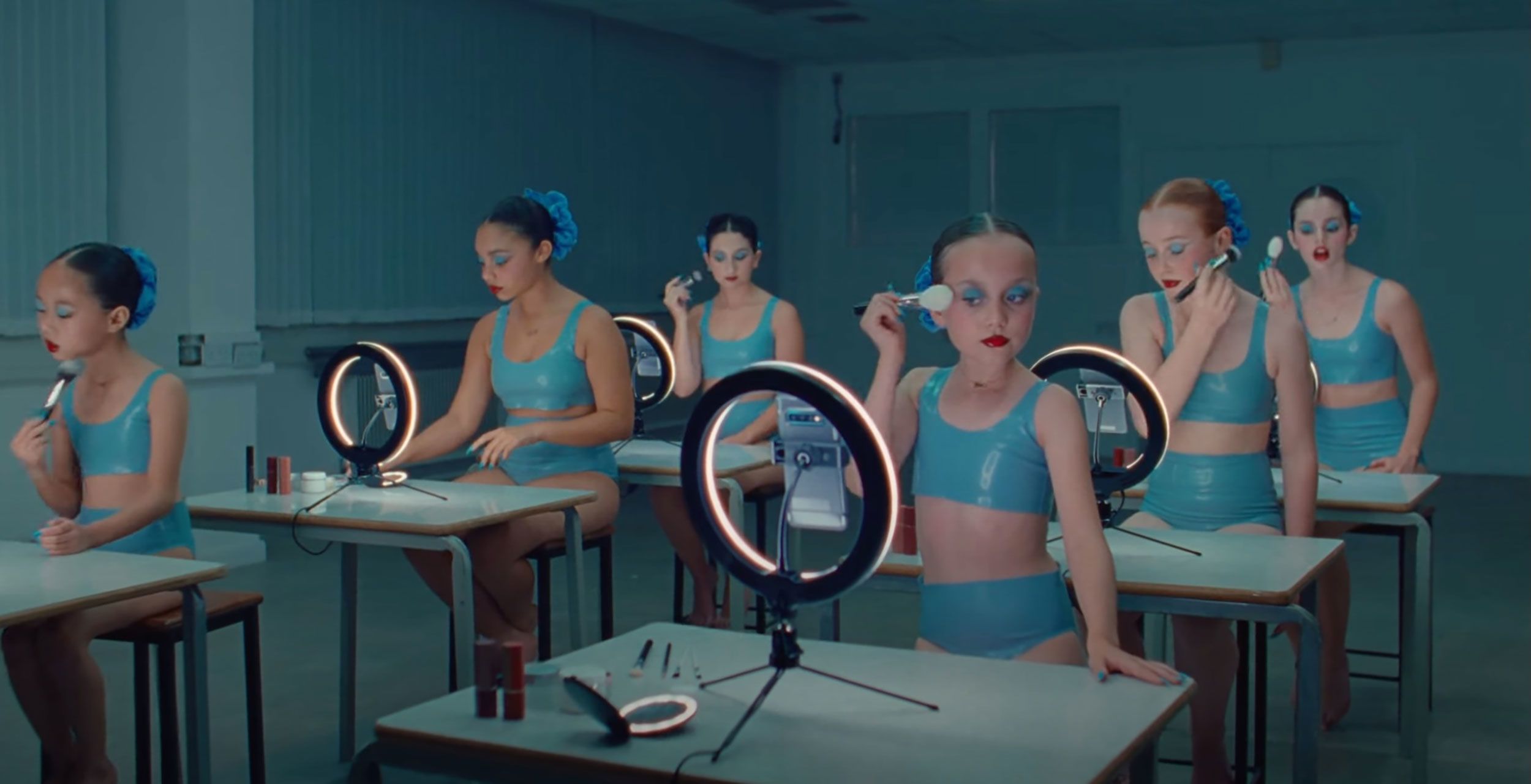

That friendly wellness expert in your feed might have a white coat, diplomas, and absolutely no pulse. AI-generated influencers are selling supplements with manufactured authority, and the scam is getting harder to spot.
I would love to tell you that I watched this video and immediately spotted the fake people.
I did not.
The woman confidently explaining Chinese medicine? She looked real to me. The wellness influencers documenting their miraculous transformations? Maybe a little too polished, but have you been on Instagram lately? That barely narrows it down.
And that is exactly what makes this so unsettling.
A New York Times investigation found hundreds of AI-generated doctors, healers, and wellness influencers appearing in social media ads for health supplements. These aren’t always the vaguely plastic, six-fingered AI creations we’ve learned to laugh at. Some look disturbingly convincing.
They have friendly faces. Calm voices. Diplomas hanging on office walls. American flags in the background. They talk about inflammation, kidney disease, weight loss, and the kinds of chronic health problems that can make someone desperate enough to try almost anything.
There is just one small issue.
They do not exist.
When AI Learns How to Look Trustworthy
The fake people themselves are impressive in the worst possible way.
In the Times video, AI-generated influencers deliver testimonials about what happened after taking supplements for 50 days, 77 days, and beyond. Others appear as doctors or traditional medicine experts, speaking with the kind of authority that makes you assume someone, somewhere, checked their credentials.
Except there are no credentials to check.
Those diplomas are fake. The offices are fake. The reassuring expert explaining what your body supposedly needs is fake.
The sales pitch is very real.
And apparently, creating these ads is becoming remarkably cheap. One Chinese advertising company featured in the Times report said its 40 employees operate hundreds of accounts and produce roughly 1,200 AI videos a day, at a cost of about $10 each.
Ten dollars.
We have officially reached the point where manufacturing a trustworthy-looking medical expert can cost less than lunch.
The imagery isn’t accidental, either. The Times found familiar elements repeated across ads, including suburban settings, American flags, medical offices, and other little visual signals designed to make the person on screen feel recognizable and credible.
That part has been rattling around in my brain.
Because most of us don’t conduct background checks on every person who appears in our social feeds. We make tiny judgment calls all day long. Does this person seem knowledgeable, or does this setting look legitimate? Does what they’re saying sound plausible?
Now all of those cues can be manufactured.
This Gets Much Less Funny When Someone Is Sick
The story could easily be framed as another entry in the increasingly crowded category of “Look What Weird Thing AI Can Do Now.”
Except real people are buying these products.
The Times spoke with Pamela Wundrow, a 71-year-old retired truck driver who lives with several health issues. After seeing Facebook ads promoting moringa, she ordered Rosabella moringa supplements, hoping they might help with inflammation, fatigue, and joint problems.
Months later, she learned that some Rosabella capsules had been recalled because of Salmonella contamination.
By the time the FDA and CDC closed their investigation in April 2026, 10 people in eight states had been infected with outbreak strains linked to Rosabella moringa powder capsules. Three were hospitalized. The strains were classified as extensively drug-resistant, meaning commonly recommended antibiotics might not work if treatment were needed. No deaths were reported.
Wundrow told the Times she did not experience symptoms of Salmonella, although some of her existing health problems worsened while she was taking the supplement. She was careful not to claim the pills caused that decline because she simply doesn’t know.
That uncertainty feels important.
Because this isn’t a story about foolish people falling for obvious scams.
It’s about people with health problems looking for relief.
There is a pretty enormous moral difference between selling someone a questionable gadget because a fake influencer said it would organize their kitchen and selling health products to someone who is tired, hurting, frightened, or frustrated with the answers they’ve received elsewhere.
One costs you money.
The other can mess with your health.

The Fake Face Isn’t Even the Entire Problem
Here’s where things get particularly complicated.
Using an AI avatar in an advertisement isn’t automatically illegal. The Federal Trade Commission says there is no blanket prohibition on using AI-generated stock avatars or virtual influencers in marketing.
But advertising still has to follow existing rules. Health claims must be truthful, not misleading, and supported by appropriate scientific evidence. The FTC also says that using an avatar can itself be deceptive, depending on how it is presented.
So the technology has created a strange gap.
We already have rules against deceptive advertising. What we don’t seem to have is an enforcement system capable of keeping pace with people who can generate enormous quantities of persuasive synthetic content for almost nothing.
TikTok told the Times that it bans accounts that make misleading health claims. Meta said it labels AI-generated content on Facebook and Instagram. Yet the Times shared examples with the companies that were still active, and those ads were subsequently removed.
That’s not especially comforting.
If hundreds or thousands of new videos can be created every day, removing them one at a time starts to feel like trying to empty a swimming pool with a teaspoon.

Illness Shouldn’t Be a Targeting Strategy
The sentence from Wundrow that stuck with me most was simple:
“They’re targeting us people that have health issues.”
That’s the whole story, really.
Not AI or supplements.
Not even social media.
Vulnerability.
Someone has figured out that a person dealing with pain, fatigue, kidney disease, inflammation, or another chronic problem is also a potential customer. And AI now makes it incredibly easy to build exactly the reassuring authority figure that person might want to hear from.
Make her warm.
Make him look like a doctor.
Put some diplomas on the wall.
Add a familiar accent or a suburban background.
Promise that this one plant, powder, gummy, capsule, or mysterious ancient remedy can do what everything else hasn’t.
Then make 1,199 more videos before dinner.
That is where this stops feeling like a quirky technology story and starts feeling predatory.

So, Who Do You Trust Now?
I wish the useful takeaway were simply, “Look closely, and you’ll be able to spot the AI.”
But the Times video makes a pretty compelling case that sometimes you won’t.
And I don’t think the burden should fall entirely on a 71-year-old woman with health problems to become a digital forensics expert before she can safely scroll Facebook.
Yes, we should be skeptical of miracle health claims. We should check credentials. We should be suspicious when someone online promises a supplement can treat a serious disease better than actual medical care.
But platforms that sell advertising, companies that sell health products, and regulators who police deceptive claims have responsibilities here too.
Because the scariest thing about these fake influencers isn’t that AI can create a person who looks real.
It’s that someone can now manufacture trust for about ten bucks.
I used to think I was fairly good at spotting AI online.
This video cured me of that confidence.
Which may be the only wellness claim in the whole thing I’m willing to believe.