
I went into this expecting an easy answer about why we dream and instead found myself inside the emotional machinery of nightmares. Turns out, the tidal wave chasing you in your sleep might have a lot more to say than you think.
I’ll be honest, I clicked on this episode of The Gray Area thinking I’d get a nice, tidy answer to “why do we dream?” Instead, I got dream scientist Michelle Carr telling host Sean Illing, flat out, “I don’t know.” Which isn’t necessarily a bad thing.
Carr studies sleep and dreaming for a living, and she’s the author of a book called Nightmare Obscura. Over the course of the conversation, she and Illing get into what dreams actually are, why nightmares happen, how people learn to control their dreams on purpose, and what any of this says about consciousness itself. I went in expecting a fun little sleep-science explainer. I came out with a genuinely different way of thinking about what happens in my head every single night.
So what actually is a dream?
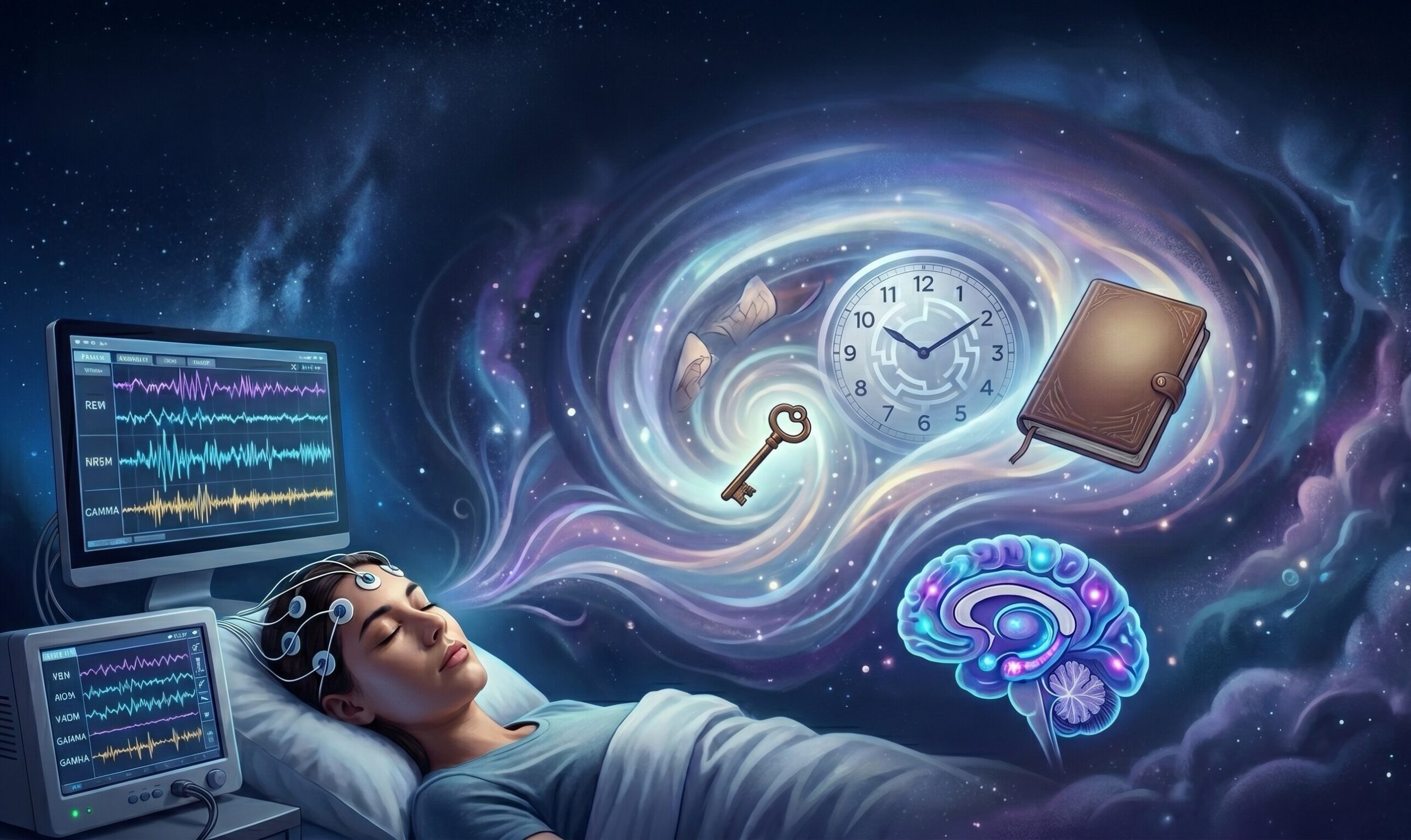
Carr’s working definition is simpler than you’d expect: dreaming is just our conscious experience while we’re asleep. We’re conscious all day, having experiences, feelings, and thoughts. That processing doesn’t just shut off when we close our eyes. It keeps going, just in a different form. She describes it as our “sleeping form of consciousness.”
That reframes the whole thing for me. I’ve always thought of dreams as something separate from being awake, like a weird side program that runs at night. Carr’s version makes it sound more like a continuation.

The tidal wave in your nightmares isn’t about water
The part of the conversation that actually made me sit up was about recurring themes in nightmares. Carr brings up research from Ernest Hartman, who studied what he called “tidal wave dreams,” people across completely different backgrounds and traumas who all report the same nightmare of being overwhelmed by a wave of water.
The wave isn’t literal. Nobody’s necessarily been through an actual flood. Carr explains it’s a symbolic stand-in for the feeling of being completely overwhelmed and helpless, whatever the actual source of that feeling is in someone’s life. The same goes for the classics: teeth falling out, flying, and showing up somewhere without your clothes on. These aren’t random. They’re the mind reaching for images that match an emotion, not an event.
She also gets into why nightmares loop the way they do. A nightmare tends to spike your heart rate and breathing right before it wakes you up, which is exactly the problem: you get yanked out of sleep before your brain has a chance to actually process and work through whatever emotion triggered the dream in the first place. So the same nightmare comes back, again and again, because it never got to finish its job.

Yes, you can learn to control your dreams
This is the part of the episode that felt almost sci-fi. Carr studies lucid dreaming, which is when you become aware, mid-dream, that you’re dreaming and, in some cases, can start directing what happens next.
Her lab can confirm in real time when someone is lucid. Since your body is essentially paralyzed during REM sleep except for your eyes, researchers ask people to signal by looking left, right, left, right the moment they realize they’re dreaming. The dreamer does it, the researchers see it on the monitors, and just like that, there’s a live communication channel between a sleeping brain and the waking world. Some experiments even have people try to smile or frown on cue while dreaming.
As for how regular people can get better at this: Carr’s advice is to start noticing your personal “dream signs,” the recurring oddities that show up in your dreams (a pet who’s passed away, the ability to fly, whatever your brain reaches for), and use them as a trigger. If you notice that sign, you remember you’re dreaming. She also recommends waking up early and visualizing a lucid dream before falling back asleep.
Illing asks the obvious follow-up: Is there a downside to getting too good at this? Carr says the control is more limited than people assume. Real lucid dreaming isn’t Inception, you’re not fully constructing the dream, it’s still spontaneous and creative. But she does mention people who end up lucid so often that it starts to feel intrusive, which was a genuinely funny idea to me: too much control over your own subconscious.
And then there’s Freud, sort of
Toward the end, Illing pushes Carr on whether Freud’s idea of the unconscious still holds up. Her answer is refreshingly uncertain. She doesn’t fully buy the idea that everything we’re not consciously aware of is neatly filed away as “unconscious.” She wonders instead if it’s more that we simply don’t yet have the tools to understand what that other layer of the mind actually is. It’s less “Freud was right” and more “we still don’t fully know,” which tracks with pretty much everything else she says in this conversation.

Why this one stuck with me
I think what I liked most here is that Carr never oversells the science. Sleep and dreaming are still genuinely mysterious, and she’s comfortable saying so, instead of pretending there’s a clean, satisfying answer. If you’ve ever had a recurring nightmare, wondered what your brain is doing with all your unprocessed feelings, or just like the idea of learning to fly on command in your sleep, this one’s worth the 47 minutes. And I’m already looking up Nightmare Obscura.