I thought candlepin bowling was just one of New England’s weird little quirks. Turns out, saving it might also mean saving the kind of place where people still actually show up for each other.
I had never heard of candlepin bowling until I went to college in New England.
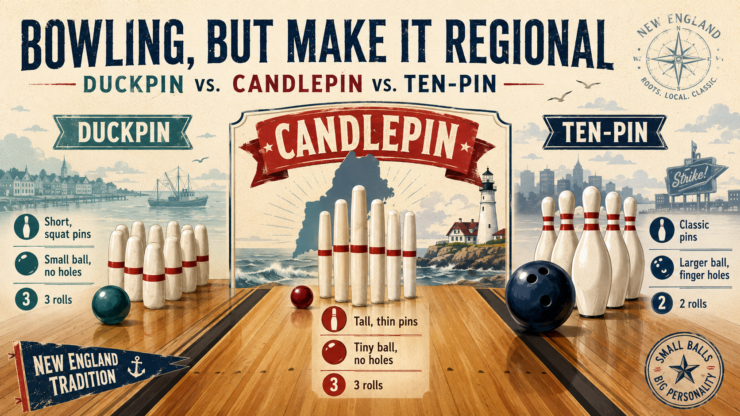
Bowling, as far as I knew, involved heavy balls with finger holes and the occasional humiliating trip directly into the gutter. Then I encountered candlepin, with its skinny pins, tiny balls, three rolls per turn, and the immediate realization that something that looked much easier was definitely not.
I was never very good at it.
But I had a great time.
That’s probably why a recent CBS Sunday Morning story about a young woman fighting to save a candlepin bowling alley in Ellsworth, Maine, hit me with an unexpected wave of nostalgia.
Saving a Very New England Tradition
Candlepin bowling is one of those wonderfully regional things that somehow remained mostly a New England secret. It never spread across the country the way traditional ten-pin bowling did, and now the alleys that remain are becoming increasingly rare.
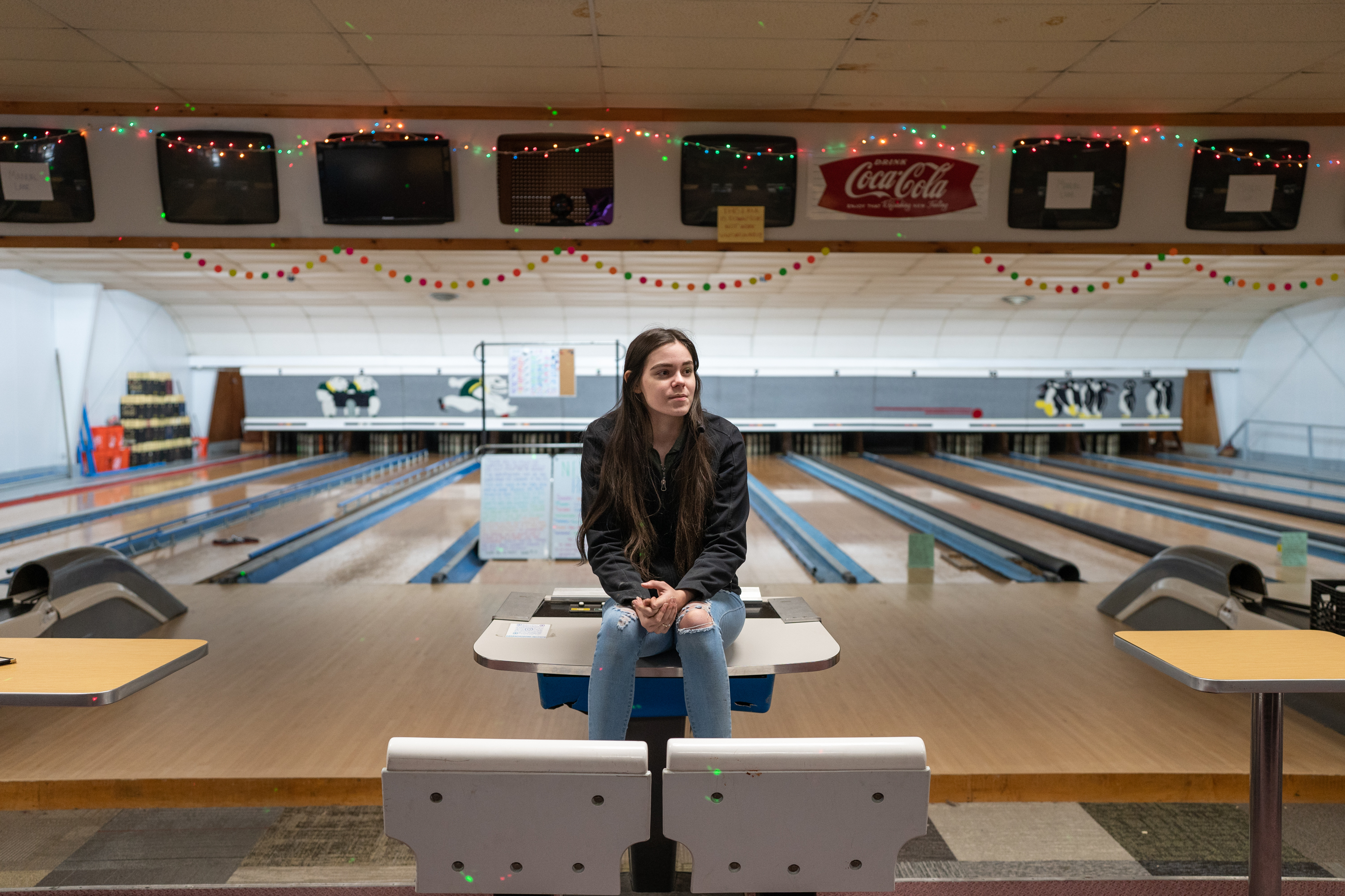
In Ellsworth, Autumn has been trying to make sure one of them survives.
She grew up going to the alley, started working there as a teenager, and became fascinated by the ancient pinsetting machines hiding behind the lanes. At 18, when the struggling bowling alley was headed toward demolition, she convinced the owner to give her three months to prove she could keep it running.
That was in 2020, which turned out to be an especially unfortunate year to begin saving a bowling alley.
There were electrical problems. The roof leaked. A pipe burst badly enough that it was literally raining inside. Then COVID arrived.
Somehow, Autumn kept going.
It Became More Than Bowling
What I loved most about the story, though, had very little to do with bowling.
Autumn originally wanted to become a clinical therapist to help people. Instead, she discovered that a bowling alley could become its own kind of community space.
After recognizing that a woman visiting the alley might be in danger, Autumn quietly passed her a note asking if she was okay. When the woman indicated she wasn’t, Autumn called the police.
Since then, the alley has opened its doors to domestic violence survivors who need a safe place to talk. Autumn and her fiancé have hosted food drives, pancake breakfasts, kids’ events, and other community programs, even when they could probably use that money to fix the temperamental machinery keeping the place alive.
That’s where this stopped feeling like a story about preserving an old-fashioned pastime.
It became a story about preserving a place where people still gather.
Maybe That’s What We’re Really Losing
I don’t think every old tradition needs to survive simply because it’s old. But I do think we should notice what disappears along with places like candlepin bowling alleys.
These are places where you actually have to show up.
You sit with people and wait your turn. You laugh when someone completely misses the pins they were aiming directly at, and you eat bowling-alley food that has absolutely no nutritional ambitions whatsoever.
Basically, you spend time together.
And maybe that’s why Autumn’s story feels bigger than candlepin bowling.
I haven’t been candlepin bowling since college, and based on my past performance, the sport has probably been doing just fine without me. But hearing that these alleys are slowly disappearing makes me appreciate those nights a little more.
I hope places like this one survive.
Not because candlepin bowling is perfect. A perfect 300 game is apparently so difficult that nobody is known to have ever bowled one.
But because the places where we come together don’t have to be perfect to be worth saving.
Sources: CBS News Sunday Morning